

Key Takeaways
- Bare spots and thin grass are almost always symptoms of soil problems, not surface-level issues.
- Soil compaction blocks oxygen and water from reaching roots, causing predictable die-off patterns.
- pH imbalance locks out nutrients even when fertilizer has been applied - testing is essential.
- Poor drainage and overwatering produce symptoms that closely mimic drought stress.
- Identifying the root cause before reseeding saves time, money, and frustration.
Patchy Lawn Syndrome
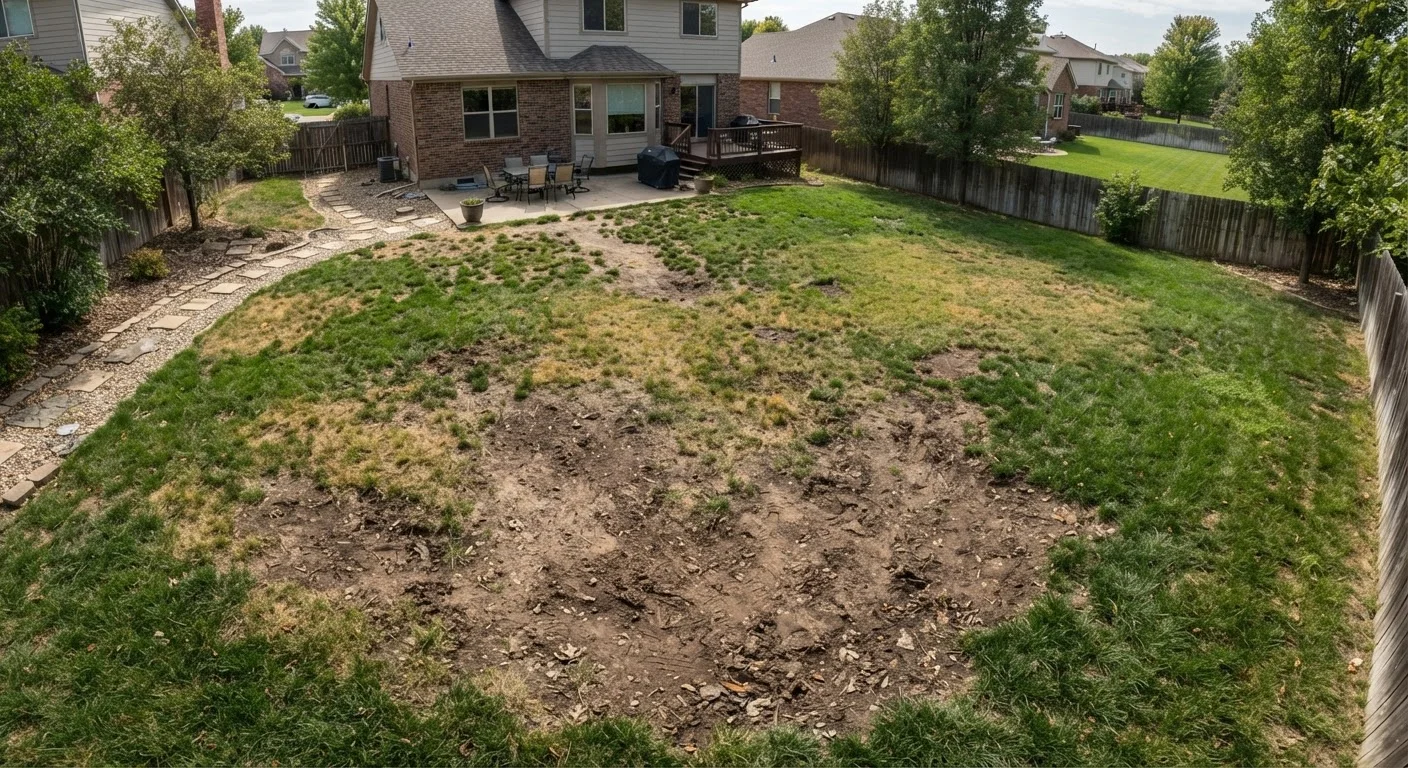
A patchy lawn refers to uneven grass growth characterized by bare spots, thin areas, or inconsistent color and density across the turf. These irregularities are almost always symptoms of underlying soil conditions rather than problems with the grass itself. Understanding what the soil is communicating - through compaction, pH shifts, drainage failure, or nutrient deficiency - is the first step toward a lasting fix.
Turfgrass specialists often distinguish between biotic causes (pests, fungal disease, thatch) and abiotic causes (compaction, pH extremes, drought stress, waterlogging) when diagnosing patchy lawns, because each category requires a different intervention.
Reading the Pattern: Why Patchy Lawns Are a Diagnostic Tool
A patchy lawn is frustrating to look at, but it's also informative. Before reaching for grass seed or fertilizer, it pays to observe the pattern of the problem carefully. Bare spots that follow a predictable shape - running along a heavily walked path, appearing only under a downspout, or clustering in compacted play areas - each point toward a specific cause.
Random-looking patches scattered across multiple zones are more likely related to soil chemistry or a subsurface drainage problem. Patchy areas limited to shade are different again. The pattern itself is often the first clue, and rushing past this step leads to fixes that don't hold.
Think of your lawn as feedback from the soil beneath it. Grass is a relatively shallow-rooted plant that depends entirely on the top few inches of soil for oxygen, water, and nutrients. When those conditions are compromised in any zone, the grass above that zone tells you so - sometimes before the problem becomes severe enough to cause permanent damage.
Soil Compaction: The Silent Root Killer
Compaction is one of the most common - and most overlooked - causes of patchy lawns. When soil particles are pressed tightly together by foot traffic, vehicle weight, heavy clay content, or repeated mowing on wet ground, pore spaces collapse. Those pores are where oxygen, water, and nutrients travel down to roots. Without them, grass essentially suffocates from below.
You'll often see compaction-related die-off in high-traffic areas: paths between garden beds, spots where children regularly play, or areas near a frequently used gate. The soil in these zones is usually noticeably hard underfoot. A simple screwdriver test can confirm it: if you can't press a standard screwdriver six inches into moist soil using hand pressure alone, compaction is likely significant.
The most effective remedy for compaction is aeration - physically removing small plugs of soil to restore pore space and allow air, water, and organic matter to penetrate. Lawn aeration is most effective when done at the right time of year for your grass type, and it's worth understanding whether your specific situation calls for it before renting equipment.
Do the Screwdriver Test Before Aerating
Press a standard flathead screwdriver into moist soil using only hand pressure. If you can't reach 6 inches without significant resistance, compaction is affecting root growth. Doing this test across several zones of your lawn helps you understand whether compaction is localized or widespread - useful information before deciding whether full aeration or targeted spot treatment makes more sense.
pH Imbalance: When Nutrients Become Unavailable
Soil pH measures how acidic or alkaline your soil is on a scale from 0 to 14. Most lawn grasses perform best in a range of roughly 6.0 to 7.0 - slightly acidic to neutral. Outside that window, even a well-fertilized lawn can look starved, because the nutrients are chemically locked in a form grass roots can't absorb.
Acidic soil (pH below 6.0) is common in high-rainfall regions and beneath conifers or oak trees. Alkaline soil (pH above 7.0) tends to appear in drier climates and areas with limestone-heavy subsoil or where concrete runoff has accumulated. In both cases, grass may show yellowing, slow growth, and patchy thin areas - symptoms that look like nutrient deficiency even when fertilizer has been applied.
A soil test is the only reliable way to know your pH. Many cooperative extension services offer affordable testing, and home test kits are widely available. Our guide on soil pH covers how to interpret your results and what amendments - such as lime to raise pH or sulfur to lower it - can help bring your soil back into a productive range.
Soil Test Results Take Time to Act On
If your test reveals a pH problem, don't expect overnight results. Amendments like lime or sulfur typically take weeks to months to meaningfully shift soil pH. Plan corrections for the season before you intend to reseed or fertilize heavily, so the soil chemistry has time to stabilize before you invest in seed or nutrients.
Drainage, Watering, and What Wet Soil Really Means
Poor drainage creates a paradox: areas of your lawn may look drought-stressed while actually being waterlogged. When soil stays saturated for extended periods, roots are cut off from oxygen and begin to rot. The grass above yellows, thins, and eventually dies - symptoms that can easily be misread as dryness.
Watch your lawn for 30 minutes after a heavy rain. Areas where water pools or drains very slowly are candidates for drainage intervention, whether that means improving grading, adding organic matter to break up clay, or in more severe cases, installing subsurface drainage channels. These are often projects that benefit from professional assessment, particularly when grading changes are involved, since redirecting water incorrectly can affect neighboring properties or foundations.
Overwatering is a related problem and is more common than most homeowners realize. Frequent shallow watering encourages roots to stay near the surface, making turf more vulnerable to heat and drought. Managing water during summer heat follows different rules than maintaining a lawn in moderate conditions, and getting the frequency and depth right makes a measurable difference year-round.
What To Do After You Diagnose the Problem
Once you have a clearer picture of what your soil is communicating, the repair sequence matters. Correcting soil conditions first - then reseeding or overseeding - gives new grass the foundation it needs to persist. Skipping to seed before addressing compaction, pH, or drainage produces results that disappear within a season.
After aeration or pH correction, adding compost as a topdressing improves soil structure and microbial activity simultaneously. This is also when what mulch does below the surface becomes relevant - organic matter added to the soil profile feeds the biology that helps grass roots establish and thrive.
For thin lawns that don't have complete bare patches, overseeding is often a gentler and more effective approach than tearing out and restarting. Timing - based on your grass type and regional climate - plays a significant role in whether new seed germinates successfully. Taking the time to read your lawn's signals carefully before acting is always the most efficient path to a healthier, more uniform yard.