

Key Takeaways
- Overseeding fills thin or bare spots by sowing grass seed directly into existing turf without a full renovation.
- Timing matters: cool-season grasses do best when seeded in late summer or early fall.
- Soil-to-seed contact is the single most important factor for successful germination.
- Consistent, light watering during the first two to three weeks is critical for new seedlings.
- Mowing height and traffic restrictions protect young grass until it establishes fully.
What you will need
Why Overseeding Works - and When to Use It
A lawn that looks tired, thin, or patchy doesn't necessarily need to be torn up and replanted. Overseeding - the practice of spreading grass seed over existing turf - can restore density, improve disease resistance, and introduce newer grass varieties without the cost and disruption of a full renovation.
The technique works best when thinning is caused by age, moderate wear, or gradual shading changes, and when at least 50 percent of the existing turf is still healthy. If your lawn has widespread bare soil, severe grub damage, or persistent drainage problems, address those underlying issues first - overseeding alone won't fix structural problems.
Timing is closely tied to grass type. Cool-season grasses (such as tall fescue, Kentucky bluegrass, and perennial ryegrass) germinate most reliably when soil temperatures are between 50°F and 65°F - typically late August through mid-October in most northern U.S. regions. Warm-season grasses (like bermuda and zoysia) prefer late spring to early summer overseeding when soils are consistently warm. For a broader look at autumn lawn tasks, see our fall yard prep checklist for a season-end overview.
Match Your Seed to Your Region
Using the wrong grass species is a common and costly mistake. Cool-season grasses thrive in northern and transitional zone lawns; warm-season types are suited to the South and Southwest. Your local cooperative extension office can confirm which species and varieties perform best in your specific region and soil type - a quick call or website visit is worth it.
What You'll Need Before You Start
Gather your materials before you begin so the process goes smoothly. Seed selection is especially important: choose a variety that matches your existing grass type and suits your lawn's conditions (sun exposure, traffic level, and regional climate). Buying a mix labeled for shade, high traffic, or drought tolerance can make a meaningful difference long-term.
What you will need
Lawn mower
Used to scalp the existing lawn short before seeding, improving seed-to-soil contact.
Dethatching rake or power dethatcher
Removes the layer of accumulated dead plant material (thatch) that blocks seed from reaching soil.
Core aerator (manual or rental)
Pulls small plugs of soil to reduce compaction and create ideal seed pockets.
Broadcast or drop spreader
Distributes grass seed evenly across the lawn at the correct application rate.
Starter fertilizer
A phosphorus-forward fertilizer that supports root development in newly germinated seedlings.
Garden rake
Used to lightly work seed into the top layer of soil after spreading.
Lawn roller
Improves seed-to-soil contact by pressing seed gently into the surface after raking.
Step-by-Step: Overseeding Your Lawn
Follow these steps in order. Skipping soil preparation is the most common reason overseeding fails, so don't rush past the early stages.
Mow the existing lawn short
Set your mower to its lowest comfortable setting - around 1.5 to 2 inches for most cool-season grasses - and mow the entire area. Bag the clippings rather than mulching them, since heavy clipping accumulation can block seed from reaching the soil. This low cut lets sunlight and water reach newly germinating seed more easily.
Dethatch the lawn
Use a dethatching rake or a power dethatcher to remove the layer of thatch - the spongy mat of dead stems, roots, and debris - sitting between the grass blades and the soil surface. A thatch layer thicker than about half an inch acts as a barrier that prevents seed from contacting soil. Rake up and remove all pulled material before moving on.
Aerate the soil
Core aeration is one of the most impactful steps you can take. A core aerator removes small plugs of compacted soil, creating channels where seeds can lodge and roots can penetrate. You can rent walk-behind core aerators from most equipment rental centers. Run the aerator over the lawn in two overlapping passes - once north-to-south, once east-to-west. Leave the soil cores on the surface; they'll break down and return organic matter to the lawn.
Apply starter fertilizer
Before spreading seed, apply a starter fertilizer formulated for new grass establishment. These products are higher in phosphorus (the middle number on the fertilizer label) to support root development. Follow the label rate for your lawn's square footage. Do not substitute a standard lawn fertilizer - high nitrogen at this stage can burn seedlings or encourage weed competition.
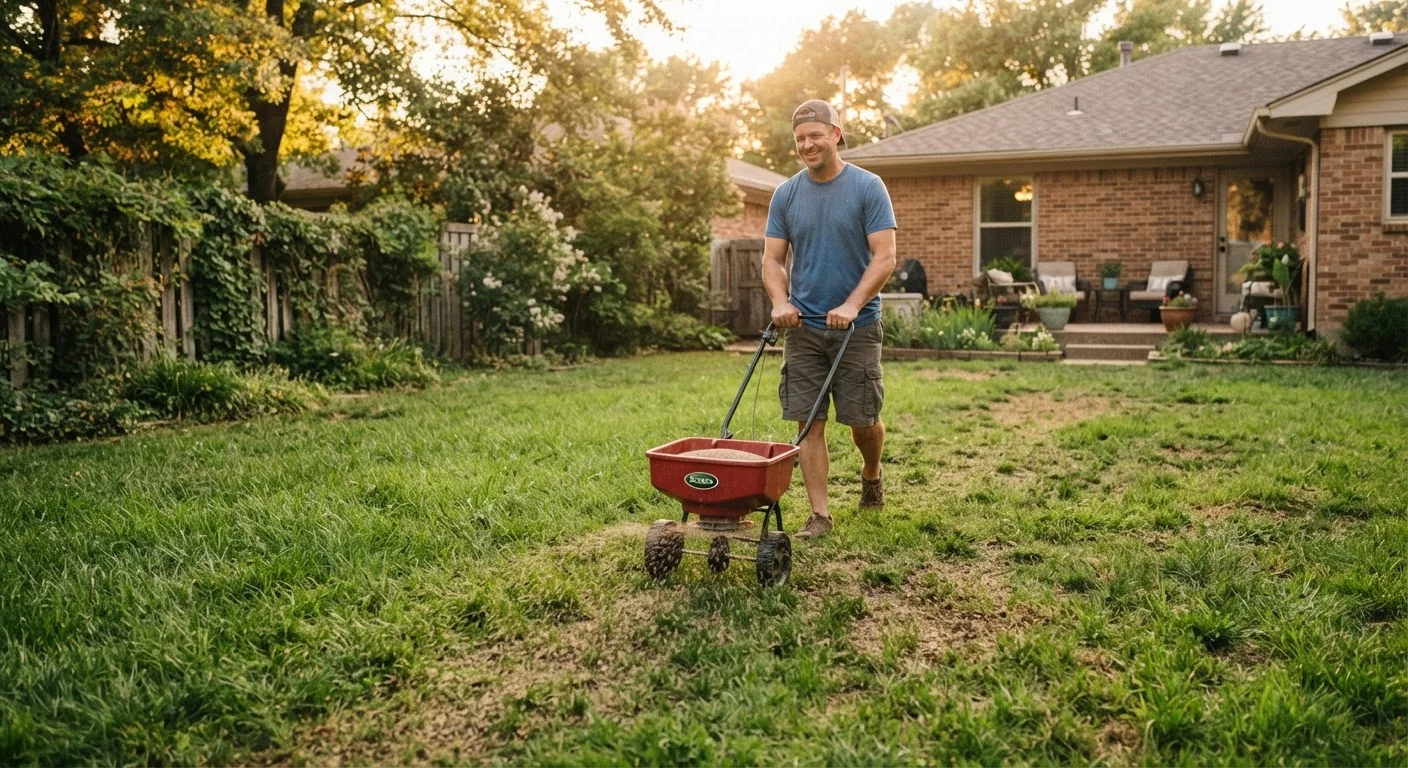
Spread the seed
Load your broadcast or drop spreader with the selected grass seed and calibrate it to the overseeding rate listed on the seed packaging - typically half the new-lawn seeding rate. Apply seed in two perpendicular passes (north-to-south, then east-to-west) for even coverage. Pay extra attention to the thinnest areas and edges. After spreading, use a garden rake to lightly work the seed into the top quarter-inch of soil, especially in aeration holes.
Water and protect the seed
Water immediately after seeding - gently enough not to displace seed, using a sprinkler or misting setting. From this point, keep the soil consistently moist until germination is visible and seedlings are at least an inch tall. This typically means two to three brief waterings per day depending on temperature, wind, and sun exposure. Mark the area with temporary flags or string to discourage foot traffic.
Caring for Your Lawn After Overseeding
New seedlings are fragile. For the first two to three weeks, water lightly and frequently - two to three short sessions per day is often more effective than one deep soak - keeping the top half-inch of soil consistently moist. Once seedlings reach about an inch tall, gradually transition to deeper, less frequent watering to encourage roots to grow downward.
Hold off on mowing until the new grass reaches the same height as your target mowing height (typically 3 to 3.5 inches for cool-season types). Use a sharp blade and never remove more than one-third of the grass height in a single pass. Restrict foot traffic and play on the area for at least four weeks. Avoid applying broadleaf herbicides until the new grass has been mowed at least three times, as young seedlings are highly sensitive to herbicide contact.
Overseeding is just one part of a broader yard care strategy. As your lawn fills in, consider how surrounding plantings contribute to the overall look - our guide on perennials vs. annuals can help you plan borders and beds that complement a healthy lawn year-round.
Don't Apply Crabgrass Preventer After Overseeding
Pre-emergent herbicides (often used to prevent crabgrass) work by inhibiting seed germination - which means they'll prevent your new grass seed from germinating too. Skip pre-emergent applications for the entire season in which you overseed, and wait until the new grass has gone through at least one full mowing cycle before considering any post-emergent herbicide use.