

Key Takeaways
- Drought stress and overwatering produce similar symptoms - correct diagnosis prevents making damage worse.
- Watering deeply and infrequently encourages deep root growth that better withstands dry spells.
- Raising mowing height during summer reduces soil moisture loss and protects grass crowns.
- Mulching garden beds can cut surface moisture evaporation significantly, protecting plant roots.
- Avoid fertilizing stressed lawns in peak heat - it draws energy grass cannot spare.
- Cool-season grasses may go dormant in summer; dormancy is a survival strategy, not death.
Read the Signs Before You React
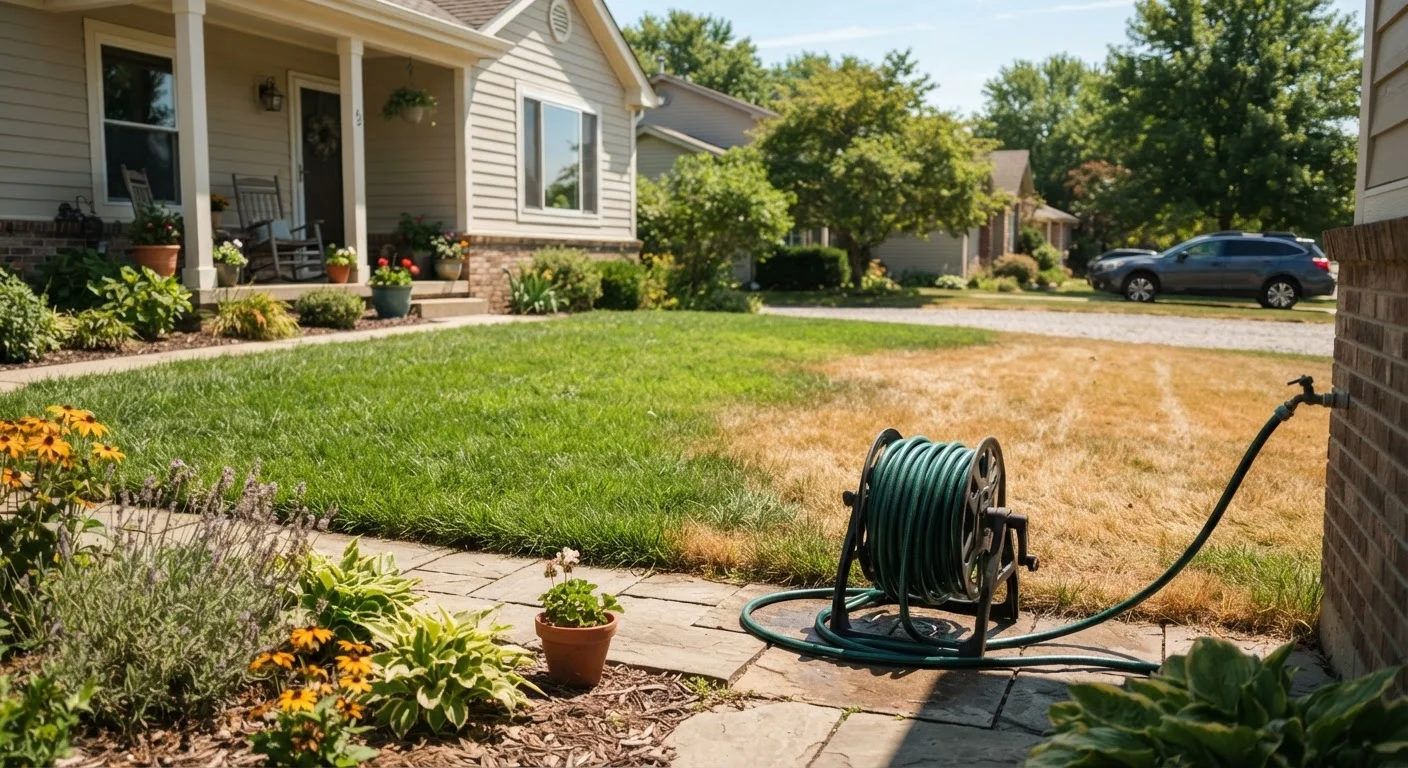
One of the most common - and damaging - mistakes homeowners make during summer is misreading what their lawn is telling them. Drought stress and overwatering can look nearly identical on the surface: yellowing blades, wilting, and thinning patches. Acting on the wrong diagnosis compounds the problem.
Before reaching for the hose or shutting it off entirely, do a simple screwdriver test: push a standard screwdriver 6 inches into the soil. If it slides in easily, moisture is adequate. If it resists, the soil is dry and irrigation is warranted. For grass specifically, step on a section and watch - if the blades spring back within a few minutes, the lawn is adequately hydrated. If your footprints remain visible, the grass is thirsty.
Patchy or uneven distress patterns across a lawn aren't always drought. Soil compaction, pH issues, and drainage problems can mimic heat damage and require entirely different responses.
Water Smarter, Not More
The goal in summer isn't to keep the top inch of soil perpetually damp - it's to push moisture deep enough that roots follow it downward. Shallow, frequent watering trains grass roots to stay near the surface, where they're most vulnerable to heat. Deep, infrequent watering - roughly one inch per week, applied in one or two sessions - encourages roots to grow deeper into cooler, more stable soil layers.
Timing matters as much as volume. Early morning is the most efficient window: water pressure is typically higher, temperatures are low, and foliage dries before evening, reducing disease pressure. Avoid midday watering, which loses significant volume to evaporation before it reaches roots. For a fuller breakdown of what the evidence shows about common watering habits, see our guide to garden watering myths.
Mow High, Mulch Well, and Skip the Fertilizer
Two of the most impactful summer lawn decisions happen with a mower and a bag of mulch. Raising your mowing height by one notch - most cool-season grasses do best at 3.5 to 4 inches in summer - shades the soil surface, slows moisture loss, and protects the grass crown from scorching. Never remove more than one-third of the blade in a single mowing; doing so under heat stress can push already-struggling turf past a recovery threshold.
In garden beds, a 2-3 inch layer of organic mulch (shredded bark, wood chips, or straw) functions like a thermal blanket, moderating soil temperature and meaningfully reducing surface evaporation. Apply mulch away from plant stems to avoid rot.
Hold off on fertilizing any lawn that shows signs of heat stress. Nitrogen-rich fertilizer pushes new growth that requires more water and energy than a struggling lawn can provide. Save fertilization for when temperatures reliably drop - typically early fall for cool-season grasses.
Understand Dormancy and Plan for Recovery
Cool-season grasses like Kentucky bluegrass and tall fescue have a built-in survival mechanism: summer dormancy. When temperatures are sustained above roughly 90°F and moisture is limited, these grasses go brown and pause active growth. This is not death - it's a strategic pause. Most healthy lawns can remain dormant for four to six weeks without permanent loss, provided they receive at least a half-inch of water every two to three weeks to keep the crown alive.
The recovery window comes in fall. If your lawn thinned through summer, overseeding in early autumn is typically far more effective than trying to force growth during peak heat. Warm-season grasses like Bermuda and zoysia, by contrast, actively thrive in summer heat - their dormancy comes in winter instead.
Before next summer, consider whether compacted soil is limiting your lawn's ability to absorb and hold water. Aeration in spring or fall can significantly improve moisture penetration, giving roots better access to whatever water does fall. And once the heat breaks, a thorough fall prep routine will position your lawn to enter next summer from a stronger baseline.