

Key Takeaways
- Three main filters - engine air, cabin air, and fuel - protect different systems in your vehicle.
- A clogged engine air filter can measurably reduce fuel economy and engine responsiveness.
- Cabin air filters affect the air quality you breathe inside the vehicle, not engine performance.
- Fuel filters are often overlooked but protect fuel injectors from damaging particulates.
- Replacement intervals vary by vehicle, driving conditions, and filter type - check your owner's manual.
- Filter replacement is one of the most cost-effective routine maintenance tasks available.
Vehicle Filters
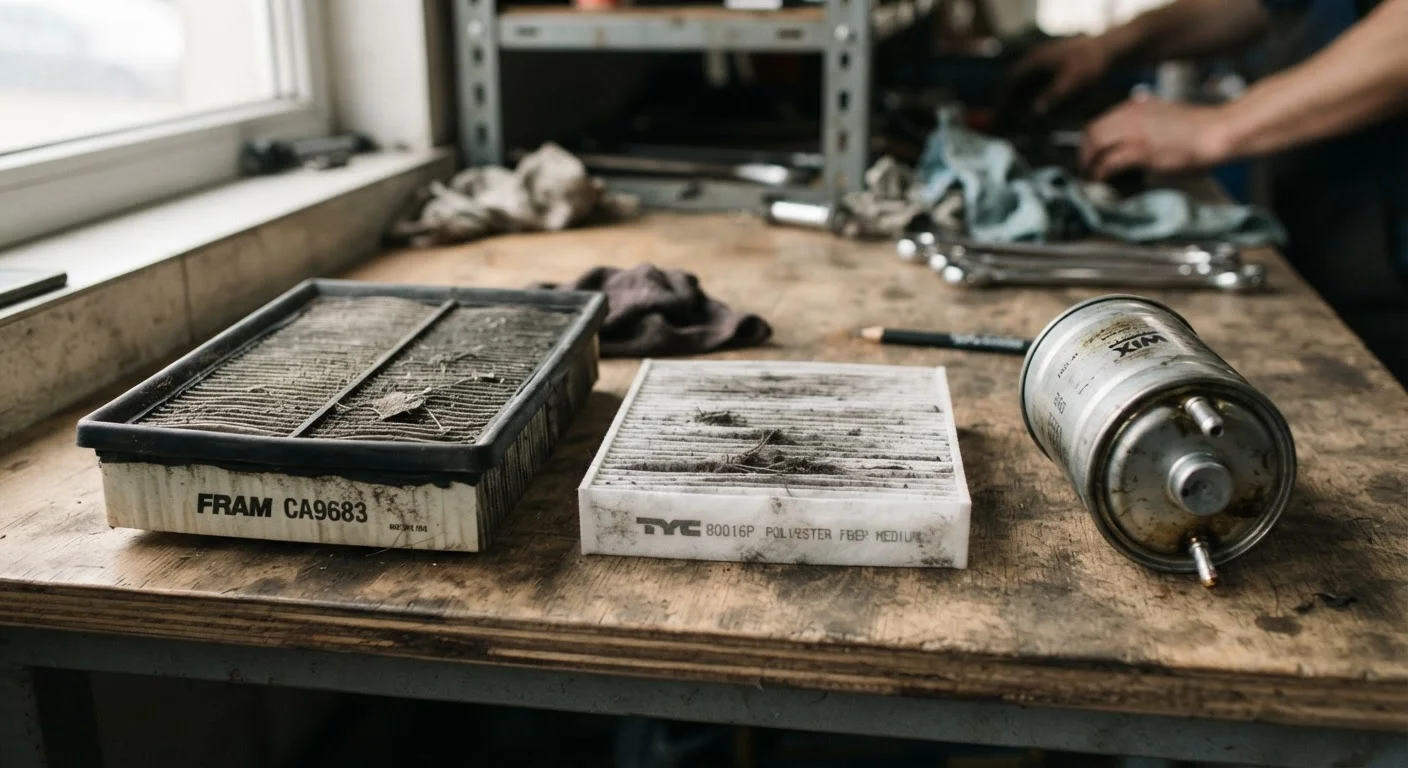
Your car uses a set of filters - typically an engine air filter, a cabin air filter, and a fuel filter - to block contaminants from reaching critical systems. Each one traps particles, debris, or impurities that would otherwise cause damage or reduce efficiency. Over time, these filters become clogged and need to be replaced to keep your engine and interior working properly.
Filter media is typically made from pleated paper, foam, or synthetic fibers; porosity and surface area determine how effectively a filter captures particles without restricting flow.
What Each Filter Does - and Why It Matters
Most drivers think about oil changes and tire rotations. Filters rarely come up until something goes wrong - and by then, the cost of neglect has already added up. Understanding what each filter actually does makes it much easier to take the right action at the right time.
Engine air filter: Your engine burns a mixture of fuel and air. Before that air enters the combustion chamber, it passes through the engine air filter, which captures dust, pollen, insects, and road debris. A clean filter allows unrestricted airflow; a clogged one chokes the engine, reducing power output and fuel efficiency.
Cabin air filter: Separate from engine airflow entirely, the cabin air filter sits in the HVAC system and cleans the air that enters the passenger compartment. It captures pollen, dust, exhaust particulates, and mold spores. If you or anyone in your vehicle has allergies or respiratory sensitivities, this filter's condition matters more than most people realize.
Fuel filter: Fuel from the tank passes through the fuel filter before reaching the fuel injectors or carburetor. Its job is to catch rust particles, sediment, and other contaminants that can cause injector wear or blockages. On older vehicles, the fuel filter is an external inline component; on many newer vehicles, it is integrated into the fuel pump assembly inside the tank.
Cabin Filter vs. Engine Filter: Not Interchangeable
These two filters serve entirely different purposes and are located in separate parts of the vehicle. The engine air filter is under the hood; the cabin air filter is typically behind the glove box or under the dashboard. Replacing one does not affect the other - both need independent attention on their own service schedules.
How Filters Degrade Over Time
Filters don't fail suddenly - they degrade gradually as captured particles accumulate on the filter media. The rate of degradation depends heavily on your driving environment. A driver commuting on a clean highway will see slower filter wear than someone regularly driving on unpaved roads, near construction zones, or in areas with high pollen counts.
For engine air filters, a common indicator of serious clogging is a noticeable drop in acceleration response or a decrease in fuel economy - though these symptoms can have other causes too, so a visual inspection is always the better first step. A filter that looks gray, brown, or visibly packed with debris is due for replacement regardless of mileage.
Cabin air filters often signal their degradation through reduced airflow from vents, musty or stale odors in the cabin, or increased dust on interior surfaces. Fuel filter degradation is subtler - symptoms such as engine hesitation under load, difficulty starting, or inconsistent idle can all point to restricted fuel flow.
Up to 10%
Potential fuel economy loss from a clogged air filter
The U.S. Department of Energy has noted that a severely restricted engine air filter can reduce fuel efficiency, particularly in older carbureted vehicles.
1 in 4
Vehicles with a cabin air filter needing replacement
Industry service data suggests a significant portion of vehicles inspected have cabin filters past their recommended service life.
$10-$30
Typical cost of a cabin or engine air filter
Compared to injector cleaning or replacement costs, which can run into hundreds of dollars, filter maintenance offers strong preventive value.
Replacement Intervals and Real-World Guidance
General guidelines exist, but your owner's manual is the authoritative source for your specific vehicle. That said, common reference intervals give useful context:
- Engine air filter: Roughly every 15,000-30,000 miles under normal conditions; inspect annually regardless
- Cabin air filter: Typically every 15,000-25,000 miles, or once a year for average drivers
- Fuel filter (external): Often every 20,000-40,000 miles; integrated tank-mounted filters may last longer but should be inspected per manufacturer guidance
Severe driving conditions - dusty environments, heavy stop-and-go traffic, or extreme temperatures - can cut these intervals significantly. If you're unsure whether your filters are due, a visual inspection of the air filter is easy and free. A mechanic can assess the fuel filter during routine service.
Pairing filter maintenance with other routine tasks makes it easier to stay on schedule. Understanding oil change intervals provides a useful parallel - just as oil degrades in ways you can't always see, so do filters. Similarly, our overview of fluids under the hood covers other systems where invisible degradation quietly accumulates.
Use Your Owner's Manual, Not Guesswork
Filter replacement intervals vary significantly between vehicle makes, models, and model years. Your owner's manual lists manufacturer-specified intervals for each filter type. When in doubt, a qualified mechanic can visually assess filter condition during any routine service visit - no appointment just for filters is necessary.
The Real Cost of Ignoring Filters
Filter replacement is among the least expensive routine maintenance tasks - typically ranging from a modest parts cost to a low labor charge when done during scheduled service. The downstream costs of neglect, however, are substantially higher.
A severely restricted engine air filter can reduce fuel economy by a meaningful margin over time, quietly increasing what you pay at the pump. A clogged fuel filter can damage fuel injectors, which are precision components with significant replacement costs. A neglected cabin filter may contribute to HVAC blower motor strain, adding wear to a component that costs considerably more to replace than a filter cartridge.
The pattern mirrors a broader truth about vehicle maintenance: small, inexpensive interventions prevent large, expensive repairs. Consistent maintenance habits consistently rank among the most cost-effective ways to extend vehicle life. And if you've heard that some of these tasks are unnecessary upsells, our look at common maintenance myths separates fact from fiction.