

Key Takeaways
- Batch cooking works best when scaled to your actual schedule, not an idealized one.
- Prepping components rather than full meals gives you more flexibility throughout the week.
- Small, consistent prep sessions prevent the Sunday overwhelm that causes most people to quit.
- A well-stocked pantry multiplies the usefulness of whatever you prep.
- Rotating a short list of reliable recipes reduces decision fatigue and food waste.
Why Meal Prep Fails - and How to Set Realistic Expectations
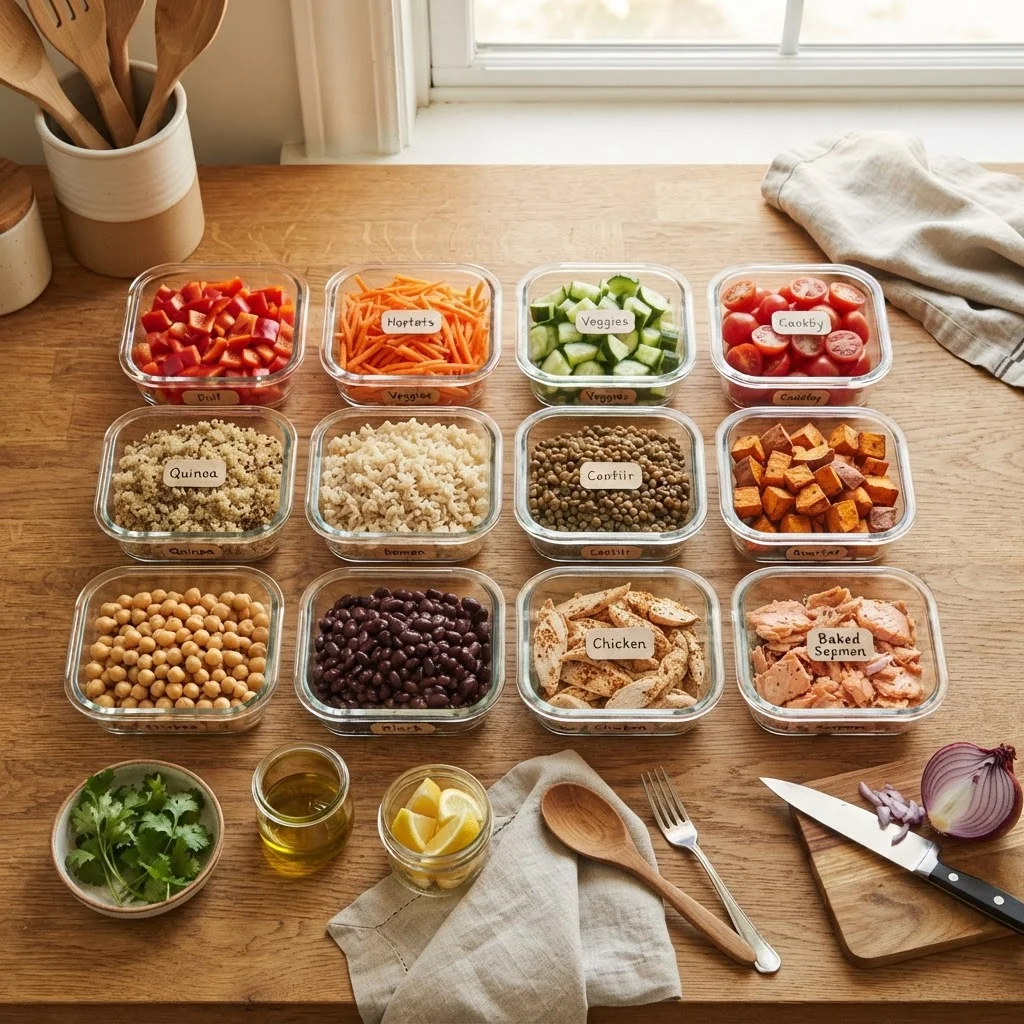
Most people abandon meal prep not because they lack discipline, but because they start with an unrealistic model. The social-media version of batch cooking - twelve matching containers, four proteins, and a color-coded chart - works for some people. For most, it's a setup for a stressful Sunday followed by a week of eating the same tired dish until Friday, when everything gets tossed.
The goal of batch cooking should be reducing weeknight friction, not achieving perfection. That reframe changes everything: instead of cooking complete meals, you're building flexible components that combine easily. Instead of a four-hour marathon session, you're doing two or three shorter efforts throughout the week.
Cooking from scratch every night has genuine merits, but it's not the only path to eating well at home. Batch cooking fills the gap - giving you the benefits of home cooking without requiring a fresh effort every evening.
The Core Habits That Make Batch Cooking Sustainable
Sustainable meal prep comes down to a handful of repeatable practices. None of them are complicated, but they do require intentionality - especially in the first few weeks while new habits form.
One of the most underrated strategies is aligning your prep with your grocery run. The hour or two right after you unpack groceries is often the best time to wash greens, cook a pot of grains, or roast a sheet pan of vegetables - everything is already out, and momentum is on your side.
A well-stocked pantry also dramatically extends what you can do with prepped components. When your shelves include reliable staples like canned legumes, good vinegars, and versatile spices, even a modest prep session can yield varied meals all week.
Working Smarter: Components Over Complete Meals
The shift from prepping full meals to prepping components is the single biggest adjustment that keeps batch cooking from feeling like a chore. A pot of cooked farro becomes a grain bowl base on Monday, a warm salad topping on Wednesday, and a soup add-in on Friday. Roasted sweet potatoes work as a side dish, a taco filling, or blended into a quick sauce.
Think in categories when you plan: one cooked grain or starchy base, one or two roasted or blanched vegetables, one or two proteins or protein-adjacent ingredients (hard-boiled eggs, cooked beans, baked tofu), and a sauce or dressing that can tie everything together in different ways. That framework - rather than a rigid recipe list - gives you structure without locking you into repetition.
Stretching ingredients across multiple meals is a skill that pairs naturally with this approach. When you buy with components in mind, you waste less and spend less per meal over time.
For a complementary approach to managing what you already have at home, a weekly pantry audit can help you spot gaps and prevent duplicate purchases before you even start your prep.
Food Safety and Storage Timelines
Most cooked grains, roasted vegetables, and proteins keep well in the refrigerator for three to four days when stored in airtight containers. Cooked legumes and soups typically last four to five days. When in doubt, label containers with the date you cooked the food. If something smells off or has been stored longer than recommended, discard it - food safety guidelines from the USDA are a reliable reference for safe storage times.