

Key Takeaways
- Salt enhances flavor by suppressing bitterness and amplifying every other taste.
- Fat carries fat-soluble flavor compounds and creates satisfying texture and mouthfeel.
- Acid brightens dishes and provides contrast that prevents richness from feeling heavy.
- Heat determines texture, color, and safety - both too little and too much can ruin a dish.
- Using all four elements in balance is what separates reliably great cooking from guesswork.
- These principles apply across cuisines, so mastering them makes you more versatile in the kitchen.
Salt, Fat, Acid, Heat
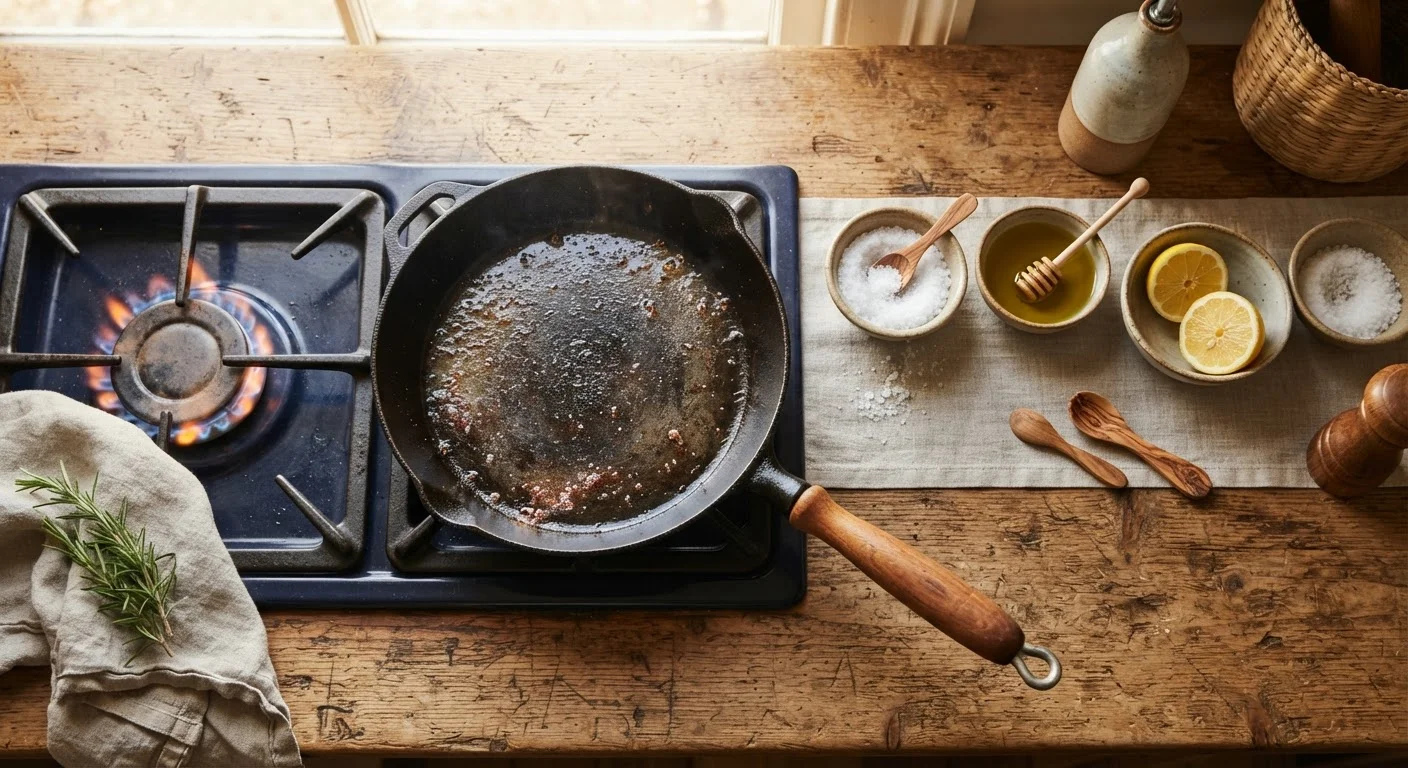
Salt, fat, acid, and heat are the four foundational elements that culinary educators identify as the building blocks of delicious cooking. Together, they control flavor, texture, richness, and balance in virtually every dish. Understanding how each one works - and how they interact - gives home cooks a flexible, intuitive framework instead of rigid recipes.
This framework is closely associated with the pedagogical approach popularized in culinary education; each element corresponds to specific chemical and physical processes that affect how ingredients behave and how flavors register on the palate.
Why Four Elements, Not a Thousand Rules
Most home cooks learn to cook by following recipes step by step. That works - until the recipe doesn't quite match what's in your fridge, or the dish comes out tasting somehow flat despite following every instruction. The gap between following a recipe and actually understanding cooking is exactly where salt, fat, acid, and heat come in.
Rather than memorizing thousands of individual techniques, these four elements give you a lens for understanding why cooking works. Once you can diagnose a dish using these four forces, you're no longer dependent on a recipe to rescue you. You become the one doing the rescuing.
This is part of a broader foundation of kitchen confidence covered in our end-to-end guide for home cooks. Think of salt, fat, acid, and heat as the engine under the hood.
~80%
Of taste perception linked to aroma
Research in sensory science consistently finds that the majority of what we perceive as 'taste' is actually smell - which is why fat's role in carrying volatile aromatic compounds is so significant to flavor.
140°F-165°F
Safe internal temp range for common proteins
The USDA establishes minimum internal temperatures for food safety - a reminder that heat is as much about safety as it is about flavor and texture.
310°F
Temperature at which Maillard reaction accelerates
Food scientists note that the Maillard reaction - responsible for the browned, complex flavors in seared and roasted foods - becomes significant above roughly 280-310°F surface temperature.
Salt: The Element That Makes Food Taste Like Itself
Salt is not just about saltiness. At the right level, it suppresses bitterness, draws out sweetness, and makes aromas more expressive - essentially amplifying everything already present in an ingredient. This is why under-salted food tastes flat even when the recipe is otherwise correct.
The key is learning to season in layers rather than dumping salt in at the end. Salting pasta water, seasoning proteins before they hit the pan, and tasting as you go are all ways of building flavor from the ground up. Our guide to seasoning at every stage goes deeper on this technique.
Different types of salt - table, kosher, flaky sea salt - vary in density and texture, which affects how much you use by volume. Most professional cooks prefer kosher salt for everyday cooking because its coarser crystals are easier to control with your fingers.
Fat: Richness, Texture, and the Carrier of Flavor
Fat does three things no other element can: it carries fat-soluble flavor compounds to your palate, creates satisfying mouthfeel, and facilitates browning through high-heat cooking. A dish with no fat tends to taste thin, no matter how well it's seasoned.
The type of fat matters too. Butter adds dairy richness and nuttiness when browned. Olive oil brings grassy, fruity notes. Coconut oil imparts a subtle sweetness. Rendered animal fats like lard or duck fat carry deep savory character. Choosing the right fat for the dish is part of developing your culinary instincts.
Fat also moderates heat. When you sauté vegetables in oil, the fat distributes heat evenly across the surface and helps achieve the browning and caramelization that make cooked food taste more complex than raw. See our explainer on sautéing, stir-frying, and pan-frying for how fat behaves differently across those methods.
Acid: The Brightening Force That Balances Everything
Acid is the most underused tool in the home cook's arsenal. A squeeze of lemon, a splash of vinegar, a spoonful of yogurt - these additions can transform a rich, heavy dish into something lively and complete. Acid works by providing contrast: it makes fat feel less cloying, lifts muted flavors, and gives your palate a point of brightness to hold onto.
Common culinary acids include citrus juices, vinegars, wine, tomatoes, buttermilk, and fermented ingredients like yogurt or miso. Each brings its own flavor alongside the tartness. Red wine vinegar tastes different from rice wine vinegar; lemon juice reads differently than lime. Developing familiarity with these distinctions gives you more precise control.
Timing matters too. Some acids - like tomatoes cooked into a sauce - mellow and sweeten over heat. Others, like fresh citrus, are best added at the very end to preserve their brightness. Knowing when to add acid is as important as knowing how much to use.
The Last-Minute Acid Test
Before serving any savory dish, taste it and ask: does it need brightness? If the answer is yes, reach for a wedge of lemon or a small splash of vinegar. Add it off the heat, stir, taste again, and serve immediately. This single habit - finishing with acid - is one of the fastest ways to elevate home-cooked food.
Heat: The Element That Changes Everything Else
Heat is transformation. It's what turns a raw egg into a cooked one, what produces the mahogany crust on a seared steak, and what converts the harsh bite of raw garlic into mellow sweetness. Two critical reactions - the Maillard reaction (browning of proteins and sugars) and caramelization (browning of sugars alone) - are responsible for much of what we find delicious in cooked food, and both require heat applied at the right level.
Too little heat produces pale, steamed-tasting results even in a pan. Too much heat burns sugars into bitterness and dries out proteins. The skill is learning to read heat visually and aurally: the sound of a sizzle, the color of browning butter, the way a vegetable's surface changes from shiny to matte. These are the signals experienced cooks rely on.
Heat also intersects with food safety. Understanding doneness - especially with proteins - matters as much for safety as for quality. Our reference guide to internal cooking temperatures is a practical companion to this principle.
The interplay of all four elements is where cooking becomes intuitive. Once you can taste a dish and identify which force is out of balance, you have the confidence to fix it - and that's the real skill that separates a competent cook from a great one. For the related skill of building deep flavor before you even reach these four forces, explore our piece on how aromatics shape a dish's foundation.