

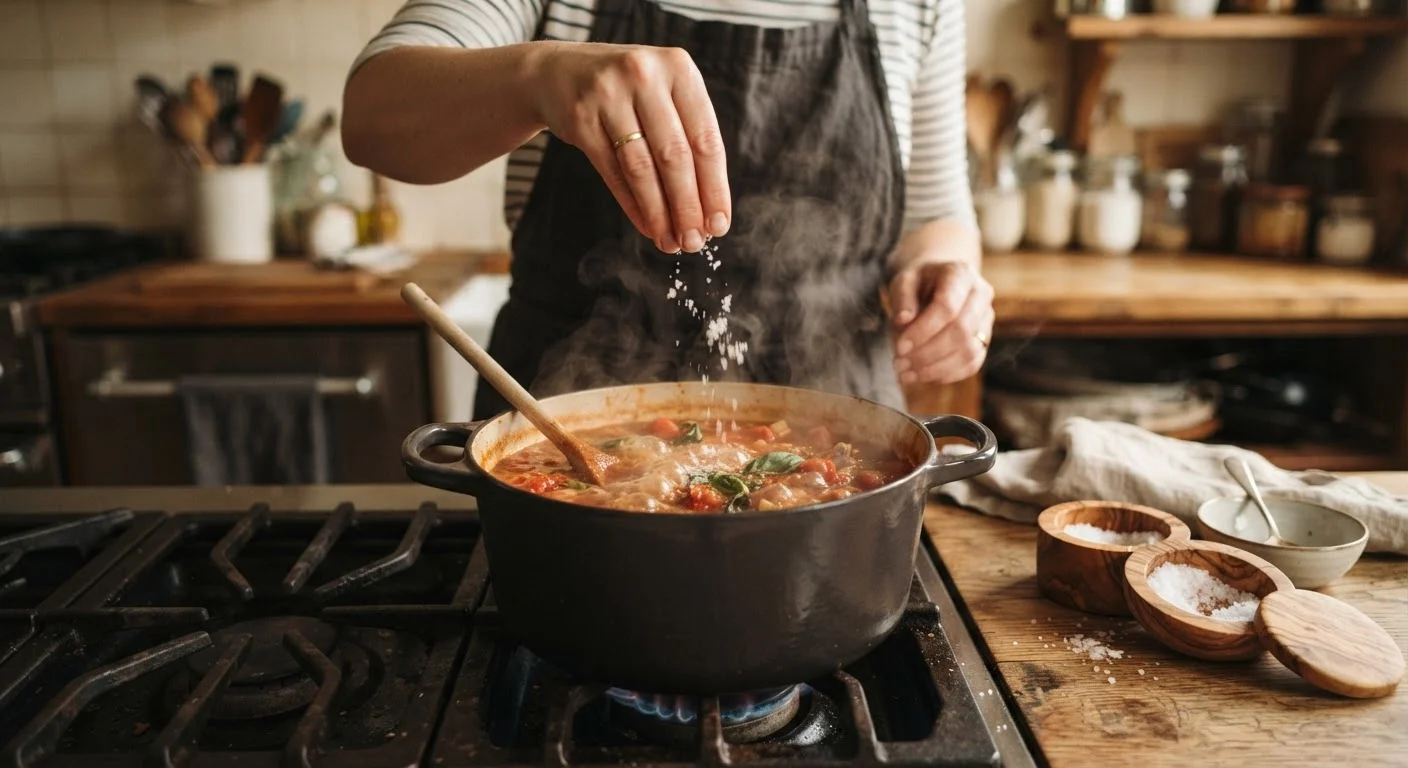
Key Takeaways
- Seasoning only at the end results in flat, surface-level flavor that salt cannot fix.
- Salt added at different stages penetrates ingredients and builds layered depth.
- Tasting as you cook - not just at the end - is a foundational professional kitchen habit.
- Acids like lemon juice and vinegar can brighten a dish at the finish without adding sodium.
- Over-salting is recoverable; under-seasoning throughout is the more common home-cook mistake.
What you will need
Why Timing Your Seasoning Matters
Most home cooks were taught to taste food at the end and adjust salt before serving. It's a reasonable instinct - but it's only half the picture. When salt is added only at the finish, it sits on the surface of the food rather than integrating into it. The result is a dish that tastes either under-seasoned or harshly salty, with no middle ground.
Professional cooks think of seasoning as a process that runs in parallel with cooking itself. Salt draws moisture out of vegetables, speeds up the breakdown of proteins, and helps flavors meld during long-cooked dishes. Used at the right moments, it doesn't just make food taste "salty" - it makes every ingredient taste more like itself. This same principle applies to acids (lemon, vinegar), heat, and fat, which you can explore further in our guide to the four forces behind great home cooking.
The goal of this guide is to make stage-by-stage seasoning a natural part of how you cook - not a complicated technique, but a simple shift in awareness.
Keep a Tasting Spoon Within Reach
Place a clean spoon right next to the stove before you start cooking. Professional cooks taste constantly - not just at the end. Making tasting physically easy removes the barrier to doing it habitually, and it's the single fastest way to improve your cooking.
What You'll Need Before You Start
No special equipment is required. The most important tools are already in your kitchen.
What you will need
Kosher salt
The standard choice for cooking - coarser grains make it easier to control and pinch precisely.
Small tasting spoon
Used to taste the dish at each stage without contaminating the pot.
Acid (lemon juice or vinegar)
Used at the finishing stage to brighten flavor without adding sodium.
Small pinch bowl
Holding measured salt near the stove so you can season without fumbling mid-cook.
Step-by-Step: Seasoning From Start to Finish
Follow these steps the next time you cook any savory dish - a soup, a braise, a sauté, or roasted vegetables. The specific amounts will vary by recipe, but the sequence applies universally. For more on building a solid flavor foundation before the first step, see our piece on how aromatics shape the taste of almost every dish.
Season your aromatics at the start
As soon as your onions, garlic, celery, or other aromatics hit the pan, add a small pinch of salt. This isn't about making the aromatics salty - it draws out moisture, softens them faster, and begins extracting their flavor into whatever fat or liquid you're cooking with. A modest pinch is all you need at this stage.
Season proteins before they hit the heat
If your dish includes meat, poultry, fish, or tofu, season it directly - not the pan, not the sauce. Pat the protein dry with paper towels, then apply salt evenly on all surfaces. For thicker cuts, season at least 15 minutes before cooking to allow the salt to begin penetrating the surface. Thinner proteins can go straight to the pan after seasoning.
Season cooking liquid early
If you're making a soup, stew, braise, or cooking pasta, season the liquid - water, stock, or broth - before adding other ingredients. An under-seasoned base cannot be corrected simply by salting at the end; the flavors won't have had time to integrate. Taste the liquid and aim for something pleasantly savory, not aggressively salty.
Taste and adjust in the middle of cooking
About halfway through the cook time, stop and taste. Use a clean spoon and consider: Does it taste flat? Does it taste harsh? Is anything missing? A small addition of salt mid-cook gives it time to dissolve and integrate into the dish rather than sitting on top. This is the step most home cooks skip - and it's the one that makes the biggest difference.
Finish with a final seasoning check - and consider acid
Before serving, taste one final time. If the dish still tastes flat despite adequate salt, try acid before adding more sodium. A few drops of lemon juice or a small splash of vinegar can sharpen and lift all the flavors already present. Add your finishing touch - flaky salt, fresh herbs, or a drizzle of good oil - and serve immediately.
Troubleshooting Common Seasoning Mistakes
Even experienced cooks run into seasoning problems. Here's how to handle the most common ones:
- Dish tastes flat despite added salt: Try acid first. A squeeze of lemon juice or a splash of vinegar can lift a dish dramatically without adding more sodium. Salt and acid work together - sometimes what reads as "needs more salt" is actually a need for brightness.
- Dish is too salty: Add bulk - unsalted starch (potato, pasta, rice), more liquid, or a dairy element like unsalted cream or yogurt. Dilution is your most reliable fix.
- Vegetables taste bland after roasting: Salt them before they go in the oven, not after. Salt draws surface moisture away, which promotes browning and concentrates flavor.
- Protein tastes flat even when the sauce is well-seasoned: The protein itself needed to be seasoned before cooking. A sauce cannot rescue an unseasoned piece of chicken or fish - season the protein directly and generously before it hits the heat.
This approach to building flavor at every stage connects naturally to understanding your core cooking methods. Our article on the real difference between sautéing, stir-frying, and pan-frying explains how each technique affects how seasoning should be timed.