

Key Takeaways
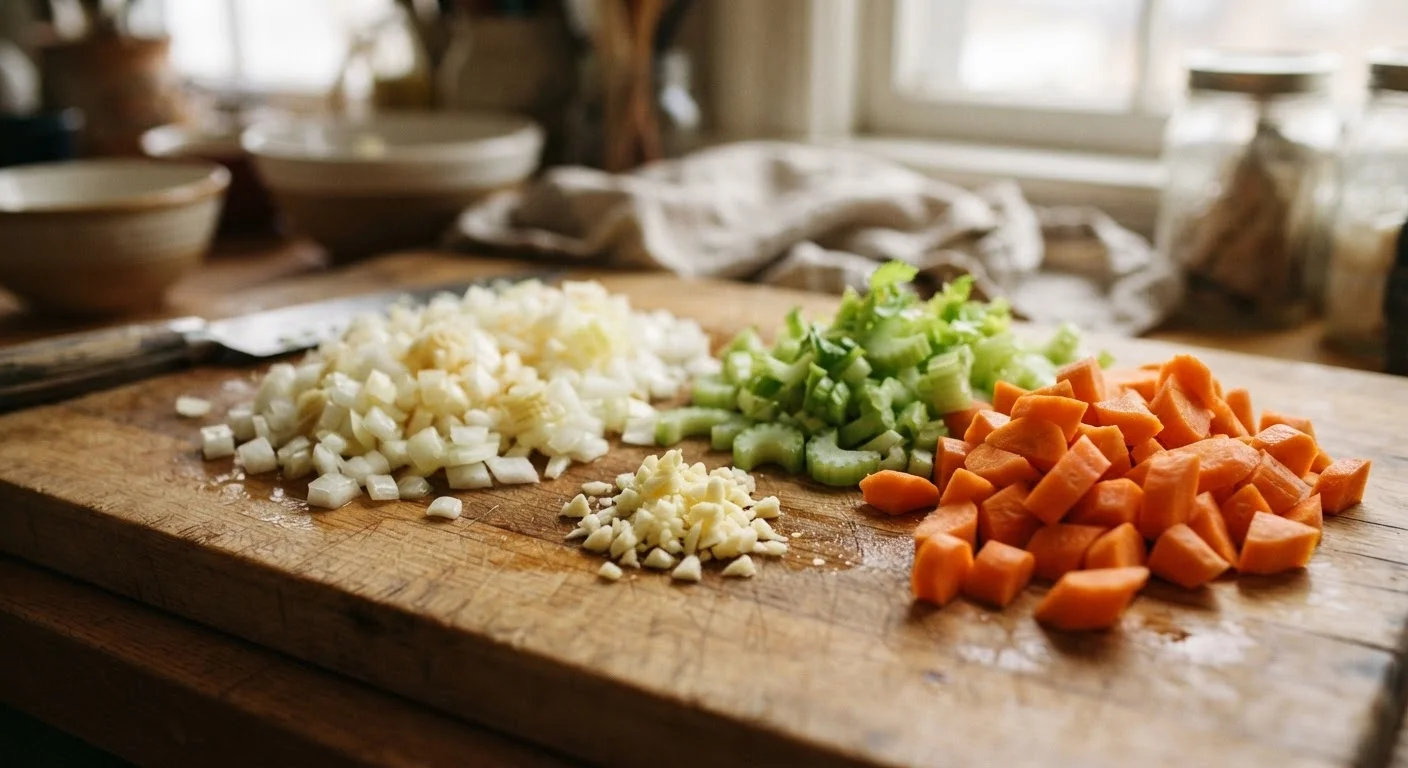
- Aromatics like onion, garlic, and celery form the flavor base of dishes across nearly every cuisine.
- Cooking aromatics in fat before adding other ingredients unlocks their full flavor potential.
- Different cuisines use distinct aromatic combinations as their signature starting point.
- The order and heat level at which you cook aromatics meaningfully changes the final taste.
- Skipping or rushing aromatics is one of the most common reasons home-cooked food tastes flat.
Aromatics
Aromatics are vegetables, herbs, and other ingredients that release strong, complex fragrances when heated in fat or liquid. They are used at the beginning of cooking to create a flavor foundation that permeates the entire dish. Common examples include onions, garlic, celery, carrots, ginger, leeks, and shallots.
The flavor transformation in aromatics is driven by the Maillard reaction and caramelization, which convert natural sugars and amino acids into hundreds of new flavor compounds when heat is applied.
Why Every Great Dish Starts Before the Main Ingredient
If you have ever wondered why a dish made at a restaurant tastes more layered and complex than the same recipe attempted at home, aromatics are often part of the answer. Most cooks add their protein or primary vegetable to the pan right away - but professional and experienced home cooks almost always start with a flavor base first.
Aromatics are the ingredients you cook before the star of the dish. They dissolve into the background, but their contribution is enormous. They sweeten, deepen, and round out the overall flavor in a way that no amount of salt or seasoning added at the end can fully replicate. Understanding how to use them is one of the most transferable skills in cooking. It applies to soups, stews, braises, pasta sauces, grain dishes, and even many stir-fries.
This is part of a broader principle explored in our end-to-end guide to building real kitchen confidence: great cooking is built on technique, not just ingredients.
The World's Most Common Aromatic Combinations
One of the most revealing things about global cuisine is that nearly every food culture has developed its own aromatic base - a combination of vegetables cooked in fat that signals the start of countless dishes.
3
Vegetables in the Cajun holy trinity
Onion, celery, and green bell pepper form the aromatic base of nearly all classic Cajun and Creole dishes, a tradition with roots in Louisiana's multicultural culinary history.
5-8 min
Time needed to properly sweat onions
Culinary educators consistently note that most home cooks underestimate the time needed for aromatics to soften and sweeten before adding other ingredients.
100+
Flavor compounds released when onions are cooked
Food science research shows that cooking alliums like onions and garlic generates a complex array of volatile compounds responsible for characteristic savory aromas.
- French mirepoix: Two parts onion, one part celery, one part carrot. The backbone of stocks, braises, and classical sauces.
- Italian soffritto: Similar ingredients to mirepoix but cooked longer, often with tomato paste, creating a darker, more concentrated base.
- Cajun and Creole holy trinity: Onion, celery, and green bell pepper. The foundation of gumbo, étouffée, and red beans and rice. For more on this, see our piece on staple ingredients that define Southern cooking.
- Spanish sofrito: Typically onion, garlic, and tomato, sometimes with peppers. Used as a base for rice dishes, stews, and seafood.
- Chinese aromatics: Ginger, garlic, and scallion - often bloomed in oil to begin stir-fries and braises.
The pattern is consistent across cultures: fat, heat, and a combination of pungent vegetables, cooked until softened and fragrant.
How to Actually Cook Aromatics Correctly
The most important step is cooking aromatics in fat over the right heat. This is not a passive step - it requires attention and a little patience.
Choose your fat intentionally
Butter adds richness and encourages mild browning. Olive oil contributes its own flavor and works well for Mediterranean dishes. Neutral oils let the aromatics speak for themselves. The fat you choose should match the cuisine and dish you are making.
Control your heat
For a gentle, sweet flavor, cook aromatics over medium-low heat until they are translucent and soft - about 5 to 8 minutes for onions. This is called sweating. For deeper, nuttier flavor, increase the heat slightly and allow them to brown at the edges. Avoid high heat at the start, which can burn garlic and turn onions bitter before they have time to sweeten.
Add ingredients in stages
Garlic cooks much faster than onion. Celery cooks faster than carrot. Add the slower-cooking aromatics first, then layer in the quicker ones. Garlic typically goes in during the last minute or two before adding liquids or other ingredients.
A Simple Test for Properly Cooked Aromatics
When your onions are ready, they should be translucent, noticeably reduced in volume, and smell sweet and savory rather than sharp or pungent. Taste a small piece - the raw bite should be gone. If it still stings, give it another two minutes. This small investment in time pays off in every spoonful of the finished dish.
Once your aromatics are properly cooked, you have built the foundation. Every liquid, protein, or vegetable you add afterward will be seasoned and flavored by that base. This connects directly to the principle of seasoning a dish at every stage, not just at the end.
Common Mistakes That Undermine Your Flavor Base
Even experienced home cooks fall into a few predictable habits that reduce the impact of aromatics.
“The foundation of good cooking is a well-built flavor base. Without it, you are seasoning the surface of a dish rather than its soul.”
— Jacques Pépin, Acclaimed French-American chef and culinary educator
Rushing the process is the most frequent mistake. Aromatics need time in the pan to release their moisture and develop flavor. If you add your tomatoes or broth after only 60 seconds, the onions are still sharp and raw-tasting.
Overcrowding the pan causes aromatics to steam rather than sauté. Steam keeps them wet and prevents the browning reactions that create deeper flavor. Use a pan large enough to spread them in a single layer.
Burning the garlic is easy to do and difficult to fix. Burnt garlic turns acrid and bitter, and that bitterness spreads through the entire dish. When in doubt, add garlic later in the process, after the onions are already softened.
Understanding aromatics is closely tied to the broader principles in salt, fat, acid, and heat - the four forces that shape every great home-cooked meal. Aromatics are where fat and heat first work together to transform raw ingredients into something greater.