
Home Cooking From Start to Finish: An End-to-End Guide for Building Real Kitchen Confidence

Key Takeaways
- A clean, organized workspace dramatically reduces friction and cooking errors.
- Understanding your ingredients before cooking improves results more than any single technique.
- Mastering a handful of core methods gives you flexibility across hundreds of recipes.
- Using an instant-read thermometer is the most reliable way to ensure food is safely cooked.
- Seasoning in layers - not just at the end - is what separates flat dishes from flavorful ones.
- Consistent cooking habits, not marathon sessions, build real long-term kitchen confidence.
Setting Up Your Kitchen for Success
Confidence in the kitchen starts before you turn on the stove. A workspace that's organized and equipped with a few reliable tools removes friction and lets you focus on cooking rather than hunting for equipment mid-recipe.
You don't need a professional kitchen - you need a functional one. Prioritize these essentials: a heavy-bottomed skillet, a saucepan, a sharp chef's knife, a cutting board large enough to work comfortably, and a few mixing bowls. From there, a wooden spoon, a silicone spatula, a colander, and a sheet pan cover most home cooking scenarios.
Keep your most-used tools within reach and clear your counter before you start. Many cooks underestimate how much a cluttered surface slows them down. If home safety is a concern in your household, also pay attention to knife storage - a knife block or magnetic strip keeps blades accessible without loose knives in drawers.
Start With One Good Pan
Rather than investing in a full set of cookware, start with a single 10- or 12-inch stainless steel or cast iron skillet. These pans handle the widest range of tasks - searing, sautéing, pan sauces - and last for decades with basic care. Buying one great pan beats owning five mediocre ones.
Understanding Ingredients Before You Cook
Reading a recipe is just the beginning. Understanding why each ingredient is there - and what it contributes - is what turns recipe-followers into real cooks. Broadly, ingredients play one of four roles: structure (flour, eggs), flavor (aromatics, acids, herbs), fat (oil, butter), or moisture (stock, tomatoes, wine).
Spend time at the market and in your pantry familiarizing yourself with how things smell, feel, and taste raw. This sensory awareness pays off when you cook. For anyone building better eating habits alongside their skills, the Nutrition Basics hub offers approachable guidance on understanding food choices without complexity.
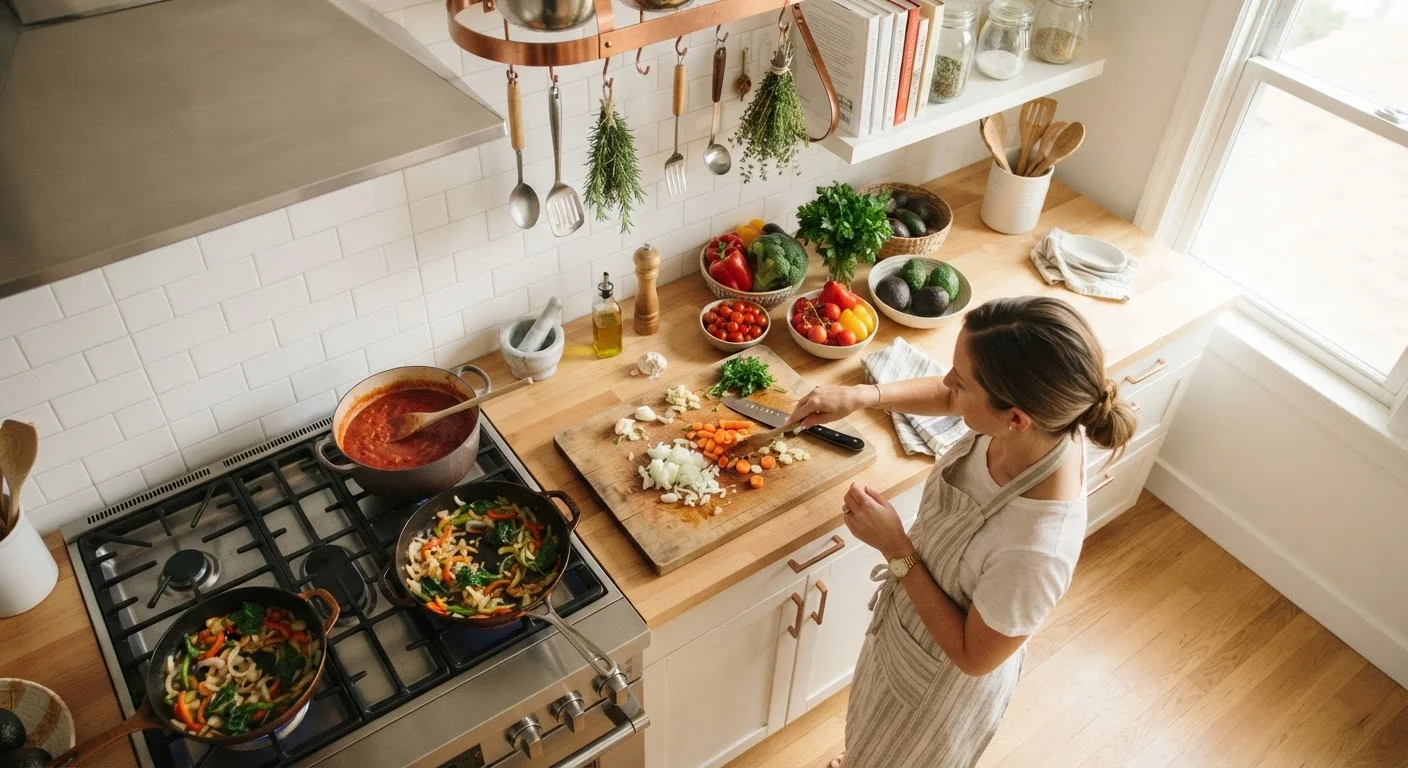
Mise en place - a French culinary term meaning "everything in its place" - is the professional practice of prepping and measuring all ingredients before cooking begins. Adopting this habit at home prevents the most common cooking mistakes: burned garlic because you were still chopping onions, or forgotten salt because you were managing three things at once.
82%
Americans who say they cook at home regularly
According to a Gallup survey, the vast majority of U.S. adults cook at home, though frequency and confidence vary widely.
3-5
Core techniques behind most home recipes
Culinary educators commonly note that sautéing, roasting, simmering, boiling, and braising form the backbone of everyday home cooking across cuisines.
48M
Estimated foodborne illness cases annually in the U.S.
The CDC estimates approximately 48 million Americans experience foodborne illness each year, much of which is preventable with proper food handling at home.
Core Techniques Every Home Cook Needs
Most recipes are built on a small set of foundational techniques. Once you understand these, you can adapt and improvise across a wide range of dishes.
- Sautéing: Cooking food quickly in a small amount of fat over medium-high heat. Ideal for vegetables, proteins, and aromatics.
- Roasting: Dry oven heat that browns and concentrates flavor. Works well for vegetables, whole cuts of meat, and sheet-pan meals.
- Simmering and braising: Low, gentle heat in liquid - great for developing depth in soups, stews, and tougher cuts of meat.
- Boiling and blanching: Useful for pasta, grains, and briefly cooking vegetables before a quick plunge into cold water to preserve color and texture.
Knife skills are woven through all of these. Uniform cuts cook evenly; inconsistent cuts mean some pieces are overdone while others are underdone. Our guide to knife skills walks through the essential cuts that make everyday prep faster and safer.
Heat, Timing, and Knowing When Food Is Done
Heat management is the skill that separates cooks who consistently get good results from those who don't. High heat builds browning and crust; low heat allows gentle cooking without toughening proteins or burning sugars. Most home cooks default to medium-high regardless of what they're cooking - learning to adjust is one of the fastest ways to improve.
Timing is closely tied to heat and portion size. A chicken breast and a chicken thigh cooked at the same temperature will be done at different times because of thickness and fat content. Visual cues - color, steam, juices - help, but they're not always reliable.
An instant-read thermometer is the most accurate way to confirm doneness for meat, poultry, and fish. For a full breakdown of safe and optimal temperatures by protein, see our internal cooking temperatures reference guide. This is especially important when cooking for children, older adults, or anyone with a health condition that warrants extra food safety care.
Let your pan fully preheat before adding oil or food. A properly heated pan means better browning and less sticking - even with stainless steel.
Adding food to a cold pan causes proteins to bond with the surface before they can release naturally. Heat allows the Maillard reaction (the browning that creates flavor) to begin immediately on contact.
Season your pasta water until it tastes noticeably salty - it should remind you of mild seawater. This is your only opportunity to season the pasta itself.
Pasta absorbs water as it cooks; under-seasoned water produces bland pasta that no amount of sauce can fully rescue. This is a consistent tip from professional chefs and culinary instructors alike.
Seasoning, Tasting, and Finishing a Dish
Seasoning is not just about salt - it's about building and balancing flavor throughout the cooking process. Salt added early draws out moisture and seasons from within; salt added only at the end sits on the surface. The same principle applies to layering aromatics, acid (lemon juice, vinegar), and fat.
Taste as you cook. This single habit - dipping a clean spoon in at multiple stages - will improve your food more than any equipment upgrade. Ask yourself: Is it bright enough? Does it need more acid? Is it flat, meaning it might need salt or umami depth from soy sauce, parmesan, or a splash of fish sauce?
Finishing touches matter. A drizzle of good olive oil, a handful of fresh herbs, or a squeeze of lemon right before plating wakes up a dish that's been cooking for an hour. Simple plating - wiping the rim of a bowl, thinking about color contrast - makes your food look as good as it tastes.
Building a Sustainable Cooking Habit
Kitchen confidence isn't built in a single ambitious weekend - it grows through regular, low-pressure practice. Aim to cook a few times a week with recipes slightly beyond your current comfort zone, rather than attempting elaborate dishes that require hours you may not have.
Batch cooking is one of the most practical tools for making home cooking stick. Preparing components - grains, roasted vegetables, a simple protein - on a flexible schedule gives you building blocks for weeknight meals without requiring a full production every day. Our guide to batch cooking without burnout offers realistic strategies for this.
If baking interests you as a complementary skill, note that it operates on different principles than stovetop cooking - more precise measurement, less improvisation. Getting comfortable with baking is a natural next step once your savory cooking feels solid.
The goal isn't perfection. It's fluency - the ability to walk into your kitchen, work with what you have, and produce something nourishing and satisfying with growing ease.