

Key Takeaways
- Jazz originated in New Orleans around the turn of the 20th century, blending African, Caribbean, and European musical traditions.
- The Great Migration carried jazz northward, seeding distinct regional styles in Chicago, New York, and Kansas City.
- Major sub-genres - from Dixieland to bebop to fusion - each reflect a specific era and set of cultural pressures.
- Dedicated clubs, summer festivals, and university programs continue to sustain jazz as a living performance art.
- New listeners benefit most from starting with a single style and following the musicians who shaped it.
Where Jazz Began: New Orleans and the Birth of a Sound
Jazz did not appear from a single moment of inspiration - it emerged slowly, almost inevitably, from the extraordinary cultural collision that defined New Orleans at the turn of the 20th century. The city brought together formerly enslaved African Americans, Creole musicians trained in European classical traditions, Caribbean immigrants carrying syncopated rhythms, and a brass band culture rooted in community parade and funeral rites. Out of that friction, something genuinely new was born.
Congo Square, where enslaved people gathered on Sundays to play drums and dance, is often cited as a spiritual precursor. By the 1890s and early 1900s, the Storyville neighborhood - a licensed entertainment district - provided steady work for musicians who began mixing blues feeling with ragtime rhythm and improvised melody. Figures like cornetist Buddy Bolden, though largely undocumented by recordings, were described by contemporaries as electrifying innovators who bent musical rules in ways audiences had never experienced.
New Orleans jazz is marked by its collective improvisation: multiple instruments - usually trumpet, clarinet, and trombone - weave melodic lines simultaneously, a democratic conversation rather than a single soloist holding court. That character, much like the city itself, is rooted in community, ritual, and a refusal to stay inside inherited boundaries.
~1900
Year jazz began taking recognizable shape
Historians generally place jazz's emergence in New Orleans between roughly 1895 and 1905, though the influences precede that window by decades.
500,000+
Annual attendance at Jazz & Heritage Festival
The New Orleans Jazz & Heritage Festival regularly draws over half a million attendees across its multi-weekend run, according to festival organizers.
1958
Year Monterey Jazz Festival was founded
Monterey Jazz Festival, established in 1958, is widely recognized as the longest continuously running jazz festival in the world.
The Great Migration and Jazz's Spread Across America
Between roughly 1910 and 1970, millions of African Americans relocated from the South to northern and midwestern cities in search of economic opportunity and escape from Jim Crow laws. They brought jazz with them, and each city reshaped it according to its own rhythms and ambitions.
Chicago became a powerhouse in the 1920s, with musicians like Louis Armstrong arriving from New Orleans and developing a more virtuosic, soloist-centered approach. The city's South Side clubs were incubators for a harder-driving style. New York's Harlem, whose flourishing arts culture is explored more fully in our look at the Harlem Renaissance, drew the nation's most ambitious musicians and gave rise to the big band era - orchestras of fifteen or more players performing arranged compositions that filled dance halls. Kansas City, meanwhile, developed a looser, blues-drenched swing style built around extended improvisation and the riff-based call-and-response that would strongly influence later rock and rhythm and blues.
Each migration stop created a regional dialect of jazz that still carries a distinct accent today. Understanding those dialects is one of the genuine pleasures of digging into the music.
Major Jazz Styles and What Distinguishes Them
Jazz has always evolved by breaking its own rules, so its sub-genres each represent a kind of artistic argument with what came before.
- Dixieland / Traditional Jazz: The earliest recorded style, featuring collective improvisation over march-influenced rhythms. Upbeat, accessible, and still performed widely in New Orleans and at festivals.
- Swing: The mainstream sound of the 1930s-40s, built around large ensembles and danceable arrangements. Benny Goodman and Count Basie defined the era.
- Bebop: A 1940s revolt against commercial swing - faster tempos, complex harmonies, and intricate melodies designed more for listening than dancing. Charlie Parker and Dizzy Gillespie are its central figures.
- Cool Jazz and Hard Bop: Two reactions to bebop's intensity. Cool jazz, associated with Miles Davis's Birth of the Cool sessions, favored restraint and space. Hard bop reconnected with gospel and blues feeling, embracing emotional directness.
- Free Jazz: The 1960s avant-garde pushed improvisation to its limits, sometimes abandoning fixed tempo and harmony entirely. Ornette Coleman's 1960 album Free Jazz gave the movement its name.
- Fusion: Beginning in the late 1960s, jazz musicians incorporated electric instruments and rock rhythms. Miles Davis's Bitches Brew remains the genre's touchstone.
- Contemporary / Post-Bop: Today's jazz scene resists easy labels, drawing freely from all prior traditions while absorbing hip-hop, electronic music, and global influences.
When exploring a new jazz style, start with the album that critics and musicians most often cite as the defining statement - then work outward from there. Landmark recordings exist for a reason: they're the clearest expression of what made a style matter.
Landmark recordings concentrate a style's essential qualities in a single listening experience, giving new listeners a reliable reference point before exploring related artists.
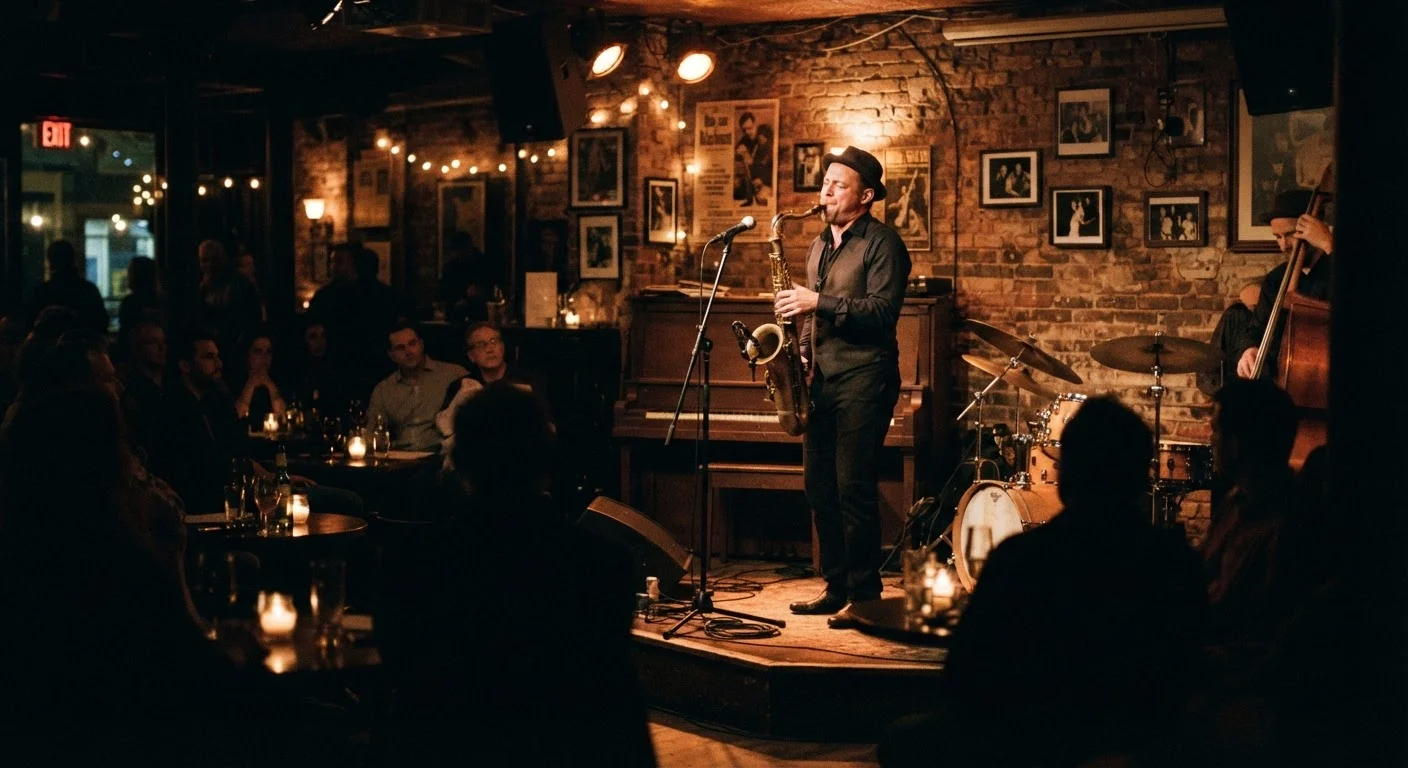
If you're attending a club set for the first time, arrive at least fifteen minutes early and don't be afraid to sit close to the stage. Jazz musicians play differently when they can feel the audience listening.
The interactive quality between performer and audience is central to jazz's improvisational character - proximity changes what both parties bring to the experience.
Iconic Venues and Festivals Keeping Jazz Alive
Jazz has always lived in physical spaces - the club stage, the festival field, the concert hall - and those spaces still matter enormously. A few institutions have become landmarks of the tradition.
In New York, the Village Vanguard has operated continuously since 1935 and remains a room where serious jazz is taken seriously. New Orleans hosts the Jazz & Heritage Festival each spring, drawing hundreds of thousands of visitors to a celebration that extends well beyond jazz into gospel, blues, and Louisiana roots music. The Monterey Jazz Festival in California, founded in 1958, is the longest-running jazz festival in the world. Chicago's Chicago Jazz Festival offers a free, multi-day event in Millennium Park each summer, a commitment to public access that reflects the city's deep relationship with the music.
Beyond marquee events, the network of smaller clubs - in cities like Detroit, Philadelphia, and Austin - is where most working jazz musicians make their careers. These rooms matter in ways the arena circuit never can: the intimacy forces honesty between performer and audience. For a broader view of how jazz festivals compare to other formats, see our guide to American music festivals by genre. And the regional creative cultures surrounding cities like Detroit and New Orleans provide the context that keeps local scenes distinct.
How to Engage with Jazz as a New Listener
Jazz can feel daunting if you approach it as a vast curriculum. The more rewarding approach is narrower: pick one era, find two or three musicians who defined it, and listen deeply before moving on. Following Miles Davis across his career alone - from the cool sessions through hard bop, modal jazz, and fusion - is essentially a guided tour of the music's entire second half.
Live performance is where jazz reveals itself most fully. Recordings capture notes but not the conversation between musicians responding to a specific room and a specific night. Many clubs offer free or low-cost early sets, making attendance genuinely accessible. Our piece on supporting local music scenes without spending a fortune offers practical strategies for getting into rooms regularly without straining your budget.
University jazz programs, community radio stations devoted to the genre, and public library streaming services are also excellent entry points. The music rewards patience and curiosity in roughly equal measure - and the tradition is still being written by working musicians every night in clubs across the country.
Jazz and American Cultural Identity
Jazz is widely regarded by cultural historians and institutions - including UNESCO, which recognized it as part of the Intangible Cultural Heritage of Humanity - as one of the United States' most significant original art forms. Its roots in African American experience make its history inseparable from the broader story of race, creativity, and resilience in America.
Jazz is also one of the genuinely overlooked live performance experiences in American culture - which means the rooms are often intimate, the tickets affordable, and the musicians performing at a level that would astonish anyone walking in for the first time.