

Key Takeaways
- New Orleans blends French, Spanish, African, and Caribbean heritage in ways that shaped its architecture, food, and music.
- Its music culture - from jazz to brass band - is a living tradition performed daily on streets and in clubs.
- Creole and Cajun cuisines originated here and remain deeply embedded in everyday local life.
- The city's historic neighborhoods display architectural styles largely unseen elsewhere in America.
- Mardi Gras and Jazz Fest are expressions of a year-round local culture, not just tourist events.
New Orleans' Cultural Singularity
New Orleans is an American city that developed under French, Spanish, African, and Caribbean influences - creating a culture, architecture, cuisine, and music tradition found nowhere else in the United States. Unlike most American cities shaped primarily by Anglo-Protestant settlement, New Orleans evolved through a uniquely layered colonial history that still defines everyday life there today.
The city sits within Orleans Parish, Louisiana, and its historic core - the French Quarter, or Vieux Carré - was established in 1718. Its legal and cultural heritage draws from French civil law traditions, setting it apart from every other U.S. state.
A History That Never Fully Became American
Most American cities share a recognizable cultural grammar rooted in British colonial settlement, Protestant traditions, and westward expansion. New Orleans doesn't fit that template. Founded by the French in 1718 and later governed by Spain before the Louisiana Purchase of 1803, the city spent nearly a century developing under European and Caribbean influences that left permanent marks on its laws, language, food, and social customs.
African enslaved people - many brought directly from West and Central Africa or through the Caribbean - contributed enormously to New Orleans' cultural fabric, shaping its music, cuisine, spiritual practices, and neighborhood life. Free people of color formed a uniquely influential Creole community well before the Civil War, producing artists, architects, and musicians whose legacies still shape the city. This layered history is not a museum exhibit in New Orleans - it's an active, living foundation.
Louisiana Operates Under a Different Legal System
Unlike every other U.S. state, Louisiana bases its legal system on Napoleonic civil law rather than English common law - a direct legacy of French colonial governance. While this rarely affects tourists directly, it's a striking reminder of how thoroughly New Orleans' origins diverge from the American mainstream. It also shaped inheritance laws, property customs, and social structures that influenced the city's development for centuries.
Architecture You Won't See Anywhere Else in the U.S.
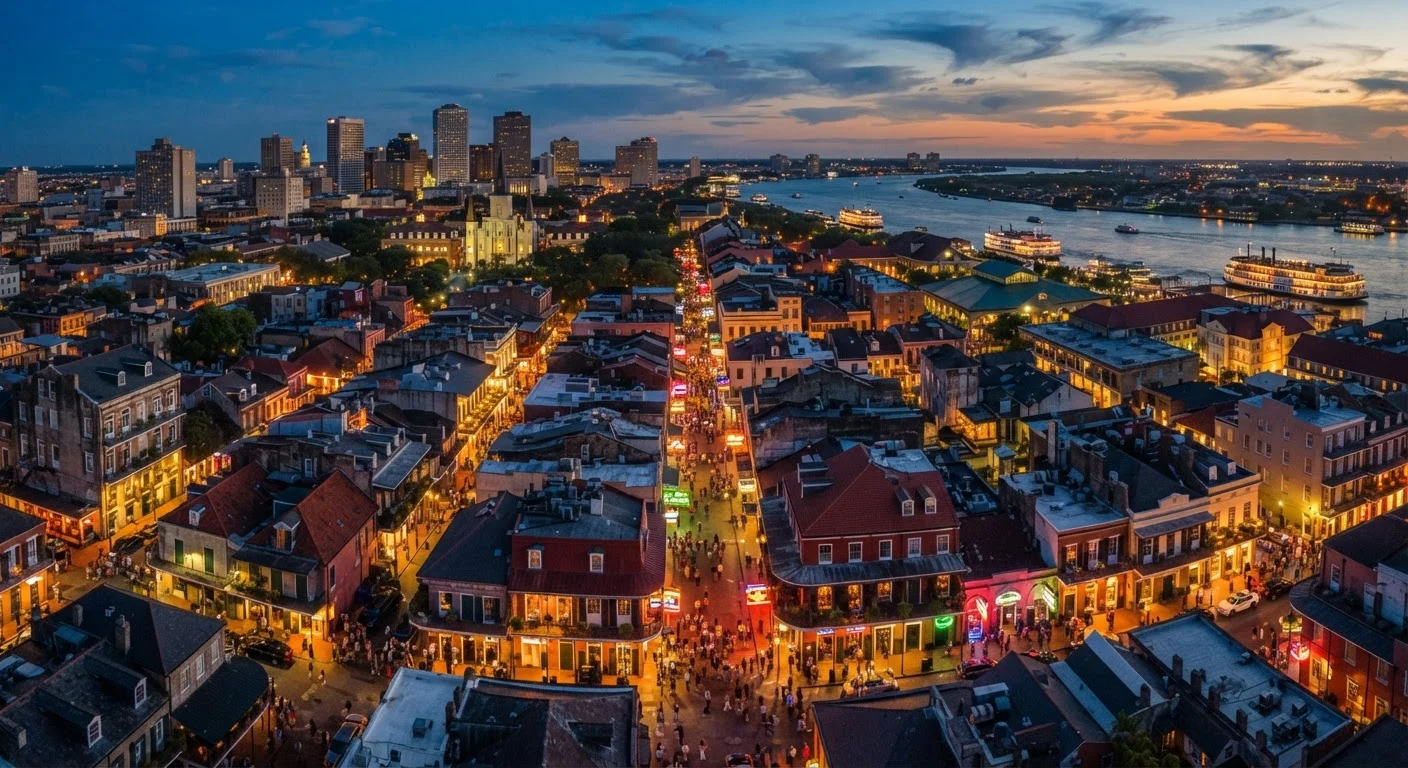
Walking through the French Quarter or the Garden District, visitors immediately notice that New Orleans looks different. The French Quarter's signature Creole townhouses - with their shaded courtyards, stucco facades, and ornate wrought-iron balconies - reflect Spanish colonial building codes imposed after two major fires in the late 1700s. The style is distinctly Mediterranean in character and bears little resemblance to colonial architecture elsewhere in America.
Farther from the river, the Garden District presents another kind of visual language: grand antebellum mansions built by wealthy American settlers who arrived after 1803 and settled outside the old Creole city. The contrast between these neighborhoods reveals the cultural friction and coexistence that defines New Orleans. The city's regional creative identity extends into its built environment in ways rarely seen in American cities of comparable size.
Music as a Daily Practice, Not Just Entertainment
New Orleans is widely recognized as the birthplace of jazz, but describing the city purely through that lens undersells how deeply music is woven into ordinary life here. Brass bands play at funerals and second-line parades through neighborhood streets. Jazz clubs on Frenchmen Street feature local musicians most nights of the week. Street performers on Royal Street play for tourists and neighbors alike with equal seriousness.
This isn't performance for performance's sake - it reflects a cultural relationship with music that developed over generations, rooted in African musical traditions, European classical influences, and the improvisational spirit that gave rise to jazz. For a deeper look at how that tradition evolved and where it lives today, see our guide to the American jazz tradition.
1718
Year New Orleans was founded by the French
Making it one of the oldest continuously inhabited cities in North America, with over three centuries of layered cultural development.
72+
Neighborhood festivals held annually
New Orleans hosts dozens of neighborhood-level festivals each year, reflecting a culture of communal celebration that extends well beyond Mardi Gras and Jazz Fest.
~400,000
Residents in the Greater New Orleans area
Despite its relatively modest population size, New Orleans holds outsized cultural influence on American music, cuisine, and architecture.
A Food Culture That Belongs to No Other Place
New Orleans cuisine is one of the most regionally distinctive in the country. Dishes like gumbo, jambalaya, red beans and rice, and crawfish étouffée developed from the intersection of West African cooking techniques, French culinary structure, Spanish seasoning traditions, and Native American ingredient knowledge. This isn't fusion in the modern sense - it's centuries of necessity and creativity producing something entirely its own.
The food culture extends well beyond restaurants. Corner grocery stores serve hot plate lunches. Neighborhood festivals rotate through bayou-caught seafood and family recipes passed down for generations. Understanding New Orleans through its food is one of the most reliable ways to grasp what makes the city distinct - a point explored further in navigating a new city through its food scene. Whether you're exploring street food or sit-down dining, New Orleans rewards curiosity at every level.