

Key Takeaways
- Genre shapes nearly every aspect of a festival - from crowd size to stage design to how audiences participate.
- Format differences (single-day vs. multi-day, camping vs. urban) dramatically change the overall experience.
- Folk, jazz, EDM, and classical festivals each have distinct cultures, pacing, and logistical considerations.
- Knowing what to expect from a festival's genre and format helps first-timers choose the right fit.
Our Verdict
No single festival format is objectively superior - each reflects the values and listening culture of its genre. The right festival depends on what kind of experience a person is seeking: communal storytelling, improvisational discovery, collective euphoria, or contemplative immersion. Understanding how genre and format intersect is the clearest path to finding your match.
| Best for | Recommended |
|---|---|
| Those seeking community, storytelling, and acoustic intimacy | Folk festivals |
| Listeners who appreciate spontaneity and musical conversation | Jazz festivals |
| Fans of high-energy, immersive sensory environments | EDM festivals |
| Concertgoers who prefer structured programming and quiet listening | Classical festivals |
Why Genre Changes Everything at a Festival
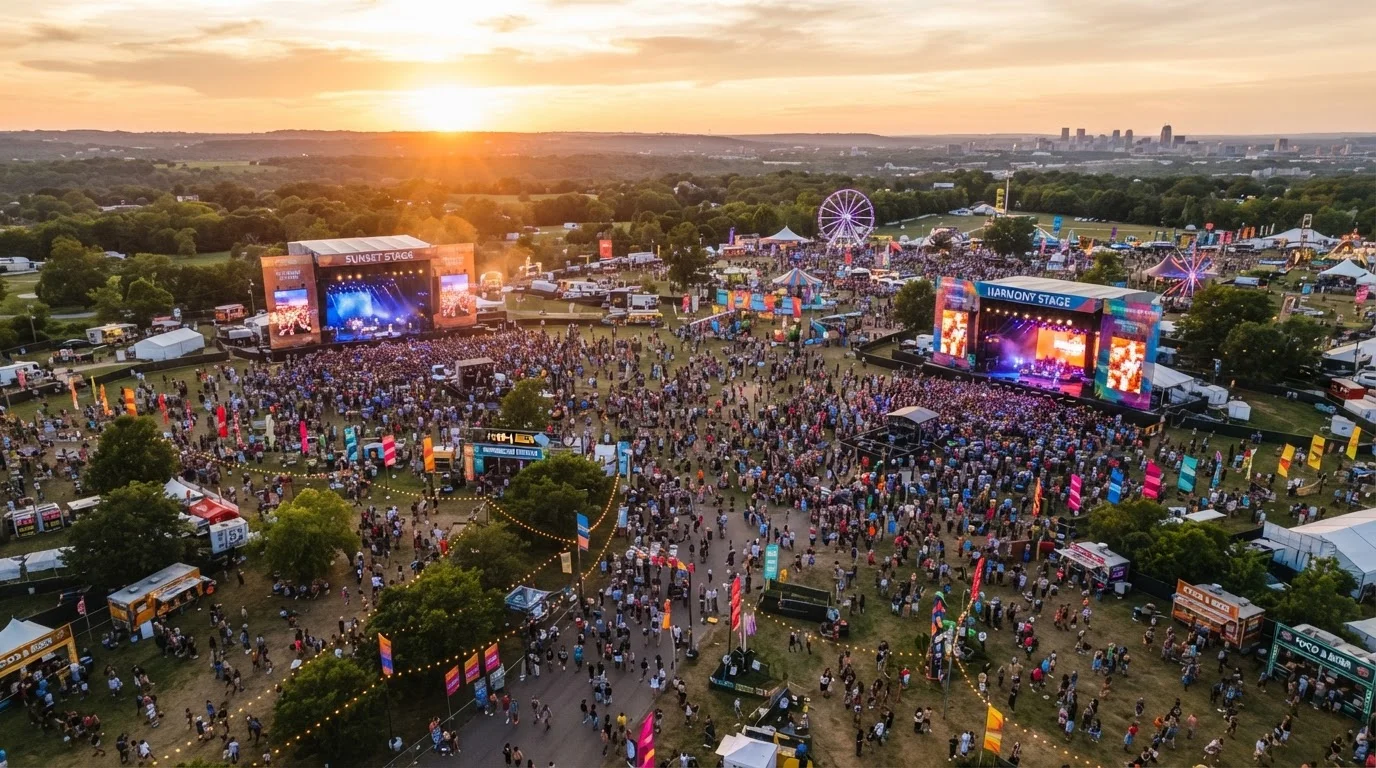
Walk into a folk festival and a bluegrass jam might be happening under a tree with no stage at all. Walk into an EDM festival and a DJ is performing beneath a LED superstructure the size of a small building. Same country, same general concept - radically different worlds. American music festivals don't just differ by lineup; they differ by philosophy, social contract, and physical design. Genre, it turns out, is the most powerful predictor of what a festival will actually feel like on the ground.
That's worth understanding before you commit to a weekend. Common myths about festivals often focus on cost or crowds, but the subtler barrier is cultural unfamiliarity - showing up somewhere whose unwritten rules you don't know yet.
| Folk | Jazz | EDM | Classical | |
|---|---|---|---|---|
| Typical duration | Multi-day, weekend | Multi-day, sometimes weeks | Single or multi-day | Multi-week summer season |
| Setting | Rural, fairgrounds | Urban parks or venues | Urban or large fairgrounds | Outdoor lawns or concert halls |
| Audience participation | High - singing, jamming | Moderate - attentive listening | Very high - dancing | Low - quiet, focused listening |
| Production scale | Modest, intimate | Mid-range | Very high, immersive | Varies; often elegant |
| Discovery potential | High via workshops | High via overlapping sets | Moderate via DJ lineups | High via curated programming |
| Camping culture | Common and central | Rare | Occasionally available | Rare |
Folk and Americana Festivals: Participatory and Rooted
Folk festivals - think the Newport Folk Festival in Rhode Island or MerleFest in North Carolina - tend to be built around the idea that music belongs to everyone. Workshops where attendees learn songs alongside artists, open mics, and late-night campfire jams are as central as the main-stage sets. The culture skews participatory. Applause is warm but rarely frenzied; conversations between songs are welcome. These events often carry a sense of historical mission, connecting present-day audiences to deep American musical roots.
Format-wise, folk festivals are frequently multi-day and held on fairgrounds or rural sites. Camping is common and encouraged - it reinforces the community-gathering feel. Stages tend to be modest in production scale, which keeps the focus on the songs themselves. Bluegrass jams and similar forms that thrive at folk festivals often fly under the radar for people raised on arena rock or pop radio, but they represent some of the most socially rich live music experiences available.
Jazz Festivals: Listening Rooms in the Open Air
Jazz festivals operate on a different social frequency. Events like the New Orleans Jazz & Heritage Festival or the Monterey Jazz Festival are built around attentive listening - audiences tend to sit, lean in, and follow soloists through improvisations that can stretch well beyond the recorded version of a song. The culture prizes connoisseurship without being exclusionary; knowledgeable fans and first-timers often end up side by side, both caught off guard by a brilliant chord change.
These festivals frequently span multiple stages with overlapping sets, requiring genuine programming choices. Discovery is baked into the format - you might stumble into a Latin jazz set while heading toward a headline act and end up staying for the full hour. For a deeper look at the tradition behind these events, the history and culture of American jazz helps explain why certain festivals carry the weight they do.
Match the Festival to Your Listening Style
Before committing to a festival, think about how you naturally listen to music - do you prefer to sit quietly and absorb, or do you want to move and be surrounded by energy? Folk and classical events reward patient, engaged listening, while EDM festivals are designed for physical participation. Jazz falls somewhere in between, making it an excellent choice for people who want structure with room for surprise.
EDM Festivals: Spectacle as the Art Form
Electronic dance music festivals - from multi-day destination events to single-night warehouse gatherings - treat production itself as part of the performance. Lighting rigs, pyrotechnics, synchronized visuals, and subwoofers powerful enough to feel in your chest are not accessories; they're co-equal to the music. Crowds are typically younger and more densely packed near the main stages, with movement and dancing expected rather than optional.
The format is often urban or semi-urban, staged in convention centers, fairgrounds, or large parks. Single-day and multi-day versions both exist, but even a single day tends to run well past midnight. The scale of production means venue size plays a particularly defining role in how the music lands - bass frequencies behave completely differently in a 5,000-person tent than in an open field holding 50,000.
Classical and Chamber Festivals: Structure as Hospitality
Classical music festivals - Tanglewood in Massachusetts, the Aspen Music Festival in Colorado, the Santa Fe Chamber Music Festival - inhabit yet another cultural register. Programming is carefully curated across a full summer season rather than compressed into a weekend blitz. The expectation is that audiences will return multiple times, building a relationship with a set of artists or a particular repertoire over weeks rather than hours.
Silence during performance is not just preferred but integral - a cough can feel conspicuous, and the contrast between that stillness and the explosive sound of a full orchestra makes the listening experience unusually heightened. Many classical festivals include pre-concert lectures, open rehearsals, and post-performance discussions, embedding education directly into the event structure. If you're preparing for an outdoor summer concert, a classical festival on a lawn like Tanglewood offers a gentler on-ramp - you can bring a picnic blanket and listen from the surrounding grass at a more relaxed remove.