

Key Takeaways
- Thriving art scenes exist across the U.S. in cities well outside New York and Los Angeles.
- Each regional scene draws on distinct local history, culture, and community identity.
- Detroit, New Orleans, Santa Fe, Chicago, and Houston each offer a genuinely different creative experience.
- Many regional museums, galleries, and public art programs are internationally recognized.
- Visiting regional art scenes offers context and depth that major metropolitan markets sometimes lack.
The Art World Is Bigger Than Two Coasts
When most people think about where American art happens, two cities dominate the mental map: New York, with its auction houses and blue-chip galleries, and Los Angeles, with its museum boom and entertainment-industry adjacency. That picture is real - but it's also incomplete. Across the country, cities that rarely make the art world's headline circuit are quietly producing some of the most vital, distinctive creative work in America.
These aren't consolation-prize scenes. They're ecosystems shaped by specific geographies, histories, and communities - places where artists choose to stay, build, and innovate precisely because they aren't New York. For anyone curious about visual culture beyond the familiar bylines, the regional scene is where the story gets genuinely interesting.
Art Scenes Are Always Evolving
The cities highlighted here represent well-established regional scenes, but hundreds of smaller American cities - from Asheville, North Carolina, to Marfa, Texas - also support distinctive creative communities. Any list like this one reflects a moment in time; art scenes shift as artists move, institutions grow, and neighborhoods change. Treat this as a starting point for your own exploration rather than a definitive ranking.
Five Regional Art Scenes Worth Knowing
Detroit: Resilience as Aesthetic
Detroit's art scene is inseparable from the city's broader story of industrial decline and community-led revival. The collapse of the automotive economy left behind vast swaths of empty land and buildings, which artists, collectives, and nonprofit organizations transformed into studios, galleries, and public art installations. Organizations like the Heidelberg Project - a long-running outdoor art environment on the city's east side - turned entire blocks into immersive community artwork.
The Detroit Institute of Arts holds one of the most significant museum collections in the country, including Diego Rivera's monumental Detroit Industry Murals, which depict the city's workers with both dignity and complexity. Alongside major institutions, Detroit has a dense network of independent galleries and artist-run spaces that reflect the city's working-class roots and its ongoing creative reinvention.
Detroit's artists turned empty lots and abandoned buildings into internationally recognized art environments.
New Orleans: Culture as Living Practice
New Orleans doesn't separate art from daily life - that integration is part of what makes it extraordinary. The city's visual culture is rooted in a layered history of West African, French Creole, Caribbean, and Indigenous influences, and that complexity shows up in everything from jazz funeral processionals to the intricate beadwork of Mardi Gras Indian suits, which are recognized as significant folk art objects.
The Contemporary Arts Center and the Ogden Museum of Southern Art anchor the institutional side, but much of what makes the New Orleans scene distinctive happens in neighborhoods, second-line parades, and artist studios in the Bywater and Tremé districts. It's a scene where craft, performance, and visual art remain genuinely intertwined. If you want to understand the cultural depth of the city more broadly, our look at what makes New Orleans singular offers useful context. The city's music heritage - explored in our guide to jazz's living venues - is part of the same cultural fabric.
Mardi Gras Indian suits are recognized folk art objects, representing generations of community craft.
Santa Fe: Where Indigenous and Contemporary Art Converge
Santa Fe has operated as a major art market for over a century, and it remains one of the few American cities where Indigenous art holds genuine institutional and commercial centrality rather than being treated as a historical footnote. The Indian Market, held annually on the Santa Fe Plaza, is the largest and most prestigious juried Native art market in the world, drawing artists from hundreds of tribes and nations.
The Georgia O'Keeffe Museum attracts visitors who associate the region with her iconic landscapes, but the broader Santa Fe scene encompasses contemporary galleries, ceramic traditions from Pueblo communities, and a growing cohort of artists working across multiple disciplines. For readers interested in how museums across the country are rethinking their relationship to Native work, our piece on the rise of Indigenous art in American museums examines that shift in depth.
Santa Fe's annual Indian Market is the largest and most prestigious juried Native art market in the world.
Chicago: Architecture, Murals, and Institutional Depth
Chicago's art scene operates at a scale that rivals any city in the country. The Art Institute of Chicago is consistently ranked among the world's great museums - its collection of Impressionist and Post-Impressionist painting is exceptional, but so are its holdings in African art, photography, and American modernism. The city's architecture itself functions as a public art canon, with buildings by Mies van der Rohe, Louis Sullivan, and more recent practitioners forming an open-air design museum.
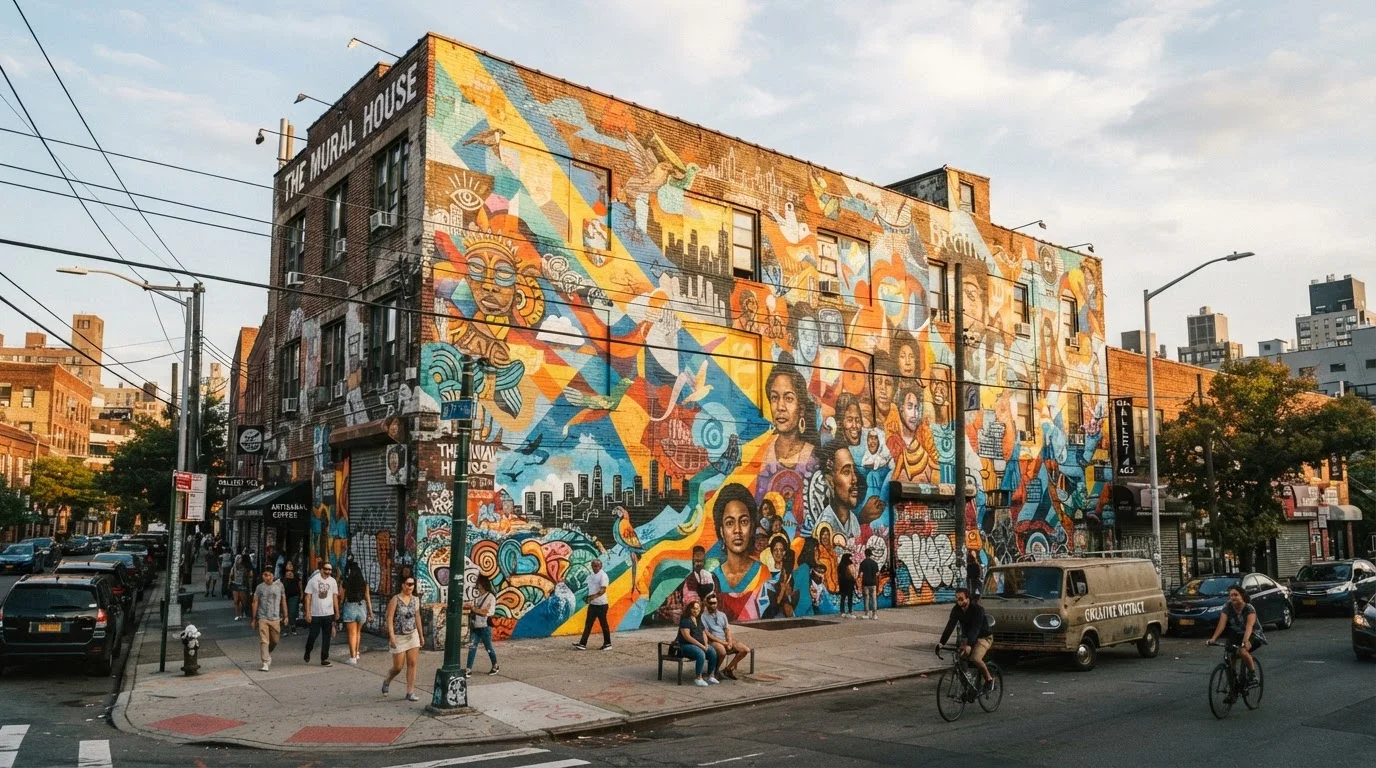
Chicago's mural tradition, rooted in the Mexican muralist movement and later in the community arts work of the Chicago Wall of Respect (1967), helped define how public art functions as political and social expression. Today, neighborhoods like Pilsen and Bronzeville maintain that tradition while also supporting contemporary gallery scenes that draw collectors and curators from across the Midwest and beyond.
Chicago's Wall of Respect helped define how public murals function as political and community expression.
Houston: Ambition, Diversity, and the Museum District
Houston's Museum District is one of the most concentrated clusters of cultural institutions in the United States - nineteen museums within a walkable radius, including the Museum of Fine Arts, Houston, which holds one of the largest permanent collections in the country. The Menil Collection, founded by the Menil family and opened to the public in 1987, is widely regarded as one of the finest privately assembled art collections ever made accessible - a free, non-commercial museum that prioritizes the quality of individual encounters with art over spectacle.
Houston's demographic diversity - it's among the most ethnically varied cities in the country - shows up in its art scene through programming that reflects African American, Latino, and Asian American artistic traditions alongside European and contemporary international work. The Rothko Chapel, a nondenominational meditation space housing fourteen large-scale paintings by Mark Rothko, draws visitors seeking something closer to spiritual experience than typical museum-going.
The Menil Collection is a free museum widely considered one of the finest private art collections ever made public.
Make the Most of Regional Art Visits
Many regional museums offer free or reduced admission on specific days, and artist-run spaces often welcome drop-in visitors without requiring appointments. Check each institution's website for current hours and public programming before you go. Neighborhood walking maps, often available from local arts councils, can help you discover murals, studios, and smaller galleries that don't show up in standard tourist guides.
Why Regional Scenes Matter Right Now
The rise of remote work, rising studio costs in coastal cities, and renewed interest in local identity have all accelerated a shift that was already underway: artists and institutions in mid-sized American cities are gaining visibility and resources at a pace that felt unimaginable a generation ago. Collectors, curators, and critics who once rarely left Manhattan are now making regular pilgrimages to Houston, Detroit, and Santa Fe.
For everyday readers, that shift is an invitation. Whether you're planning a trip or simply want to understand American culture more fully, paying attention to regional art scenes offers something that major market coverage rarely does - a sense of art as it lives inside a specific community, shaped by the people and places that produced it. The road less traveled often leads somewhere more revealing.