

Key Takeaways
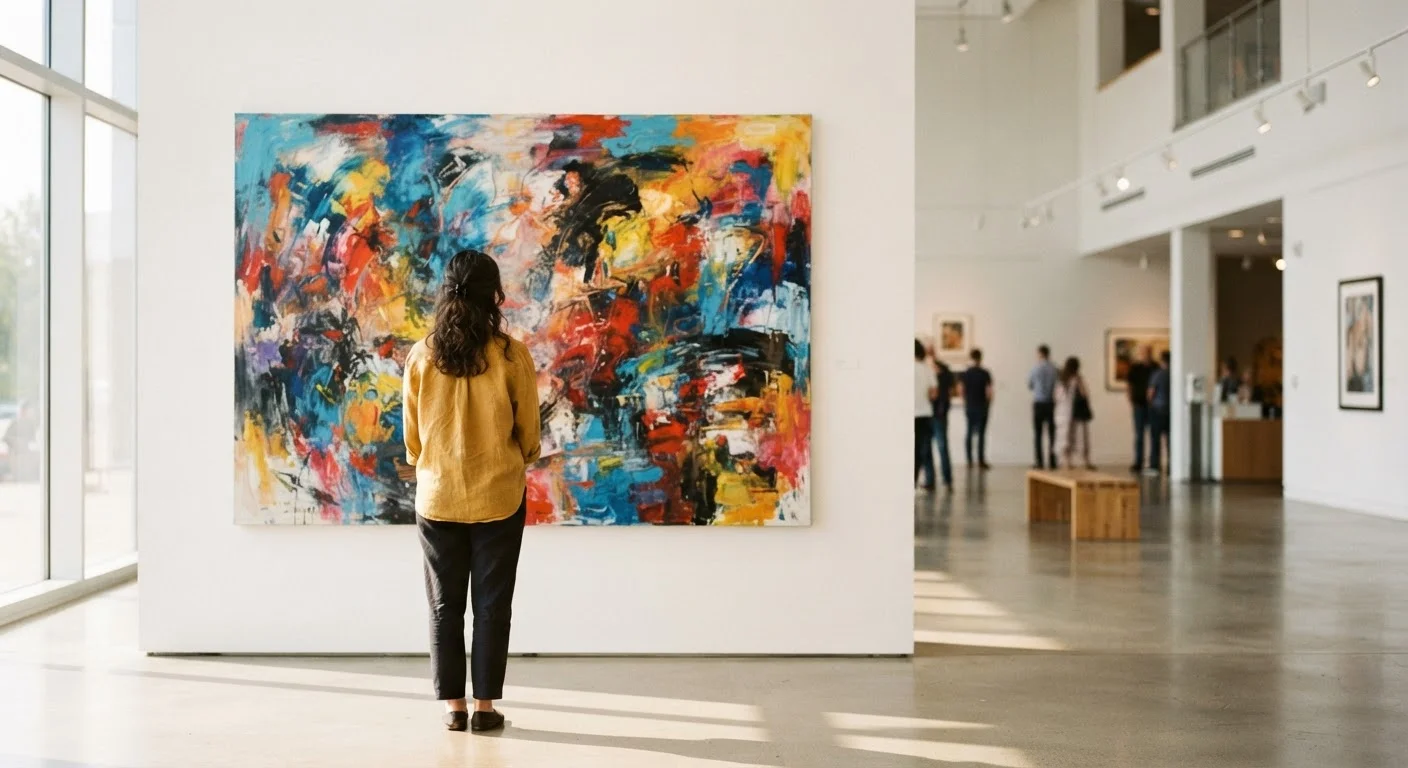
- Slowing down in front of a single work often yields more than rushing through an entire exhibition.
- Your personal emotional response to art is a valid and meaningful starting point for engagement.
- Learning a handful of visual vocabulary terms can dramatically deepen what you notice in any artwork.
- Context - an artist's era, location, or intention - enriches what you see without replacing your own reaction.
- Regular, low-pressure exposure to art builds confidence and genuine aesthetic curiosity over time.
The Myth of Needing Permission
A lot of people walk into a gallery feeling like they've arrived at a party where everyone else knows the host. There's a quiet, persistent idea that art appreciation is a credential - something you earn through lectures, textbooks, or the right education. That idea is worth setting aside entirely.
Visual art has existed for as long as humans have, and for most of that history, viewers encountered it without any formal instruction at all. What made the experience meaningful wasn't specialized knowledge - it was attention, curiosity, and a willingness to stay with something long enough to feel something. Those are capacities every viewer already has.
If you've ever been moved by a photograph, stopped to look at a mural on a building, or found yourself drawn to one painting in a room full of them without being able to explain why - you're already engaging with art. The practices below are simply ways to build on what you're already doing.
Practices That Open Art Up
These approaches aren't rules - think of them as entry points. Use whatever combination feels natural to you.
Spend at least five uninterrupted minutes with a single work before moving on.
First impressions of art are often surface-level. Most of what a work has to offer - subtle detail, emotional weight, structural decisions - only becomes visible with sustained looking. Rushing through a gallery trades depth for breadth and rarely produces a lasting experience.
Start with your gut reaction, then ask what caused it.
Emotional response is data, not noise. Whether a work makes you feel uneasy, peaceful, curious, or bored, that reaction is a meaningful starting point for deeper engagement - not something to override with intellectual analysis.
Learn the context of a work after you've formed your own initial impression.
Reading the wall label or exhibition notes before looking can bias your experience, narrowing what you allow yourself to feel. Forming an initial response first, then adding context, lets the two layers inform each other rather than one replacing the other.
Visit the same exhibition or public artwork more than once if possible.
Art changes as you change. A work that left you cold on a first visit may open up differently on a second, especially if you've had time to process your initial reaction or learned something in between.
Talk about what you saw with someone else, even casually.
Articulating a response - even imperfectly - helps solidify and deepen it. You don't need the right vocabulary; trying to describe what a work made you think or feel is itself a form of reflection that sharpens future attention.
For readers planning to visit a museum soon, our guide on getting more out of every gallery offers practical strategies for navigating the experience without feeling overwhelmed.
Building Vocabulary Without Going Back to School
A few well-chosen terms can change what you're able to notice. Words like composition (how elements are arranged in a work), negative space (the empty areas around subjects), and value (the range from light to dark) aren't gatekeeping jargon - they're tools for pointing at things you might already be sensing but couldn't name.
Vocabulary Helps - But It's a Tool, Not a Ticket
Learning art terminology is genuinely useful, but it's worth remembering that the goal is richer seeing, not sounding knowledgeable. Use new vocabulary to focus your attention, not to perform expertise. The most engaged viewers are often those who hold concepts lightly and stay curious rather than those who catalog works by category.
You don't need to memorize an art history survey. Even five or six terms used regularly will start to sharpen your eye. Our plain-language reference Reading a Painting: A Practical Vocabulary for Everyday Viewers explains the most useful terms without the intimidation factor.
Context also matters - knowing that a work was made during a period of political upheaval, or in a culture where certain colors carried specific meaning, can reframe everything you see. If contemporary art in particular leaves you puzzled, What Is Contemporary Art, Really? offers a grounded, jargon-free explanation of the term and its history.
Making It a Regular Part of Your Life
The viewers who feel most at ease with art aren't necessarily the most educated - they're often simply the most practiced. Comfort with art, like comfort with music or film, tends to come from repeated, low-stakes exposure rather than formal instruction.
Public art is one of the most accessible ways to start. Murals, sculptures, and installations are free, outdoors, and woven into daily life in most American cities. If you've ever been curious about how those works come to exist, How Public Art Gets Made traces the full journey from proposal to permanent installation.
And if you're curious about how similar habits of intentional attention translate to screen storytelling, Watching More Intentionally explores the same idea in the context of film and TV. The underlying skill - showing up with curiosity instead of expertise - turns out to apply almost everywhere.