

Key Takeaways
- Contemporary art is defined mainly by when it was made, not how it looks.
- The term covers an enormous range of styles, from painting to video art to performance.
- You don't need specialized knowledge to engage meaningfully with contemporary art.
- Contemporary art often reflects the social, political, and technological issues of its era.
- Major institutions like the MoMA and the Tate continuously refine how they classify contemporary work.
Contemporary Art
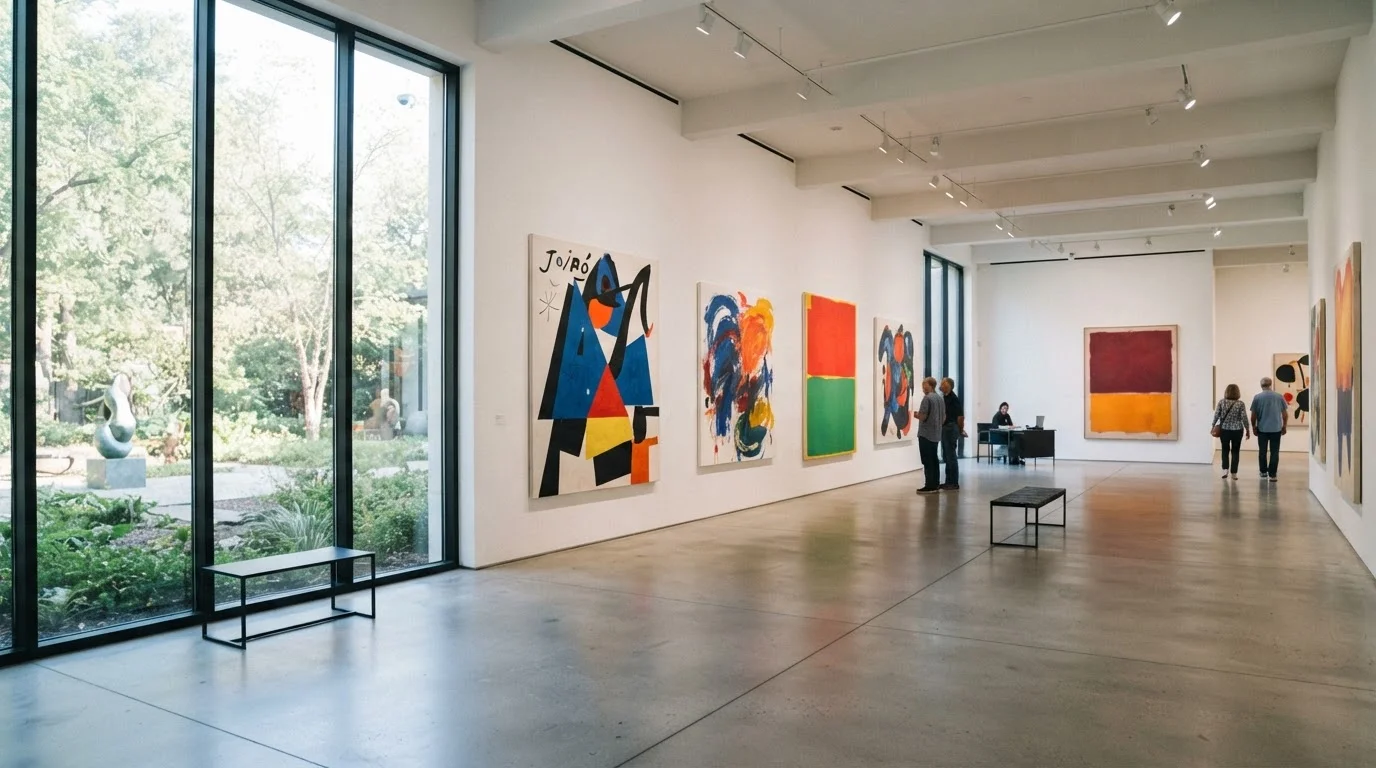
Contemporary art refers to art made by living artists or art produced roughly from the 1970s to the present day. It's an umbrella term that covers an enormous range of styles, materials, and ideas - from oil paintings to digital installations to performance art. Unlike movements with tighter definitions (like Impressionism or Cubism), "contemporary" is defined primarily by time rather than technique or style.
Art historians and institutions sometimes use different start dates - some trace contemporary art from the 1960s or the end of World War II, while others anchor it to roughly 1989 and the rise of global cultural exchange. The label remains fluid by design.
A Term That's Bigger Than It Sounds
Walk into any museum gift shop and you'll see the word "contemporary" on tote bags, catalogs, and wall text - but ask ten people what it actually means and you'll get ten different answers. That confusion is understandable. "Contemporary art" is one of the art world's most loaded, contested, and genuinely useful terms all at once.
At its simplest, contemporary art means art of our time. It describes work made by artists who are alive right now, or work produced within roughly the last half-century. The term doesn't point to a single look or philosophy - it's a chronological category, not an aesthetic one. A hyper-realistic oil portrait and a room-filling sound installation can both qualify as contemporary art, provided they were made within the relevant timeframe.
That breadth is exactly what trips people up. We're accustomed to art movements having a recognizable visual signature: Impressionism has its soft brush strokes, Pop Art has its bold commercial imagery. Contemporary art, by contrast, has no house style. It's defined by when, not what.
"Contemporary" vs. "Modern": A Quick Clarification
In everyday conversation, people often use "modern" and "contemporary" interchangeably - but in the art world, they mean distinctly different things. Modern art is a historical period, roughly 1860s through the 1960s-70s. Contemporary art refers to what's being made now. The distinction matters when you're reading exhibition descriptions or museum labels, and it's worth keeping in mind to avoid confusion.
Where Did the Term Come From - and When Does It Start?
The art world didn't always use "contemporary" as a distinct category. For much of the 20th century, "modern art" handled everything from the Impressionists through the Abstract Expressionists of the postwar era. As those movements aged into history, a new term was needed for art being made right now - and "contemporary" filled that gap.
Most institutions and critics place the beginning of the contemporary era somewhere between the late 1960s and the early 1990s. The Museum of Modern Art in New York and the Tate Modern in London have each revised their own internal timelines over the decades, reflecting how the field itself keeps shifting. Some scholars anchor the start of contemporary art to 1989 - the fall of the Berlin Wall, the explosion of the internet, and a new era of globalized cultural exchange all converged around that moment, reshaping what artists made and who could see it.
What's clear is that the boundary between modern and contemporary isn't a bright line. It's more like a gradual handoff, and the handoff keeps moving forward in time.
~1970s
Approximate start of the contemporary art era
Most major institutions, including the Tate and MoMA, use the late 1960s to mid-1970s as a working starting point for their contemporary art collections.
Over 50
Countries represented at the Venice Biennale
The Venice Biennale, one of the world's most prominent contemporary art events, regularly features artists from more than 50 nations, reflecting the global scope of the field.
Millions
Annual visitors to contemporary art museums globally
Institutions like the Tate Modern in London and the Centre Pompidou in Paris consistently draw millions of visitors annually, indicating broad public appetite for contemporary work.
What Contemporary Art Actually Looks Like
Because the term is so broad, contemporary art encompasses forms that would have been unimaginable to earlier generations. Traditional media - painting, sculpture, drawing, printmaking - are all still very much present. But so are video art, performance art, conceptual art, installation art, digital and generative art, textile work, and documentary photography, among dozens of others.
Artists today also frequently work across categories. A single exhibition might include hand-painted canvases alongside augmented-reality experiences, or ceramic vessels displayed next to archival documentary footage. The mixing of materials and methods is itself a hallmark of the era.
Themes shift, too. Contemporary artists often engage with the social and political conditions of their time - questions of identity, climate, migration, technology, and memory appear regularly in major exhibitions. That doesn't mean every contemporary work carries a heavy political message; many are primarily concerned with form, beauty, or personal experience. But the conversation between art and the wider world tends to be especially direct in contemporary practice.
For practical guidance on how to engage with what you're seeing, a plain-language visual art vocabulary can help demystify the experience considerably.
Why It Matters - and Why It's for You
One of the most persistent myths about contemporary art is that it belongs to a narrow, credentialed audience. In reality, the field has been actively expanding its reach for decades, through public art installations, free museum days, community programming, and accessible online platforms.
Understanding what "contemporary art" means gives you a foothold - a way of orienting yourself when you encounter something unfamiliar. You don't need to love everything you see, and you're not obligated to "get it" immediately. What the label tells you is that the work comes from the world you already live in, made by someone navigating the same historical moment you are.
That context alone can change the experience. A sculpture that seems strange in isolation might feel entirely different once you know it was made in response to a specific cultural upheaval. An abstract canvas that looks purely decorative might open up when you learn about the artist's stated intentions or background.
Engaging with art without a formal background is more achievable than most people expect. And if you've ever felt like the art world wasn't built for you, those assumptions are worth examining closely.
“Contemporary art is not a style. It is a conversation - one that every viewer is invited to join, regardless of their background or credentials.”
— Hans Ulrich Obrist, Artistic Director, Serpentine Galleries, London