

Key Takeaways
- Public art projects begin with formal calls for proposals issued by civic agencies or arts organizations.
- Artists must navigate community review, structural engineering, and permit approvals before fabrication begins.
- Community input sessions shape the final design, ensuring the work reflects the neighborhood it will occupy.
- Fabrication and site preparation happen in parallel, often taking months before installation day arrives.
- Maintenance agreements and public dedication events are standard final steps in permanent installations.
What you will need
Why Public Art Doesn't Just Appear
That bronze sculpture anchoring a downtown plaza or the sweeping mural brightening a highway underpass didn't arrive by accident. Behind every permanent public artwork is a structured, often multi-year process involving artists, government agencies, community members, engineers, and legal teams. Understanding how it all fits together can deepen your appreciation for what you walk past every day - and explain why that promised mural sometimes takes three years to materialize.
Public art sits at the intersection of creative ambition and civic accountability. Unlike a gallery painting that reaches one buyer, a permanent outdoor installation belongs, in a real sense, to everyone who lives or passes through that space. That shared ownership is exactly why the process is so deliberate. If you're curious about how visual art shapes public life more broadly, our guide to the art world offers helpful context on how institutions and artists operate together.
The Commissioning Process: From Open Call to Selection
Most permanent public art projects begin with a Request for Qualifications (RFQ) or Request for Proposals (RFP) - formal documents issued by a city arts commission, a transit authority, a university, or a private developer with public-facing space. These documents outline the site, the budget, thematic guidelines, and eligibility requirements.
What you will need
Artists submit portfolios, letters of intent, and sometimes early concept sketches. A selection panel - typically a mix of arts professionals, community representatives, and project stakeholders - reviews submissions and shortlists candidates. Finalists are often paid a modest stipend to develop more detailed proposals, which are then presented publicly before a final selection is made.
This stage alone can take six months to a year. The goal isn't just to find technically skilled artists; panels look for someone whose vision genuinely connects with the site's history, the surrounding community, and the long-term intent of the space.
Find and Respond to an Open Call
Monitor calls for artists through your city's arts commission website, national platforms like the Public Art Archive, or state arts council newsletters. Read the RFQ or RFP carefully - note the site specifics, budget range, eligibility criteria, and submission deadline. Prepare a portfolio that highlights relevant large-scale or site-responsive work.
Develop Your Concept Proposal
If shortlisted, you'll typically receive a stipend to develop a fuller proposal. This should include rendered visuals or a scale model, a materials list, a preliminary budget breakdown, a fabrication timeline, and a written narrative explaining how the concept responds to the site's history and the surrounding community.
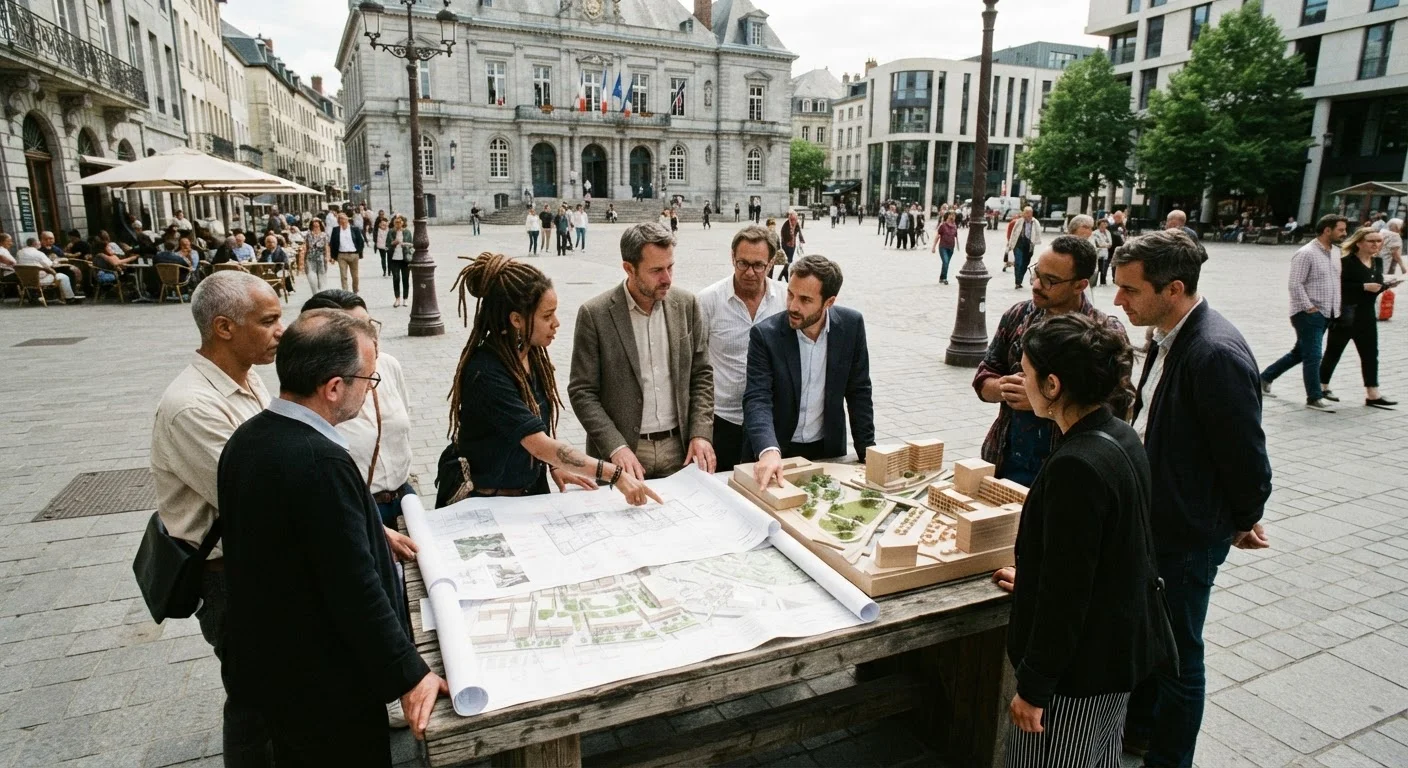
Engage With Community Review Sessions
Attend any scheduled public input meetings with an open posture. Present your concept clearly in plain language, listen carefully to concerns, and document feedback. Some of the strongest final works emerged from artists who incorporated community suggestions that initially felt like constraints.
Navigate Permits and Engineering Sign-Off
Work with the commissioning agency to secure structural, electrical, or zoning permits as required. Submit fabrication drawings to the relevant municipal departments. This phase is bureaucratic but non-negotiable - unpermitted work on public land can be removed regardless of artistic merit.
Oversee Fabrication and Site Preparation
Once permits are approved, work with your fabricator to produce the piece to spec. Visit the fabrication studio at key milestones to review quality. Meanwhile, coordinate with the commissioning agency to ensure site prep - foundation pouring, wall priming, utility hookups - stays on schedule so everything is ready on installation day.
Install the Work and Attend the Dedication
Supervise installation to ensure the work is positioned, secured, and finished exactly as designed. Address any on-site adjustments promptly. Participate in the public dedication ceremony - your presence matters to community members and signals that the relationship between artist and place doesn't end when the crane leaves.
Community Review, Engineering, and the Long Road to Fabrication
Once an artist is selected, the real negotiation begins. Community input sessions - sometimes called design charrettes - invite residents to react to early concepts, flag concerns, and suggest cultural references the artist may have missed. This feedback loop can reshape a proposal significantly. An artist designing for a neighborhood with deep Indigenous roots, for instance, might be directed toward motifs or materials that carry specific meaning - a dynamic explored further in the rise of Indigenous art in American institutions.
Simultaneously, structural engineers review whether the proposed work can safely withstand wind loads, seismic activity, and foot traffic. Materials are tested for durability and weather resistance. If the piece involves lighting or water features, electrical and plumbing permits enter the picture. Budgets are stress-tested, fabricators are contracted, and a production timeline is locked in.
Budget Overruns Can Halt a Project Mid-Stream
Public art budgets are fixed at the contract stage and rarely have room for significant revision. Materials costs, fabrication delays, or scope creep can leave an artist personally liable for overages. Build a realistic contingency - typically 10-15% of total production costs - into your proposal budget from the start, and get all change orders approved in writing before proceeding.
It's worth distinguishing this sanctioned process from unauthorized work. Street art and graffiti occupy a different cultural and legal space - one driven by immediacy rather than institutional approval, yet often every bit as meaningful to a neighborhood's identity.
Installation, Dedication, and What Comes After
Installation day - or more often, installation week - is when months of planning become physical reality. Depending on scale, crews may use cranes, scaffolding, and specialized rigging to position pieces that weigh several tons. Site preparation, including foundation work or wall treatment, typically happens weeks in advance so the surface is ready when the artwork arrives.
A public dedication event usually follows, marking the official handover from artist and agency to the public. These ceremonies serve a practical purpose too: they generate community investment in the work's long-term care. Most commissions include a maintenance agreement specifying who is responsible for cleaning, repair, and eventual deaccession - the process of removing a work if it's damaged beyond repair or if community needs change.
Engaging with a finished public artwork is its own skill. If you're developing your eye for visual art generally, approaching art without a formal background offers practical ways to connect meaningfully with what you're seeing - on a gallery wall or a city street corner alike.