

Key Takeaways
- Pick two or three galleries to focus on rather than trying to see everything in one visit.
- Wall text is a tool, not a test - read it selectively to deepen what already caught your eye.
- Slowing down in front of a single work often yields more than rushing past fifty.
- Arriving with one question in mind gives your visit a personal thread to follow.
- Most major American museums offer free or pay-what-you-wish admission on certain days.
What you will need
Why Museums Can Feel Intimidating - and Why They Don't Have To
There's a particular kind of anxiety that comes with walking into a museum as an adult who didn't grow up visiting them. The hushed rooms, the dense wall text, the sense that everyone else seems to know exactly what they're looking at - it can make a public institution feel oddly exclusive. But that discomfort is worth naming and setting aside, because museums are, at their core, places built for curiosity rather than expertise.
If you've ever wondered about the difference between a museum and a commercial gallery space, our piece on the difference between a gallery and a museum breaks down how these spaces operate differently. For now, the key thing to know is that a museum's permanent collection exists for public benefit - which means it exists for you.
The most common mistake first-time visitors make isn't ignorance of art history. It's trying to see too much at once. A large museum might hold dozens of galleries across several floors. Attempting to absorb all of it in one afternoon produces a kind of sensory debt - you leave feeling vaguely cultured but retaining almost nothing.
Less Is More on a First Visit
Think of your first museum trip the way you'd approach a new city - you wouldn't try to see every neighborhood in one afternoon. Giving yourself permission to see less, slowly, is what actually makes the experience stick. Return visits become easier and more rewarding once you have a baseline of genuine personal connections to the collection.
Before You Go: Preparation That Actually Helps
A little upfront research transforms a museum visit from a passive wander into something with shape and intention. Most museums publish their floor plans and gallery descriptions online. Spend ten minutes before you go identifying two or three areas that genuinely interest you - whether that's American portraiture, ancient artifacts, photography, or contemporary abstraction. You don't need reasons that sound sophisticated. Genuine curiosity about anything is a better guide than obligation to see the famous stuff.
Check the museum's website for free-admission days, which many institutions offer on a rotating schedule. Also note whether any temporary exhibitions require a separate timed ticket - these sell out, and discovering that at the door is a frustrating way to start.
What you will need
How to Move Through the Galleries
Once you're inside, resist the pull toward the biggest, most-photographed works. Those pieces are worth seeing, but they're often surrounded by crowds and absorbed too quickly. Instead, start with something adjacent - a smaller work nearby, or a gallery one room removed from the main attraction.
Arrive with one guiding question
Before entering, give yourself a simple, personal question to carry through the visit. It could be as open as "What makes a painting feel like it has weight?" or as specific as "How did artists depict everyday life before photography?" This question becomes a thread that connects what you see and gives your attention somewhere to land.
Choose two or three galleries, not the whole floor plan
Scan the museum map and identify two or three galleries that genuinely interest you. Mark them, then give yourself permission to skip everything else. This isn't cutting corners - it's how people who visit museums regularly actually do it. Depth in a small area beats thin coverage of the entire building.
Spend at least five minutes with one single work
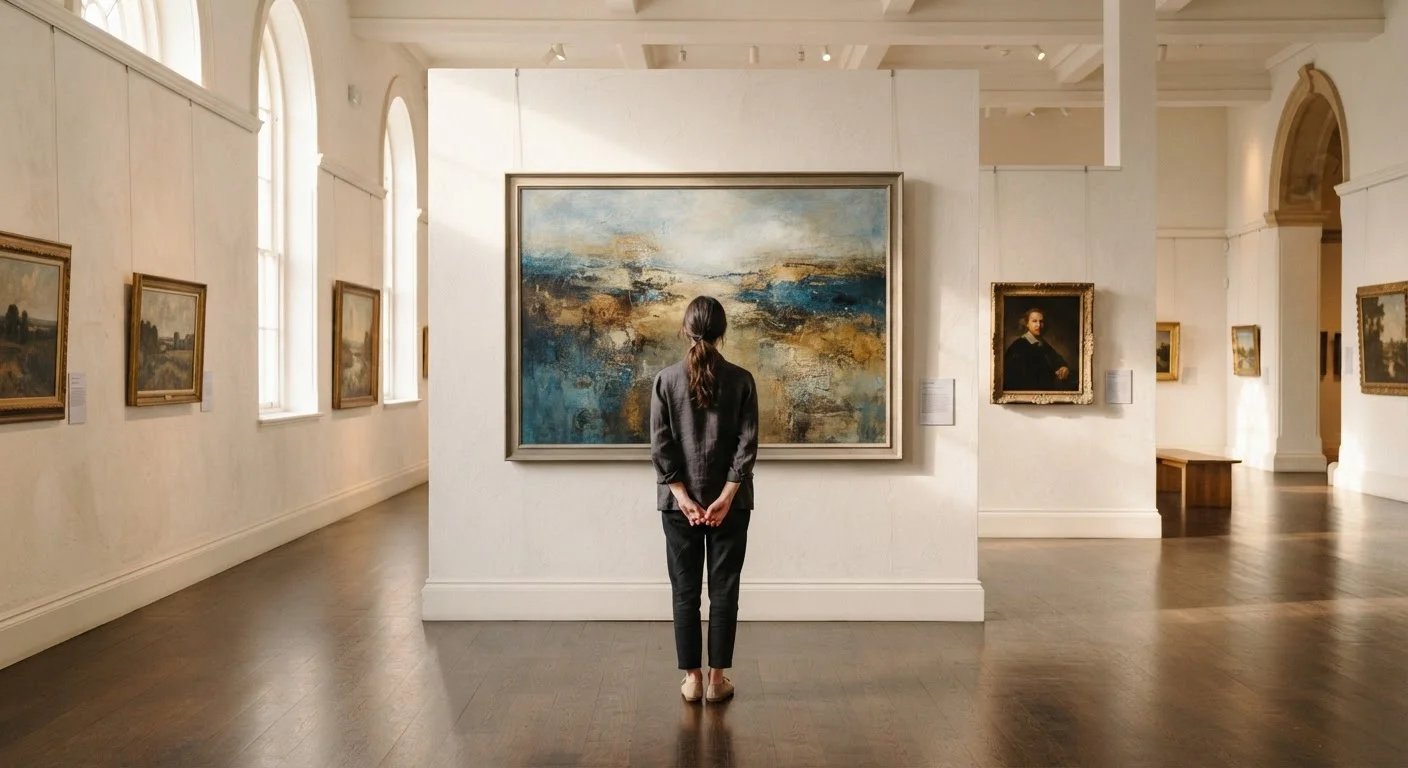
Pick any piece that catches your eye and commit to standing with it for at least five uninterrupted minutes. Notice what changes the longer you look. Does the background come forward? Do textures become more apparent? Does your emotional response shift? This exercise builds the kind of looking that makes every future visit richer.
Use the audio guide selectively
If the museum offers a free audio guide app or a rented device, use it on three or four works maximum rather than every numbered stop. Listening to a full narration for every piece in a gallery can paradoxically reduce engagement - you're processing audio instead of looking. Save the audio guide for pieces where you want more context after you've formed your own reaction.
Leave before you hit the wall
Museum fatigue is real. Most people reach a point - usually after 90 to 120 minutes - where nothing is registering anymore. Pay attention to when you start reading labels without absorbing them or walking past works without really seeing them. That's your signal to head to the café, sit outside, or simply leave. A focused 90-minute visit is far more valuable than a dutiful three-hour slog.
For readers interested in developing a longer-term relationship with visual art, our guide to engaging with art when you have no formal background offers approaches that extend well beyond a single visit.
Reading Wall Text Without Getting Lost in It
Wall labels - the small plaques next to individual works - and larger interpretive panels are tools, not assignments. The most useful approach is to look at the work first, form your own initial impression, and then consult the text. Reversing that order tends to replace your authentic response with the museum's approved one before you've had a chance to develop your own.
Good wall text will give you the title, artist, date, medium, and often a brief interpretive note. Read selectively. If a work doesn't hold your attention, move on without guilt. If one does, the text might give you a thread to pull - a historical context, a technique, a cultural movement. American museums are increasingly incorporating more diverse perspectives into their labeling, including Indigenous viewpoints; our article on the rise of Indigenous art in American museums explores how that shift is reshaping collection display and interpretation.
Don't Let Labels Replace Your Own Response
It's easy to let wall text do all the interpretive work for you, especially if you feel uncertain about your own reactions. But your initial, unmediated response to a piece - even if it's confusion, boredom, or unexpected emotion - is valid and worth noticing. The label can deepen your reaction; it shouldn't replace it before you've had one.