

Key Takeaways
- Food markets, ethnic enclaves, and local diners each reveal distinct layers of a city's history and culture.
- Doing light research before you arrive helps you find places locals actually frequent, not tourist traps.
- Eating at different price points and formats - street food, markets, sit-down spots - gives a fuller picture.
- Asking food vendors and servers questions is one of the most reliable ways to discover hidden gems.
- A city's food scene reflects its immigration history, geography, and economic identity.
What you will need
Why Food Is One of the Best Ways to Read a City
Food is infrastructure. Every city's eating landscape reflects who built it, who moved there, what the land produces, and what people could afford across generations. A po'boy shop that's been open since the 1950s carries different information than a ghost kitchen delivering fusion bowls. Both are real data points - they just tell different parts of the story.
For travelers and curious newcomers alike, food offers something that monuments and museums don't: immediate, sensory, participatory access to a city's living culture. You don't need expert knowledge to benefit from it. You need curiosity, a willingness to wander, and a basic framework for what to notice.
American food culture is shaped by immigration, geography, and history - and nowhere is that more visible than in the cities where those forces converged most intensely. Understanding that context makes you a more perceptive eater wherever you travel.
What you will need
How to Navigate a New City's Food Scene: Step by Step
The steps below work whether you're visiting a city for two days or moving there for good. They're designed to get you past the obvious and into the food culture that locals actually inhabit. Use the tools below as a starting kit - none of it needs to be elaborate.
Neighborhood map or transit app
Helps you identify distinct districts - ethnic enclaves, waterfront areas, historic downtowns - where food cultures tend to concentrate.
Local alt-weekly newspaper or city magazine website
Often publishes staff-written restaurant coverage without algorithmic bias, pointing to community favorites over tourist staples.
Cash
Many market vendors, street food operators, and family-run spots are cash-preferred or cash-only.
A food journal or notes app
Jotting down dish names, neighborhood context, and vendor stories helps you remember and connect what you've tasted.
Research the city's food identity before you arrive
Every American city has a food story shaped by geography, migration, and economics. Before you land, spend 20-30 minutes reading about the city's culinary reputation - not just its famous dishes, but why those dishes exist. Is the city a port town with a seafood tradition? Did a major wave of immigration plant a lasting culinary community? Understanding context helps you recognize what you're tasting when you get there.
For a grounded starting point on how food cultures form, see why Americans eat the way they do.
Start your first morning at a public market or food hall
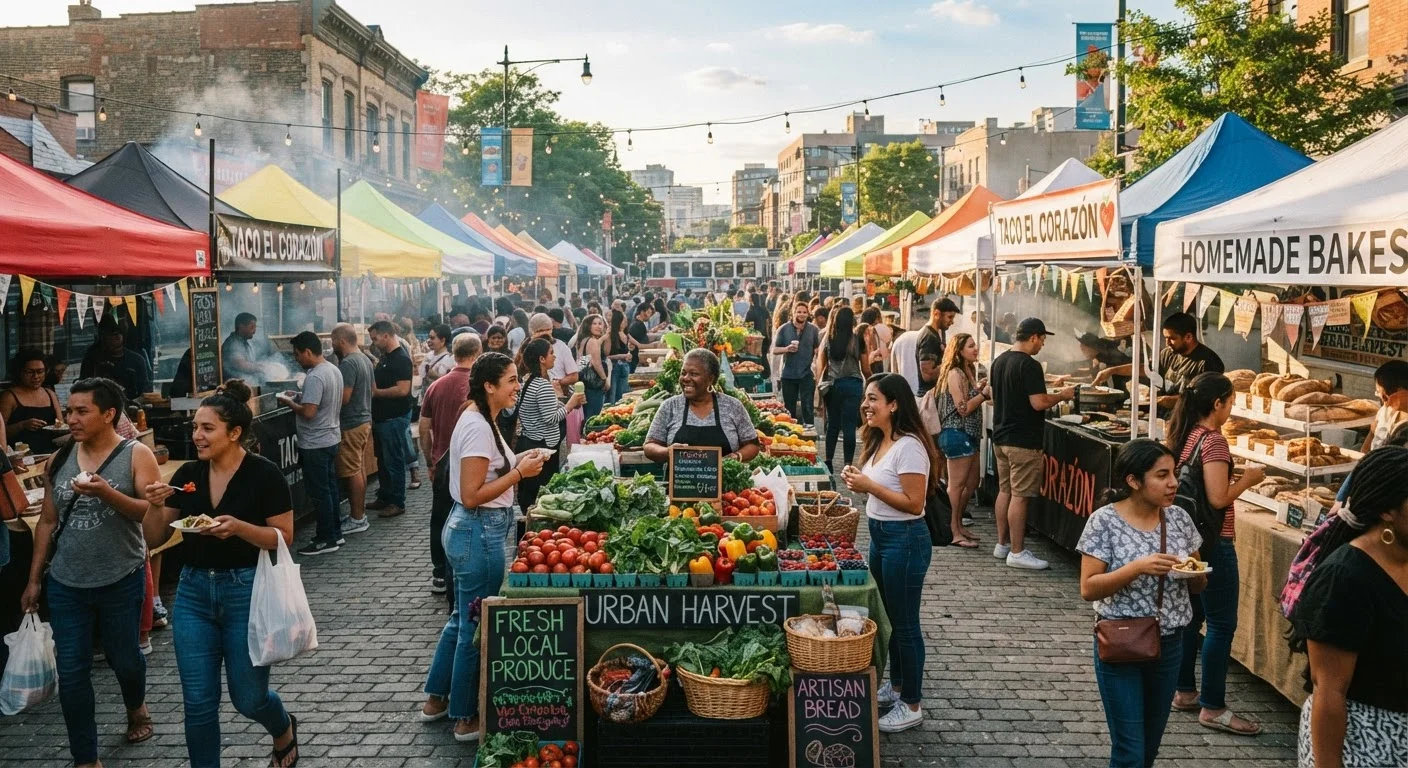
Public markets - farmer's markets, wholesale-style covered markets, or neighborhood bazaars - compress a city's food identity into a single walkable space. Show up early, eat small portions from multiple vendors, and pay attention to what ingredients appear again and again. Repetition signals regional identity.
Food halls offer a similar density of local vendors in a more curated setting. Food halls have reshaped the way Americans gather to eat, and they're often a reliable entry point into a city's independent food scene.
Walk an ethnic enclave or immigrant neighborhood
Many American cities have neighborhoods defined by the communities that shaped them - Vietnamese corridors, Mexican bakery blocks, West African grocery districts, Ethiopian restaurant rows. These areas often offer some of the most authentic and historically rooted food in any city, and the businesses are typically independent and community-supported.
Walk slowly. Read signage. Step into a grocery store or bakery even if you don't plan to eat a full meal. The ingredients on shelves and the dishes in steam trays tell a more honest story than any curated restaurant list.
Try both street food and a sit-down local diner
Street food and restaurant dining offer genuinely different windows into a city. Street food tends to be faster, cheaper, and often tied to working-class or immigrant food traditions. A sit-down meal - especially at a diner or neighborhood restaurant with decades of history - gives you context: the regulars, the long menu, the specials written on a whiteboard.
Street food and restaurant dining each shape how Americans experience cuisine in distinct ways - sampling both in the same day gives you a fuller picture than either alone.
Ask questions and follow recommendations
The most reliable food intelligence in any city lives with the people who work in it. Ask your server what the kitchen is proudest of. Ask a market vendor which other stalls they'd visit on their lunch break. Ask the person at your hotel or guesthouse where they eat on a Tuesday night - not where they send guests.
When you sit down to order somewhere new, slow down and read the menu deliberately. Menus are designed documents full of cultural signals - knowing what to look for adds depth to every meal.
Reflect on what the food told you about the city
Before you leave, take ten minutes to think back through what you ate and where. Which neighborhoods felt densely local? What ingredient or dish kept appearing? Were there visible signs of a food scene in transition - new concepts opening alongside old institutions? These patterns reflect the city's economic and cultural moment as much as any museum exhibit.
Cities with especially layered food identities - like New Orleans, where food is inseparable from history and place - reward this kind of reflection most richly. Food is rarely just food; it's evidence.
Talk to the Person Behind the Counter
Vendors, line cooks, and servers are often the most knowledgeable food guides in any city. A simple question - 'What's this neighborhood known for?' or 'What do regulars always order?' - can open doors that no review site will. You don't need to be an expert; genuine curiosity goes a long way.
Food Exploration Has Real Limits
Adventurous eating is rewarding, but be mindful of food allergies, dietary restrictions, and hygiene standards - especially at informal or outdoor stalls. If you have a serious allergy, communicating it clearly before ordering is essential. When in doubt about food safety at any venue, trust your judgment and move on.
Food exploration doesn't require a large budget or a sophisticated palate. It requires showing up, paying attention, and being willing to eat something you've never heard of before. The cities that reward this approach most are the ones with the deepest histories - but every American city has more going on beneath the surface than its most-reviewed restaurants suggest.
For context on how the American food landscape continues to shift, ghost kitchens and delivery-only restaurants represent one of the newest forces reshaping how city food cultures form - and what that means for how we discover and experience them.