

Key Takeaways
- Raised beds give you full control over soil quality but require meaningful upfront investment in materials and fill.
- In-ground gardens cost less to start but depend heavily on your yard's existing soil health and drainage.
- Raised beds typically warm up faster in spring, extending the growing season in cooler climates.
- In-ground plots are better suited for large-scale growing, deep-rooted crops, and spreading perennials.
- Either method can succeed - soil preparation and site selection matter more than which format you choose.
Option A
Raised Beds
The controlled, customizable growing environment.
Best for: Gardeners dealing with poor native soil, limited mobility, or wanting faster soil warm-up and tighter pest control.
Option B
In-Ground Gardens
The traditional, low-cost, expansive approach.
Best for: Homeowners with good existing soil who want to grow larger quantities of plants across more space at lower upfront cost.
If your yard has heavy clay, rocky, or contaminated soil
Raised Beds
Raised beds let you bypass poor native soil entirely by filling with a custom mix, giving roots a clean, well-draining environment from day one.
If you want to grow food at scale with minimal startup cost
In-Ground Gardens
In-ground plots require little more than soil amendment and tools, making them far more economical when covering large areas.
If you have mobility limitations or back and knee discomfort
Raised Beds
A bed built 18-24 inches tall dramatically reduces the need to bend or kneel, making regular maintenance much more manageable.
If you're planting deep-rooted crops like corn, squash, or asparagus
In-Ground Gardens
In-ground soil offers unlimited depth and horizontal spread, better accommodating crops with extensive or running root systems.
If you're gardening in a cold-climate region with a short frost-free window
Raised Beds
Raised beds shed cold air and warm up several weeks earlier than ground-level soil, giving cold-climate gardeners a meaningful head start.
Understanding What You're Actually Choosing Between
When homeowners debate raised beds versus in-ground gardens, they're really weighing a set of tradeoffs: cost, labor, soil quality, space, and long-term flexibility. Neither approach is objectively superior. What matters is how each one aligns with your yard's specific conditions and your gardening goals.
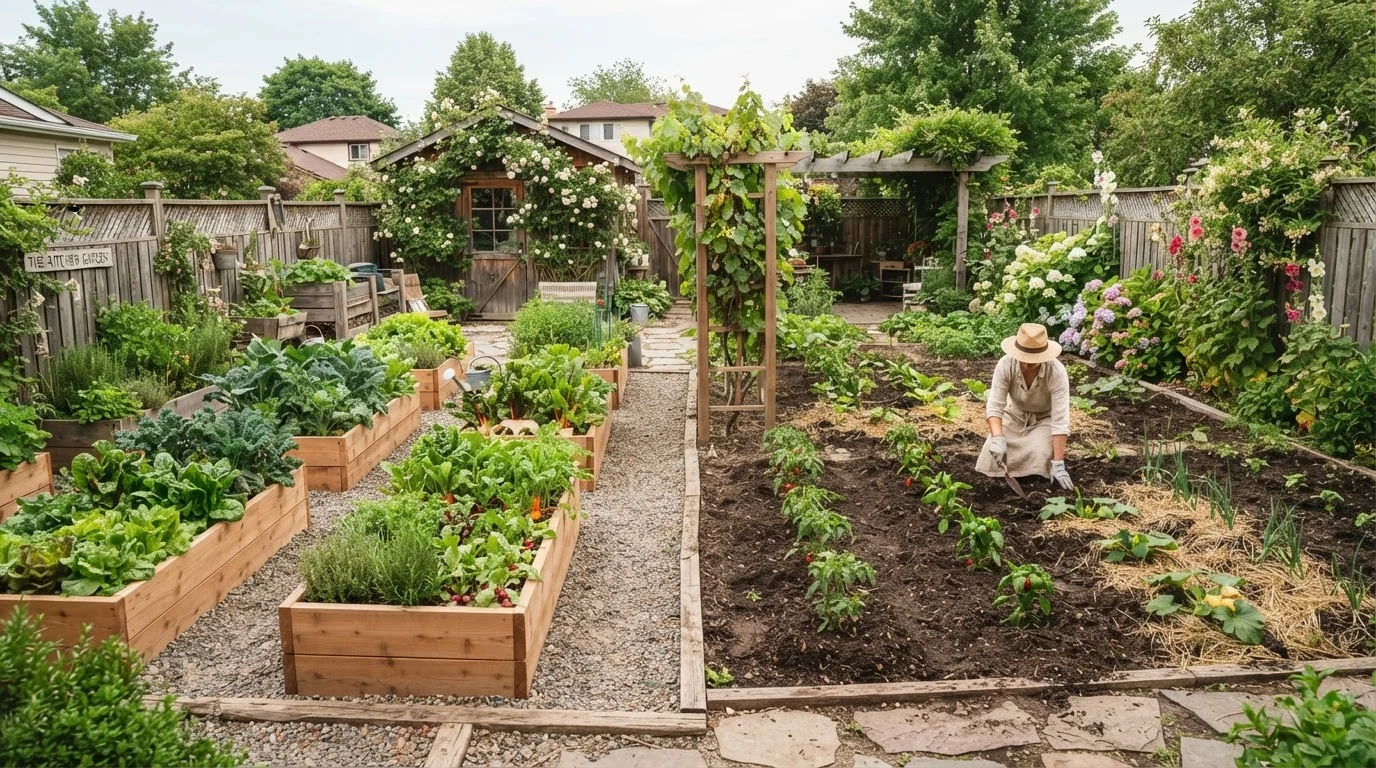
A raised bed is a contained growing structure - typically framed in wood, galvanized metal, or composite material - filled with imported soil or a blended growing mix. An in-ground garden works directly with your native soil, amended as needed to support plant growth.
If you're still figuring out your broader yard plan, the Starting a Vegetable Garden From Scratch guide covers site selection and foundational soil prep that applies to either format.
| Criterion | Raised Beds | In-Ground Gardens |
|---|---|---|
| Upfront cost | Moderate to high ($150-$400+ per bed) | Low (amendments and tools only) |
| Soil control | Full - custom fill, no native constraints | Partial - depends on native soil quality |
| Spring soil warm-up | Faster - several weeks ahead of ground | Slower - especially in cold climates |
| Weed pressure | Lower - imported soil has fewer seeds | Higher - native seed bank is active |
| Watering needs | More frequent - beds dry out faster | Less frequent - soil retains moisture longer |
| Scalability | Limited by cost and available space | Easily expanded across large areas |
| Accessibility | Excellent - adjustable height, less bending | Requires kneeling or bending at ground level |
| Deep-rooted crops | Limited by bed depth (typically 8-18 inches) | Unrestricted depth and spread |
Soil, Drainage, and the Conditions Already in Your Yard
Your native soil is the single most important factor in this decision. If a simple drainage test - digging a 12-inch hole, filling it with water, and watching how fast it drains - reveals that water sits for hours, your ground has poor drainage. Clay-heavy soils are common across much of the Midwest and Southeast. Rocky or shallow soils are typical in parts of the Northeast and West. In these situations, raised beds offer a practical workaround: you fill them with a custom blend (typically a mix of topsoil, compost, and aeration material) and bypass the native problem entirely.
In-ground gardens make the most sense where existing soil is loamy, well-draining, and moderately fertile. These conditions exist in many parts of the country, particularly in regions with a history of agricultural use. Even good native soil benefits from annual compost additions, but the baseline work is much lighter.
~60%
U.S. soils with drainage or texture challenges
USDA soil surveys suggest a substantial share of residential lots in the U.S. have clay-heavy, compacted, or otherwise problematic native soil that limits garden productivity.
2-3 weeks
Earlier planting possible in raised beds
University extension programs in several northern states note that raised beds can warm to planting temperature meaningfully earlier than in-ground soil in the same location.
4×8 ft
Most common raised bed dimension
A 4-foot width is widely recommended so gardeners can reach the center from either side without stepping into the bed and compacting the soil.
Drainage also affects which crops thrive. Root vegetables like carrots and beets need loose, deep, rock-free soil - a challenge in many native plots but easily achieved in a tall raised bed. On the other hand, spreading crops like pumpkins or sweet corn tend to do better in-ground where they have unlimited horizontal and vertical room.
Cost, Labor, and Long-Term Maintenance
Raised beds carry real upfront costs. Materials for a single 4×8-foot cedar bed - lumber, hardware cloth lining for pest exclusion, and quality fill soil - can run $150-$400 depending on your region and choices. Multiply that across several beds and the investment climbs quickly. In-ground gardens, by contrast, require little beyond a soil amendment budget, basic tools, and time.
Longer-term, the calculus shifts. Raised beds typically require less weeding because imported fill rarely carries the weed seed bank that native soil does. They also tend to compact more slowly. In-ground plots require more active soil management - annual tilling or no-till mulching, cover cropping, and consistent weed pressure. The organic vs. inorganic mulch comparison is worth reading if you're planning to suppress weeds in either setup, since mulch strategy differs meaningfully between the two.
Raised beds also reduce certain pest and disease pressures. Slugs, voles, and soil-borne pathogens have a harder time accessing a lined, elevated bed. However, raised beds dry out faster than in-ground plots, so they often demand more frequent irrigation - an ongoing cost in water and time.
Which Setup Fits Your Garden's Long-Term Goals
Think about what you actually want to grow - and for how long. Annual vegetables like tomatoes, peppers, lettuce, and herbs thrive in raised beds. So do cut flowers and compact herbs. For ideas on pairing annuals with longer-lived plantings, the perennials vs. annuals planning guide offers useful context on how these plant types behave differently over time.
Perennials and large fruiting shrubs - strawberries, asparagus, rhubarb, berry canes - can work in raised beds but often do better in-ground where they aren't constrained by bed depth or width. Trees and shrubs planted near garden areas deserve their own consideration; root competition and shade are real factors. The tree planting decisions article explains how proximity to planting areas can create long-term complications.
A Note on Soil Contamination
If your home was built before 1978, or your yard was previously used for industrial or commercial purposes, have your native soil tested for lead and other contaminants before planting edibles directly in the ground. Many county extension offices offer low-cost soil testing. Raised beds with lined bottoms and imported fill are a common and practical solution when contamination is a concern - but consult your local extension service or a soil professional for guidance specific to your situation.
Ultimately, many experienced gardeners use both: raised beds for high-value vegetables and herbs where soil control pays off, and in-ground areas for larger, lower-maintenance crops or ornamental plantings. There's no rule requiring you to commit entirely to one approach.