

Key Takeaways
- Organic mulches decompose over time, enriching soil with nutrients and improving its structure.
- Inorganic mulches last longer and require less frequent replacement, but do not feed the soil.
- Your climate, plant type, and maintenance goals should guide which mulch you choose.
- Most garden beds benefit from a 2-4 inch layer of mulch, regardless of type.
- Some situations call for combining both types - organic on top of landscape fabric, for example.
Our Verdict
Neither organic nor inorganic mulch is universally superior - each excels in specific conditions. Organic mulches are the stronger choice for vegetable gardens, flower beds, and any area where improving soil health is a priority. Inorganic options shine in low-maintenance landscapes, pathways, and areas prone to erosion where permanence matters more than soil enrichment.
| Best for | Recommended |
|---|---|
| Vegetable gardens and annual flower beds | Organic mulch (straw or compost) |
| Permanent shrub borders and foundation plantings | Inorganic mulch (gravel or river rock) |
| Homeowners focused on soil improvement over time | Organic mulch (wood chips or shredded bark) |
| Driveways, paths, or low-water xeriscaped areas | Inorganic mulch (crushed stone or landscape fabric) |
What Mulch Actually Does in the Garden
Mulch is any material spread across the soil surface to protect and improve it. Regardless of type, mulch serves several core functions: it conserves soil moisture by reducing evaporation, moderates soil temperature against heat and cold, and suppresses weed growth by blocking light. What differs significantly between organic and inorganic mulch is what happens over time - and whether the soil underneath benefits from the material breaking down.
Understanding these core functions helps you evaluate any mulch option against your specific goals. If you're also thinking through your garden beds' broader setup, the tradeoffs between raised beds and in-ground gardens are worth understanding alongside your mulch choice.
Organic Mulch: Benefits, Drawbacks, and Best Uses
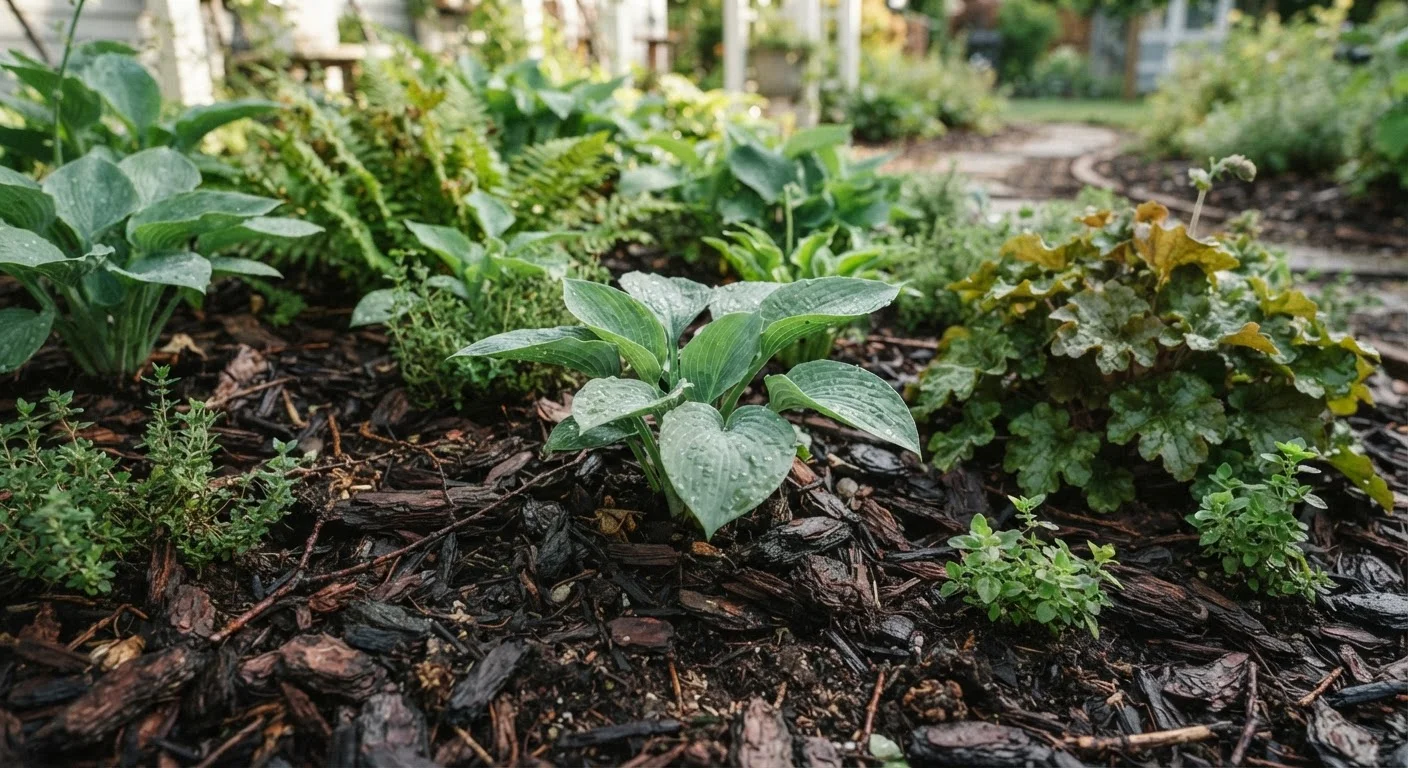
Organic mulches include materials that were once living: wood chips, shredded bark, straw, grass clippings, pine needles, and leaf mold. Their defining characteristic is that they decompose, which is both their greatest advantage and their main limitation.
Key Benefits
- Soil enrichment: As organic mulch breaks down, it adds organic matter that improves soil texture, drainage, and microbial activity.
- Moisture retention: Materials like straw and wood chips absorb water and release it slowly, reducing the need for frequent irrigation.
- Temperature buffering: Thick organic layers insulate roots from extreme heat in summer and frost in fall and winter.
Drawbacks to Consider
- Requires replenishment: Most organic mulches decompose within one to three years and must be topped up regularly.
- Can harbor pests: Moist, decomposing material can attract insects or create conditions favorable to fungal growth if piled too close to plant stems.
- Variable nitrogen impact: Fresh wood chips can temporarily tie up soil nitrogen as they decompose - a manageable issue, but worth knowing if you're planting in freshly mulched beds.
Use Compost as a Living Mulch
A 1-2 inch layer of finished compost spread across garden beds acts as both mulch and slow-release fertilizer. It's particularly effective in vegetable gardens where you want to improve soil structure and feed plants simultaneously. Pair it with a thicker layer of straw on top to extend moisture retention. Learn more about building a productive compost system in our composting guide.
Organic mulch works particularly well as part of a broader soil-health strategy. If you're already composting at home, finished compost itself makes an excellent, nutrient-rich mulch for vegetable beds and annual plantings.
Inorganic Mulch: Benefits, Drawbacks, and Best Uses
Inorganic mulches include gravel, crushed stone, river rock, lava rock, and landscape fabric. Unlike their organic counterparts, these materials do not break down - which gives them durability but removes any soil-feeding benefit.
Key Benefits
- Longevity: Stone and gravel can last for decades with minimal maintenance, making them cost-effective in permanent landscape beds.
- Weed suppression: Landscape fabric, especially when topped with stone, creates an effective physical barrier against most weed growth.
- Consistent appearance: Gravel and rock maintain their look year-round without fading or decomposing, which appeals to many homeowners in low-maintenance or drought-tolerant landscapes.
Drawbacks to Consider
- No soil benefit: Inorganic mulches do not improve soil structure or fertility over time. In fact, some landscape fabrics can gradually restrict soil oxygen and water penetration.
- Heat retention: Gravel and stone absorb and radiate heat, which can stress plants in hot climates - a real concern in southern and southwestern regions of the U.S.
- Weed intrusion over time: Organic debris accumulates on top of fabric and stone, eventually creating a layer where weeds can take root anyway.
| Organic Mulch | Inorganic Mulch | |
|---|---|---|
| Lifespan | 1-3 years; needs replenishment | 5-20+ years with minimal upkeep |
| Soil enrichment | Yes - adds organic matter over time | No - no nutritional benefit to soil |
| Weed suppression | Good when applied 3-4 inches deep | Strong, especially with fabric underlayer |
| Moisture retention | Excellent; absorbs and releases water | Moderate; stone reflects, fabric restricts |
| Heat impact on soil | Insulates and cools effectively | Stone can radiate heat in warm climates |
| Best setting | Vegetable beds, flower gardens | Permanent borders, paths, xeriscaping |
| Maintenance level | Moderate - topping up required | Low - occasional cleaning/raking |
Choosing the Right Mulch for Your Situation
The best mulch for your yard depends on what you're trying to accomplish, not on any single material being universally superior. Here are the main scenarios to consider:
- Vegetable gardens and annual beds: Opt for organic mulch - straw, shredded leaves, or compost. These beds are turned annually, so decomposition is an advantage, not a nuisance.
- Established shrub and tree borders: Wood chips or shredded bark work well, providing long-lasting coverage. Gravel works in drier climates or near drought-tolerant plants.
- Pathways and high-traffic zones: Gravel or crushed stone stands up to foot traffic without compacting like organic material would.
- Slopes and erosion-prone areas: Heavy stone mulch can anchor soil effectively, but consult a landscaping professional for steeper grades.
Applying 2-4 inches of mulch is the general guideline for most beds - enough to retain moisture and suppress weeds without smothering plant crowns or roots. Always leave a small gap around the base of trees and shrubs to prevent rot.
If you're mulching as part of a seasonal routine, the fall yard prep checklist outlines when to apply fresh mulch for maximum winter protection and spring benefit.