

Key Takeaways
- Choosing the wrong species for your climate or soil type is one of the most common and costly tree planting mistakes.
- Planting too close to structures, utilities, or septic systems can cause expensive damage over years or decades.
- Mature size-not nursery size-should determine where and whether a tree belongs in your yard.
- Ignoring soil drainage and sun requirements at planting sets a tree up for long-term decline.
- A little research before planting can prevent removal costs that often run into the thousands of dollars.
Why Tree Decisions Are So Hard to Reverse
Unlike most landscaping choices, planting a tree is a long-term commitment that can outlast your mortgage. A shrub planted in the wrong spot is an afternoon's work to move. A 30-foot oak planted too close to your foundation is an expensive, sometimes structural, problem. Because trees grow slowly, the consequences of a poor planting decision often don't fully surface for five, ten, or even twenty years - long after the original reasoning is forgotten.
The mistakes below are among the most commonly cited by arborists and extension horticulturalists. None require expert knowledge to avoid - just a bit of research before the shovel hits the ground. For a broader look at seasonal yard care that includes tree maintenance, see our fall yard prep checklist.
Common Tree Planting Mistakes to Avoid
The following errors come up repeatedly among homeowners who later wish they had planted differently - or not planted at all in a particular spot.
Planting a species that will outgrow the available space.
Why it happens: Trees at nurseries are small and appealing, making it easy to underestimate what they'll become. A 4-foot sapling labeled 'fast growing' can become a 70-foot canopy tree within a couple of decades.
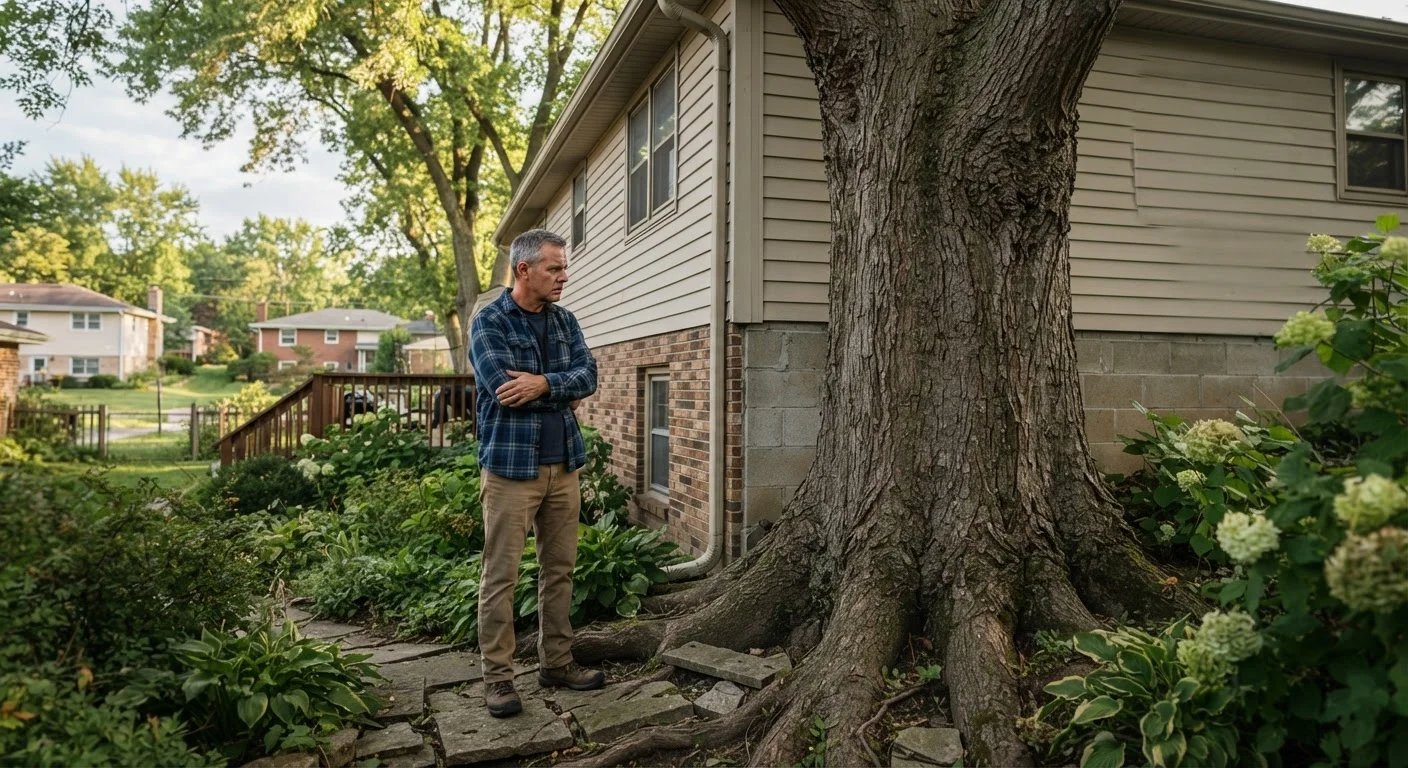
Planting too close to the house, driveway, or hardscaping.
Why it happens: Homeowners often want immediate privacy or shade near the house, so they plant close. The distance that looks fine when a tree is young becomes inadequate as the trunk and root system expand.
Ignoring the proximity to underground utilities and septic systems.
Why it happens: Underground infrastructure is invisible, so it's easy to forget it exists. Homeowners may plant a tree without knowing exactly where pipes, cables, or a drain field run beneath the yard.
Choosing a species poorly suited to local soil, drainage, or climate.
Why it happens: Many homeowners select trees based on appearance or because a neighbor has one, without checking whether the species suits their specific soil type, drainage conditions, or climate zone.
Planting at the wrong depth - most often too deep.
Why it happens: The intuition that 'deeper is more stable' leads many gardeners to bury the root ball too far down. Nurseries and garden centers sometimes also sell trees with the root flare already buried in the container.
Overwatering or underwatering in the establishment period.
Why it happens: New tree owners often assume trees are either drought-tough immediately or need heavy daily watering. Both extremes can stress or kill a newly planted tree before it establishes.
If you're interested in species that tend to sidestep several of these issues by design, our article on native plants and the American yard covers the real tradeoffs honestly.
What to Check Before You Plant
A few practical steps taken before planting can prevent the majority of the regrets described above.
- Call 811 before digging. This free national service marks underground utility lines - gas, electric, water, and cable - so you know what's below your yard before a shovel or tree root reaches it.
- Check the mature canopy spread, not just the height. Many homeowners read the height on the nursery tag but overlook the spread. A tree listed as 40 feet tall may also spread 35 feet wide at maturity.
- Consult your local Cooperative Extension office. Every U.S. state has an extension service connected to a land-grant university. They publish regionally specific planting guides and can advise on which species thrive in your county's soil and climate.
- Know your USDA Hardiness Zone - and your microclimate. Cold hardiness zones are a starting point, but your specific site (low-lying frost pocket, exposed hilltop, urban heat island) can shift what performs well.
- Review HOA rules and local ordinances. Some municipalities restrict certain invasive or messy species; others have rules about tree placement near property lines.
$1,000-$2,000+
Typical cost to remove a mature tree
According to estimates from certified arborist associations, large tree removal in residential settings commonly costs between $1,000 and $2,000 or more depending on size, location, and complexity.
10%-15%
Potential property value increase from mature trees
Research from the USDA Forest Service and various university studies suggests well-placed, healthy mature trees can increase residential property values by roughly 10 to 15 percent, though outcomes vary by market.
Taking thirty minutes to research a species before purchasing can genuinely change the outcome. The investment in a healthy, well-placed tree pays back in shade, air quality, and property value - while a misplaced tree tends to cost money in every direction.