

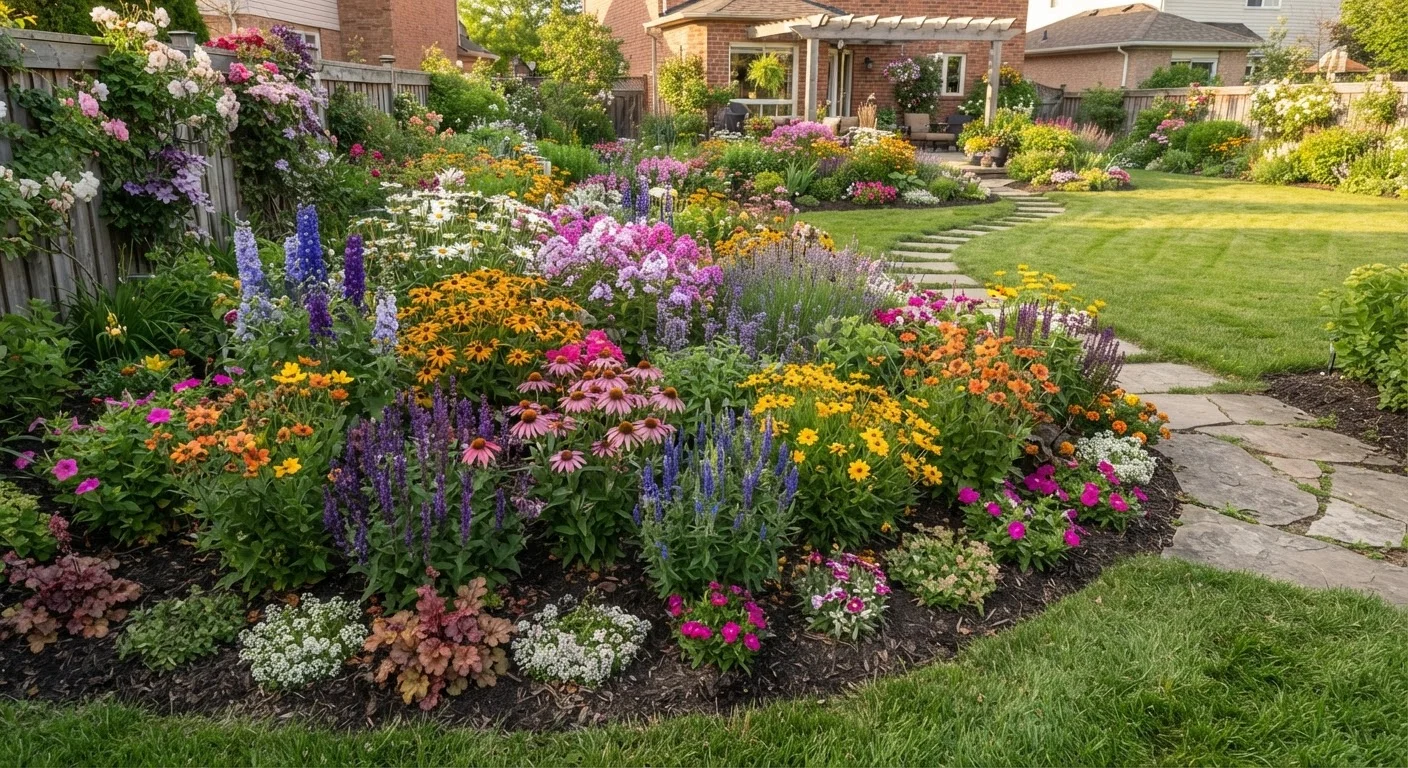
Key Takeaways
- Perennials return each year from established roots, reducing replanting effort and long-term cost.
- Annuals bloom prolifically all season but must be replanted each year from seed or transplant.
- Combining both types gives your yard layered interest across multiple seasons.
- Perennials take time to establish; most reach their full display by their second or third year.
- Your regional climate and USDA hardiness zone should guide which perennials survive winter in your yard.
Our Verdict
Neither perennials nor annuals alone will give you a yard that looks great from spring through fall. Perennials build long-term structure and reduce annual replanting costs, but they have off-peak gaps. Annuals fill those gaps with reliable, season-long color. A well-planned combination of both is the most practical strategy for most American homeowners.
| Best for | Recommended |
|---|---|
| Homeowners who want lower long-term maintenance and cost | Perennials |
| Those who want bold, continuous color with full seasonal control | Annuals |
| Gardeners seeking the best of both worlds across all seasons | A mixed planting approach |
What Sets Perennials and Annuals Apart
The core difference comes down to life cycle. Perennials are plants that live for more than two years. They die back to the ground in winter (in most climates) and regrow from their root systems each spring. Examples include coneflower (Echinacea), black-eyed Susan, daylily, and lavender. Annuals complete their entire life cycle - germination, flowering, seed production, and death - within a single growing season. Petunias, marigolds, zinnias, and impatiens are classic annuals.
This distinction matters for your yard planning because it affects how you spend money, how much labor you invest each season, and what your garden looks like from month to month. Understanding both categories before you dig helps you avoid starting over every spring - or waiting years for a garden that feels alive.
The Case for Perennials: Investment That Compounds
Perennials are often described as long-term investments, and that framing holds up well. You typically pay more for a perennial transplant upfront compared to annual seedlings, but that plant returns - and spreads - for years. Many perennials also divide readily, meaning you can expand your planting over time without purchasing new stock.
The practical upside is significant for homeowners who don't want to replant beds every spring. Once established (usually after the first full growing season), perennials need relatively little intervention beyond seasonal pruning, dividing every few years, and routine watering during dry spells.
Stagger Your Perennial Bloom Times
When selecting perennials, look for varieties that bloom in early spring, midsummer, and fall. Choosing plants across all three windows prevents the dreaded "all-green" gap that makes perennial-only beds look unfinished for weeks at a time. Most plant tags and reputable nurseries label bloom season clearly - use that information as a planning filter, not an afterthought.
The tradeoff: most perennials bloom for only a few weeks at a time. A yard planted exclusively with perennials can look sparse or all-green for stretches of the season. Thoughtful selection of early-, mid-, and late-season bloomers minimizes gaps. Pair spring-blooming plants like bleeding heart with mid-summer rudbeckia and fall-blooming sedums to maintain continuous interest.
Your USDA Plant Hardiness Zone is essential here. A perennial rated for Zone 6 may not survive winter in a Zone 5 garden. Check plant tags and confirm your zone before purchasing. Also see our guide to native plant options for American yards, which often overlap with regionally hardy perennials.
The Case for Annuals: Reliable Color, Full Season Control
Annuals solve the problem perennials create: they bloom continuously from planting until frost, delivering uninterrupted color without any gap periods. For high-visibility spots - front walkways, containers, window boxes, or the front border of a bed - annuals provide the reliable, polished look many homeowners want throughout the growing season.
They also give you flexibility. Because you're replanting each year anyway, you can change colors, varieties, and arrangements seasonally or annually without being locked into a permanent design. This suits homeowners who enjoy experimenting with different palettes each year.
| Perennials | Annuals | |
|---|---|---|
| Lifespan | 3+ years from established roots | One growing season only |
| Bloom duration | 2-6 weeks per season, varies by type | Continuous from planting to frost |
| Upfront cost | Higher per plant | Lower per plant or seed pack |
| Long-term cost | Lower - no annual repurchase | Higher - replant every year |
| Labor per season | Lower once established | Higher - replanting required |
| Design flexibility | Limited - plants are permanent | High - change annually |
| Establishment time | 1-2 seasons for full display | Blooms in same season planted |
| Climate sensitivity | Zone-dependent for winter survival | Less concern; replaced each year |
The downside is cumulative cost and labor. Buying flats of annual transplants each spring adds up, especially for large beds. Growing from seed reduces cost but requires starting indoors 6-10 weeks before your last frost date - a manageable commitment for some, a deterrent for others.
How to Combine Both for Year-Round Impact
The most practical approach for most homeowners is a mixed planting strategy: use perennials as your structural backbone and fill seasonal gaps with annuals. Here's how to think about it layer by layer:
- Back and middle of beds: Plant taller perennials that anchor the design - ornamental grasses, tall coneflowers, or phlox. These return reliably and give the bed visual structure even when not in bloom.
- Front edges and containers: Fill with annuals for continuous color impact where visitors and passersby focus most.
- Gap-fillers: When a perennial finishes blooming mid-season, tuck in a fast-growing annual nearby to bridge the visual gap until the next perennial takes over.
Fall preparation matters for both plant types. Cutting back spent perennial stalks, amending soil, and noting which annuals self-seeded are all valuable end-of-season tasks. Our fall yard prep checklist walks through those steps in detail. If you're also planning new garden beds, see our comparison of raised beds vs. in-ground gardens to choose the right setup before planting.