

Key Takeaways
- Most vegetables need at least six hours of direct sun daily - site selection is the single most important decision you'll make.
- Healthy, well-amended soil dramatically outperforms fertilizer shortcuts for first-time gardeners.
- Start small: a 4×8-foot bed is manageable and still yields meaningful results.
- Easy beginner crops include lettuce, zucchini, green beans, and radishes.
- Consistent watering and early pest scouting prevent most first-season setbacks.
- Fall bed preparation sets you up for a stronger second growing season.
Start here
Choosing the Right Spot
Next
Understanding and Preparing Your Soil
Then
Planning What to Plant
Ready to act
Planting and Early Care
Big picture
What to Expect Through the Season
Choosing the Right Spot
Site selection determines more about your garden's success than any seed variety or product you buy. Before digging a single inch, observe your yard at different times of day across several days and note where sunlight lands and for how long.
Most vegetables - especially tomatoes, peppers, cucumbers, and squash - require a minimum of six hours of direct sun. Leafy greens are more forgiving at four to six hours, making them a smart choice if your yard has partial shade. Avoid spots directly under large trees, which compete for water and nutrients in addition to casting shade.
Proximity to a water source also matters. You'll be watering regularly, and a garden bed that requires hauling a hose 100 feet will quickly become a chore you skip. Ideally, position your bed within reach of an outdoor spigot. Also check that the site drains reasonably well - standing water after heavy rain is a warning sign of poor drainage that can drown roots and invite disease.
Start Smaller Than You Think You Should
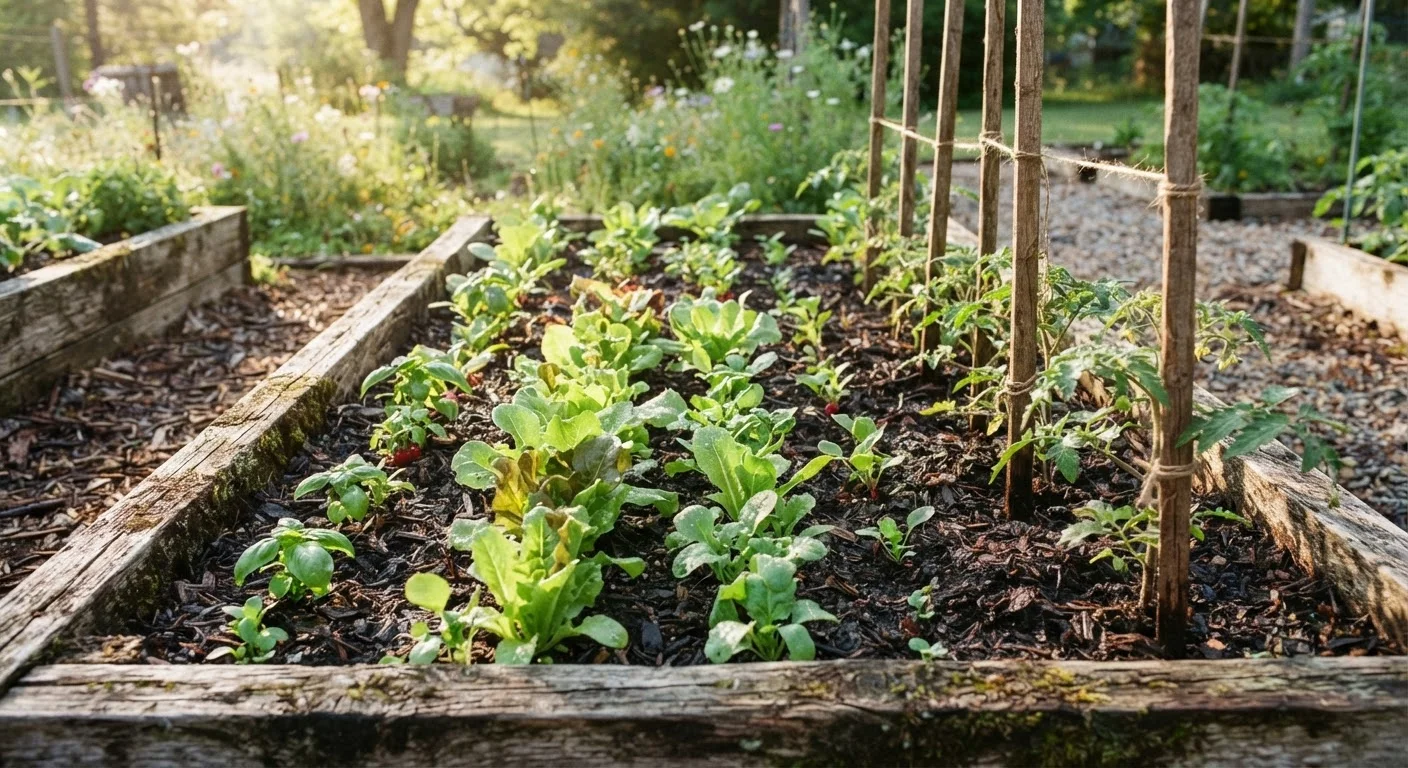
Most first-time gardeners overestimate how much space they can manage. A single well-tended 4×8-foot raised bed will teach you far more than a sprawling plot that becomes unmanageable by midsummer. You can always add more space in year two once you understand the rhythms of watering, weeding, and harvesting.
Understanding and Preparing Your Soil
Soil is not just dirt - it's a living system that feeds your plants. Most native yard soil benefits from improvement before vegetables go in.
pH
A scale from 0 to 14 that measures how acidic or alkaline your soil is. Most vegetables prefer a slightly acidic to neutral range of 6.0 to 7.0.
Compost
Decomposed organic material - food scraps, leaves, grass clippings - that improves soil structure, drainage, and nutrient content when worked into garden beds.
Last frost date
The average calendar date in your area after which freezing temperatures are unlikely. It determines when warm-season crops can safely go into the ground.
Transplant
A young plant started from seed indoors or at a nursery and then moved into the garden. Transplants give you a head start over direct seeding for slow-growing crops.
Bolting
When a plant shifts energy from producing edible leaves or roots to producing flowers and seeds, often triggered by heat or inconsistent watering. Bolted lettuce, for example, becomes bitter and unpalatable.
Mulch
A layer of material - straw, wood chips, or shredded leaves - spread over soil around plants to retain moisture, regulate soil temperature, and suppress weed growth.
Start by digging down six to eight inches and evaluating what you find. Healthy garden soil should be dark, crumble loosely, smell earthy, and show signs of earthworm activity. Heavy clay soil drains poorly and compacts easily; sandy soil drains too fast and holds few nutrients. Both improve significantly with the addition of aged compost worked in to a depth of at least six inches.
A basic soil test - available through most cooperative extension services or as a kit from garden centers - tells you your soil's pH and nutrient levels. Most vegetables grow best in soil with a pH between 6.0 and 7.0. If your soil is too acidic, ground limestone can raise pH; if too alkaline, sulfur can lower it. Follow test results rather than guessing.
If your native soil is very poor or the area has unknown fill history, consider building a raised bed and filling it with a mix of quality topsoil and compost. This gives you complete control over your growing medium from day one.
Planning What to Plant
Resist the temptation to plant everything that interests you in your first season. A focused, manageable plan produces better results and a better learning experience than an overstuffed garden that becomes overwhelming.
A 4×8-foot bed is a practical starting size for a first-time gardener. It's large enough to grow a meaningful variety of crops but small enough to maintain without burnout. As you gain confidence, you can always expand.
Select crops based on three factors: what your household will actually eat, what grows well in your regional climate, and the difficulty level. Your local Cooperative Extension office publishes planting calendars tailored to your state - these are among the most reliable free resources available and should guide your timing decisions.
- Cool-season crops (planted before last frost): lettuce, spinach, kale, peas, radishes, broccoli
- Warm-season crops (planted after last frost): tomatoes, peppers, zucchini, green beans, cucumbers, basil
Once you're harvesting your own produce, you'll likely find yourself spending more time in the kitchen. Our end-to-end home cooking guide is a helpful companion for turning fresh vegetables into satisfying meals.
Planting and Early Care
Seeds vs. transplants is one of the first practical decisions you'll face. Many crops - beans, peas, carrots, radishes - do best sown directly in the ground because they don't tolerate root disturbance. Others, like tomatoes and peppers, are typically started indoors six to eight weeks before the last frost date or purchased as transplants from a local nursery, which saves time and simplifies your first season.
When planting, follow spacing guidelines on seed packets or plant tags. Crowding is one of the most common beginner mistakes - it increases competition for nutrients and reduces airflow, which promotes disease. Plant at the correct depth; a general rule is to plant seeds two to three times as deep as their diameter.
Watering consistency matters more than volume. Aim for roughly one inch of water per week. Stick your finger two inches into the soil - if it's dry, water thoroughly. Irregular watering causes problems like blossom-end rot in tomatoes and bolting in lettuce. Mulching with straw or wood chips around plants helps retain soil moisture and suppress weeds, reducing how often you need to intervene.
Avoid Overhead Watering When Possible
Watering leaves and stems directly - especially in the evening - leaves plants wet overnight, creating ideal conditions for fungal diseases like powdery mildew and blight. Water at the base of plants in the morning whenever possible, and consider soaker hoses for consistent, low-splash irrigation.
What to Expect Through the Season
First-time gardeners are sometimes surprised that a vegetable garden requires ongoing attention, not just a burst of energy in spring. Budget roughly 20 to 30 minutes per week for a small bed - more during peak growing season.
Common challenges in a first season include aphid infestations, fungal issues from overhead watering, and uneven germination. Scout your plants at least twice a week, checking undersides of leaves for insects and looking for yellowing, spotting, or wilting. Catching problems early almost always makes them easier to address.
As the season winds down, the work you put in during fall determines how well your garden bounces back next year. Clearing spent plants, adding compost, and covering bare soil prevents nutrient loss over winter. Our fall yard prep checklist covers bed and garden tasks that pay dividends in spring.
Your first season will involve trial and error - that's expected and valuable. Keep simple notes on what you planted, when, and how it performed. That record becomes your most useful tool for planning a second, more confident growing season.