
Staircase, Bathroom, and Bedroom: The Three Most Hazardous Zones in the Average Home

Key Takeaways
- Staircases, bathrooms, and bedrooms generate the majority of non-fatal home injury incidents.
- Wet surfaces, poor lighting, and missing grab bars are among the most correctable risk factors.
- Many effective safety upgrades require little or no professional assistance and minimal cost.
- Older adults and young children face elevated risk in all three zones and benefit most from targeted modifications.
- A systematic room-by-room audit is the most reliable way to catch overlooked hazards.
Why These Three Rooms Deserve Your Attention First
Most household injuries don't happen during unusual activities - they happen in everyday spaces during routine moments. The staircase, bathroom, and bedroom consistently account for a disproportionate share of non-fatal home injuries across all age groups, according to data tracked by the U.S. Consumer Product Safety Commission and public health researchers. What these three zones share is a combination of physical features - hard or slick surfaces, low light, elevation changes, or confined layouts - that amplify the consequences of a small lapse in attention.
Understanding why each room is hazardous is the first step toward reducing exposure. The good news: many of the most effective interventions are straightforward, low-cost, and don't require a contractor. For a broader overview of household safety across every room, see our complete home safety overview. If you've recently moved, this beginner-friendly guide is a practical starting point.
The Staircase: Elevation, Speed, and Hard Landings
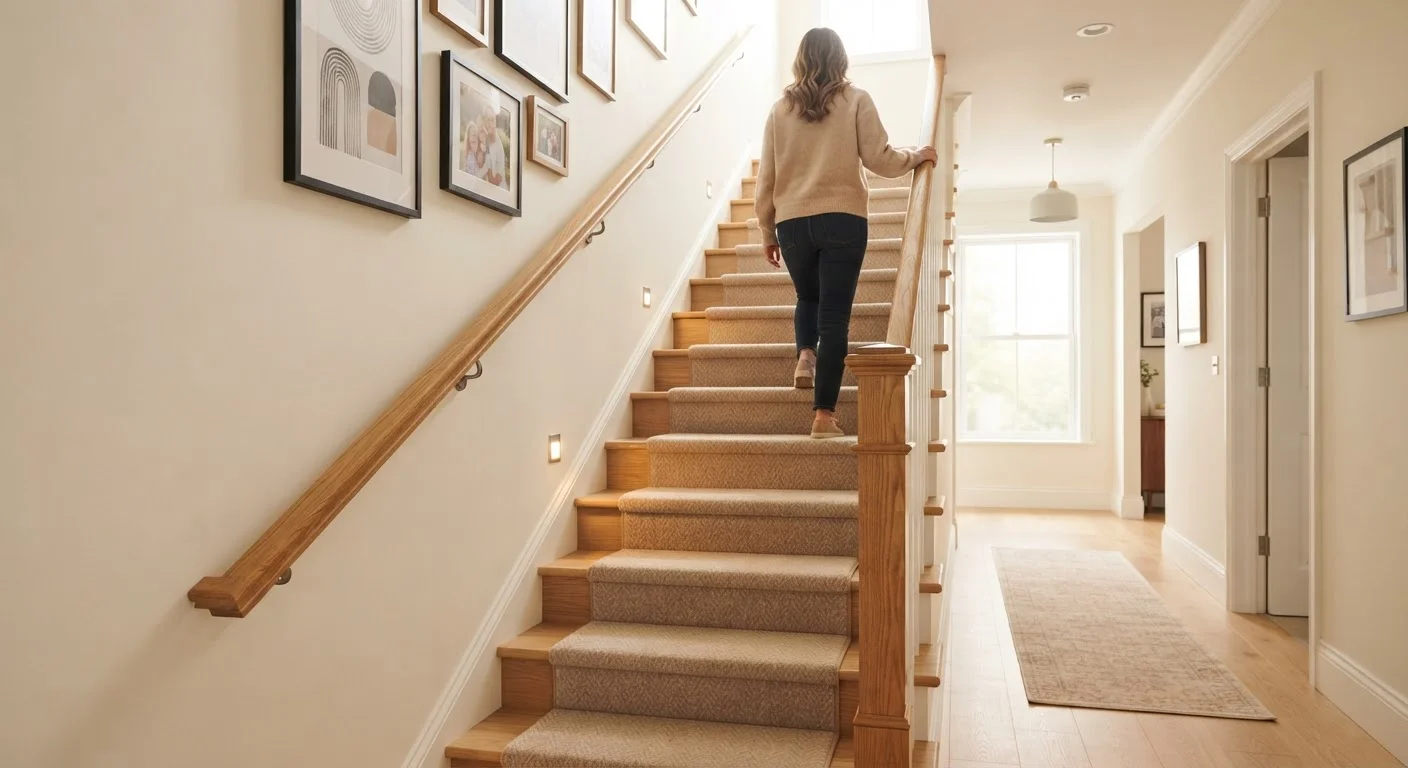
Staircases combine height, momentum, and typically hard surfaces - a combination that makes falls here more likely to result in serious injury than falls on flat ground. The most common contributing factors include worn or uneven treads, inadequate handrails (loose, too short, or absent on one side), poor lighting at the top or bottom of the flight, and clutter left on steps.
Key corrective steps to consider:
- Check handrails on both sides. A single handrail is the minimum in most U.S. building codes, but a rail on each side dramatically improves stability, especially for children and older adults. Ensure any existing rail is firmly anchored - it should not flex or wobble when you put your full weight on it.
- Add lighting at both ends. Motion-activated lights or always-on night lights at the top and bottom of the staircase reduce low-visibility risk, particularly for nighttime trips.
- Address tread condition. Carpet that is fraying or lifting should be repaired or replaced. Hardwood treads benefit from non-slip adhesive strips. Keep treads completely clear of stored items.
- Maintain consistent riser height. If a renovation has altered step heights unevenly, this is worth correcting - irregular risers are a significant trip risk.
Any structural repairs to staircases - riser replacement, major tread work, or new handrail installation anchored into walls - typically require a skilled carpenter or contractor. Verify whether a permit is needed in your jurisdiction before starting structural modifications.
A loose handrail that seems minor can fail entirely when a person grabs it mid-fall.
The Bathroom: Water, Hard Surfaces, and Limited Space
The bathroom is consistently identified as one of the highest-injury rooms in the home. Wet floors, slick tub and shower surfaces, and hard fixtures at head height create a hazardous environment in a confined space. Injuries frequently occur during entry and exit from the tub or shower, and during nighttime visits when residents are less alert.
Priority improvements include:
- Install grab bars, not towel bars. Towel bars are not engineered to bear a person's weight and can pull away from the wall. Properly anchored grab bars - ideally installed into wall studs or with toggle anchors rated for the load - provide genuine support near the toilet, tub entry, and inside the shower. Consider consulting a handyman or contractor to ensure secure installation.
- Use non-slip mats inside and outside the tub or shower. Look for mats with strong suction cups, and replace them when suction weakens. Bath rugs outside the tub should have non-slip backings.
- Check water temperature settings. Scalding is a significant bathroom hazard, particularly for young children and older adults. Most water heater manufacturers recommend setting the thermostat to 120°F to balance burn risk and bacterial growth concerns - confirm the appropriate setting with current guidance from your water heater's documentation or a licensed plumber.
- Improve lighting. A bright overhead light supplemented by a nightlight supports safe nighttime navigation without requiring full overhead lights that disrupt sleep.
For households storing cleaning chemicals under the bathroom sink, safe storage practices matter too - see our guidance on safe storage of household chemicals.
Grab bars installed into wall studs provide real fall protection - towel bars do not.
The Bedroom: Night Falls, Fire Risks, and Suffocation Hazards
Bedrooms present a different hazard profile than the other two zones - risk here is concentrated around nighttime disorientation, fire safety, and, for households with infants, unsafe sleep environments. While fall severity in bedrooms is generally lower than on stairs or hard bathroom floors, frequency is high because residents move through darkened rooms while fatigued.
Common bedroom hazards and practical responses:
- Clear pathways from bed to door and bathroom. Furniture, loose cords, and items left on the floor become obstacles in low light. Arrange furniture to maintain a clear route to the bedroom door, and keep the floor around the bed uncluttered.
- Use nightlights or motion-activated lighting. Plug-in nightlights along the route to the bathroom significantly reduce nighttime fall risk. Motion sensors are convenient and conserve energy.
- Place a working smoke alarm inside or immediately outside the bedroom. The U.S. Fire Administration recommends a smoke alarm inside each sleeping room. Test alarms monthly and replace batteries annually, or choose models with 10-year sealed batteries.
- Follow safe sleep guidance for infants. Pediatric health authorities recommend that infants sleep on a firm, flat surface, on their back, without soft bedding, pillows, or positioners. This guidance is established by major U.S. pediatric health bodies - consult your child's pediatrician for personalized recommendations.
- Secure heavy furniture. Dressers and wardrobes can tip over if climbed on, posing a serious risk to young children. Anti-tip straps anchored to wall studs are a low-cost protective measure.
A clear nighttime path from bed to door is one of the simplest bedroom safety improvements available.
Turning Awareness Into Action
Addressing hazards in these three zones doesn't require a full renovation - it requires honest observation. Walk through each area and ask: Is there secure footing everywhere I step? Is lighting sufficient at all hours? Are assistive features (handrails, grab bars, nightlights) actually where I need them? If you live with children, our article on childproofing versus general home safety can help you layer protections effectively. For older adults or anyone with changing mobility, adapting your home for aging in place goes deeper on targeted modifications.
For a structured way to evaluate every room systematically, use our annual home safety audit checklist. Falls specifically - the dominant injury type across all three zones - are also examined in depth in our companion article on fall prevention research and risk factors. Small, consistent improvements made now are far less disruptive than responding to an injury after the fact.
Start With a Single Room
If the full scope feels overwhelming, pick one of the three zones and address its highest-priority hazard first. A grab bar in the shower or a handrail check on the stairs can be completed in an afternoon and delivers immediate risk reduction. Building the habit of improvement room by room makes sustained progress much more manageable than attempting everything at once.