
Getting Started With Home Safety: What New Homeowners and Renters Should Know First

Key Takeaways
- Install or test smoke alarms and carbon monoxide detectors on your first day in any new home.
- Bathrooms, staircases, and bedrooms account for a disproportionate share of household injuries.
- Rekeying or replacing door locks is one of the simplest and most impactful security steps for new occupants.
- A written fire escape plan shared with every household member dramatically improves emergency outcomes.
- Most home safety improvements require time and attention, not significant expense.
Start here
Why Home Safety Starts on Day One
Next
Detection Devices Every Home Needs
Then
The High-Risk Zones You Should Address Early
Also important
Security Basics: Doors, Locks, and Lighting
Finally
Building Safety Habits That Stick
Why Home Safety Starts on Day One
Moving into a new space - whether you're a first-time homeowner or a renter settling into an apartment - brings a lot of competing priorities. Unpacking, setting up utilities, and finding the nearest grocery store tend to dominate those early days. Home safety, however, is the one category where waiting carries real risk.
The first 24 to 48 hours in any new home are the ideal window to conduct a quick safety walkthrough. You don't yet know the quirks of the space, and that unfamiliarity is exactly why early action matters. For a broader look at all the safety categories worth addressing over time, see our complete home safety overview. This guide focuses on what to address first.
Smoke alarm
A device that detects smoke particles in the air and sounds a loud alert to warn occupants of a potential fire. It requires working batteries or a hardwired power source to function.
Carbon monoxide (CO) detector
A sensor that monitors the air for carbon monoxide, a colorless and odorless gas produced by combustion appliances. High CO levels are dangerous and the detector alerts occupants before levels become life-threatening.
Rekeying
A locksmith process that changes the internal pins of an existing lock cylinder so that old keys no longer work. It's less expensive than replacing the full hardware.
Egress
A means of exit from a room or building. Egress windows, for example, are sized and positioned so occupants can escape through them in an emergency.
GFCI outlet
A ground fault circuit interrupter outlet that automatically cuts power if it detects an imbalance in electrical current, reducing the risk of shock near water sources like bathrooms and kitchens.
Detection Devices Every Home Needs
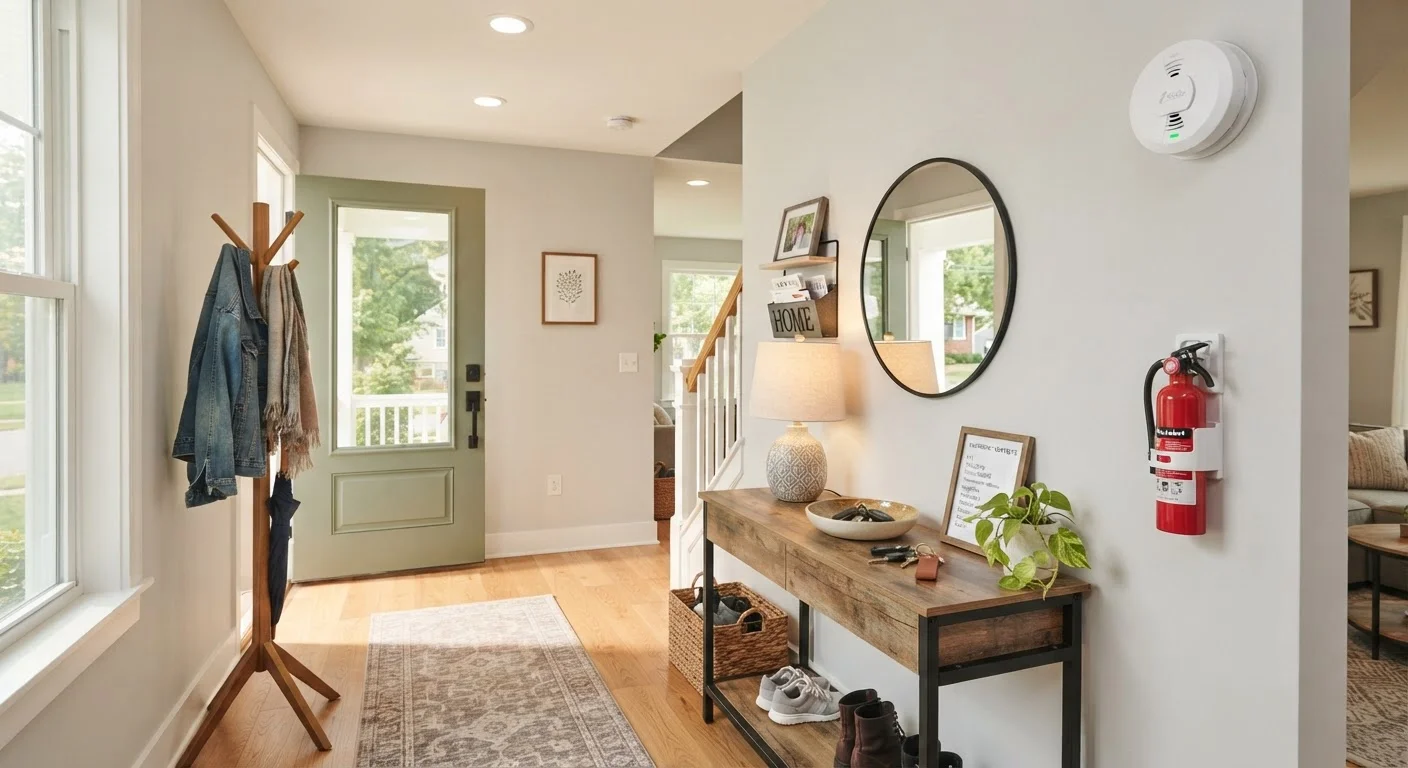
Smoke alarms and carbon monoxide (CO) detectors are the two most critical life-safety devices in any home. The U.S. Fire Administration recommends placing smoke alarms on every level of the home, inside each bedroom, and outside sleeping areas. CO detectors should be installed near sleeping areas and on every level where fuel-burning appliances or an attached garage are present.
When you move in, do the following:
- Press the test button on every existing alarm to confirm it chirps.
- Check the manufacture date printed on the back - most smoke alarms should be replaced after 10 years.
- Replace any missing units before your first night in the space.
Understanding the difference between device types matters too. Our guide on smoke alarms, CO detectors, and heat sensors explains what each device monitors and where each belongs. Equally important is having a practiced plan for when an alarm sounds - the home fire escape planning guide walks through how to build and rehearse one with your household.
Write Down Your Emergency Plan
Don't rely on memory during a stressful event. Write out your fire escape routes, a meeting point outside the home, and key emergency numbers on paper. Post it somewhere all household members will see it, such as on the refrigerator or inside a kitchen cabinet door.
The High-Risk Zones You Should Address Early
Three areas of the home produce the majority of household injuries: the bathroom, the staircase, and the bedroom. Our detailed article on the three most hazardous zones in the average home covers each in depth, but here are the first steps for each:
- Bathroom
- Check that the tub or shower floor has a non-slip mat or surface. Consider whether grab bars are needed - they're not just for older adults. Wet surfaces are a slip risk for anyone.
- Staircases
- Test every handrail to confirm it is firmly anchored. Loose railings are a code concern and a genuine hazard. Ensure staircase lighting is adequate at all times of day.
- Bedroom
- Know your exit options in case of fire or emergency. Make sure windows open easily and are not blocked by furniture or security bars without a quick-release mechanism.
Falls are the leading cause of home injury across all age groups. For a research-backed look at specific risk factors, see our article on fall prevention at home.
Security Basics: Doors, Locks, and Lighting
Physical security doesn't require a sophisticated system to be effective. For new occupants of any property, the most important first step is addressing door locks. Previous tenants, contractors, or real estate agents may have copies of existing keys. Rekeying - having a locksmith change the lock cylinder so old keys no longer work - is far less expensive than replacing the entire hardware and provides immediate peace of mind.
Beyond locks, consider these foundational steps:
- Exterior lighting: Motion-activated lights at entry points discourage opportunistic intrusion and help you navigate safely at night.
- Door condition: Check that exterior doors fit their frames properly and that deadbolts engage cleanly. A door that doesn't close squarely offers little protection regardless of the lock quality.
- Sliding doors and windows: Ensure these have functional latches; a cut wooden dowel in the track is a simple secondary measure.
If you're considering a monitored security system, our article on home security monitoring services lays out the practical trade-offs to help you decide whether professional monitoring fits your situation.
Don't Attempt Electrical or Gas Work Yourself
If your safety walkthrough reveals concerns like double-tapped breakers, ungrounded outlets, or gas line connections that look worn or corroded, contact a licensed electrician or plumber. These are areas where DIY repairs can introduce serious hazards and often require permits and inspections. When in doubt, get a professional assessment.
Building Safety Habits That Stick
Equipment and physical fixes set the foundation, but consistent habits are what maintain a safe home over time. A few practices are worth establishing from the start:
- Test smoke and CO alarms once a month - set a recurring phone reminder if that helps.
- Know where your main water shutoff, electrical panel, and gas shutoff are located before you need them urgently.
- Keep a basic first aid kit stocked and accessible, not buried in a closet.
- Store emergency contact numbers somewhere physical - not only in a phone that could be lost or uncharged during an event.
Home safety also intersects with specific household compositions. Families with young children will want to explore where childproofing and general home safety overlap. Those planning updates or renovations should consult our home improvement hub to understand how project work affects safety. And for anyone concerned about electrical hazards specifically, common electrical safety mistakes is a valuable next read.
Safety is built incrementally. Getting the basics right in the first week means you're working from a solid foundation rather than catching up after a problem occurs.