
Childproofing vs. General Home Safety: Where the Two Overlap and Where They Diverge

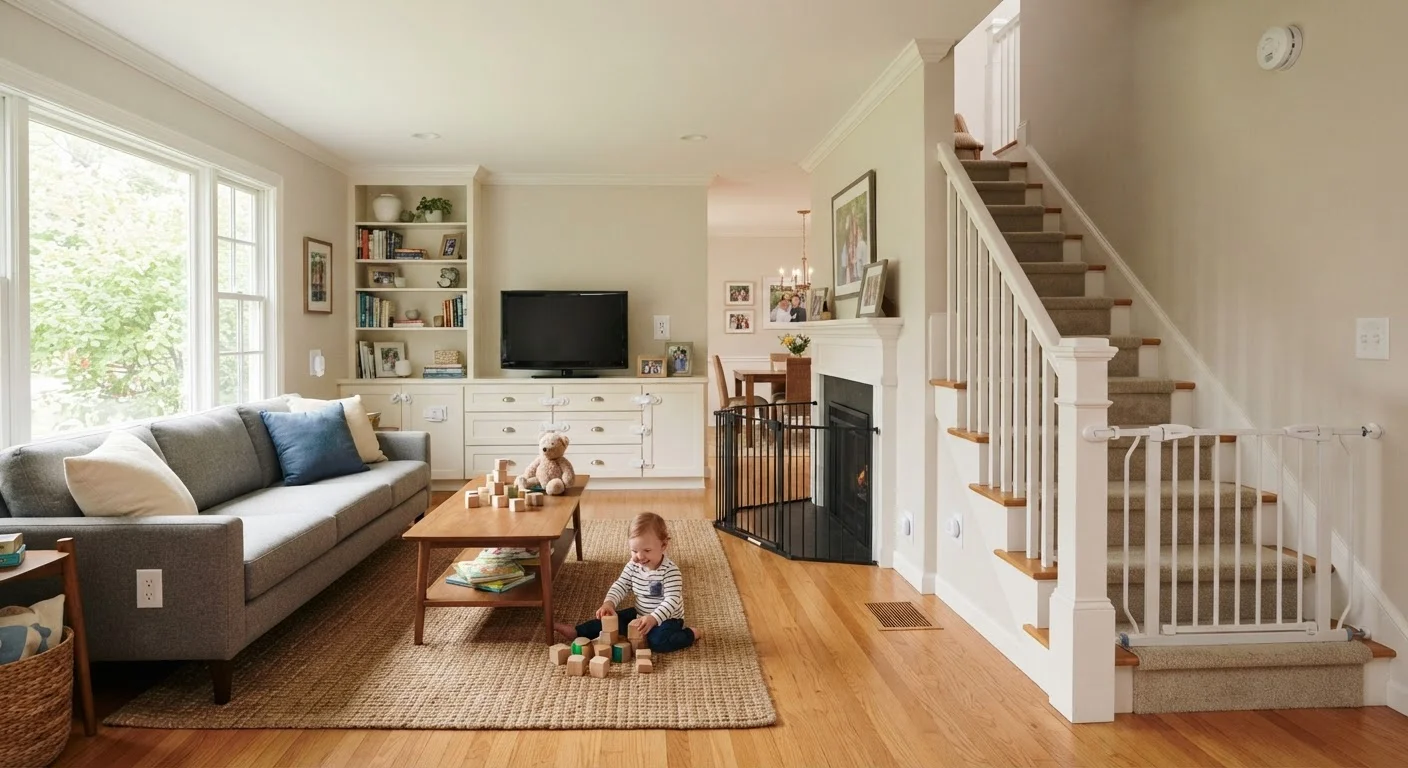
Key Takeaways
- Childproofing targets hazards that are only dangerous due to a child's size, curiosity, and developmental stage.
- General home safety applies to all household members and addresses fire, carbon monoxide, falls, and security threats.
- Many measures - like smoke detectors and locked chemical storage - serve both goals simultaneously.
- Families benefit from treating childproofing as a layer on top of a solid general safety foundation.
- Some childproofing needs are temporary; general safety infrastructure should be permanent and maintained year-round.
Our Verdict
Childproofing and general home safety are not competing priorities - they are complementary layers of protection. General safety measures form the non-negotiable baseline every household needs, while childproofing extends that foundation to address the specific vulnerabilities of young children. Families with children are best served by building both layers deliberately rather than treating one as a substitute for the other.
| Best for | Recommended |
|---|---|
| Households with infants or toddlers | Combined approach - general safety foundation plus active childproofing |
| Adult-only households or empty nesters | General home safety focus - with childproofing only when young visitors are expected |
| New homeowners establishing safety from scratch | Start with the general safety baseline, then layer childproofing as needed |
| Households where children are aging out of childproofing | Phase out childproofing hardware while reinforcing permanent general safety habits |
Two Distinct Safety Goals Under One Roof
When people talk about making a home safe, they often conflate two related but meaningfully different efforts: childproofing and general home safety. Both aim to prevent injury and harm, but they're designed with different populations and threat profiles in mind.
General home safety covers the hazards that put any household member at risk - fire, carbon monoxide poisoning, electrical faults, falls, and security vulnerabilities. These threats don't discriminate by age. A smoke alarm, a properly maintained staircase railing, and a carbon monoxide detector protect everyone in the home equally. For a thorough overview of the baseline every American household should meet, see our complete home safety overview.
Childproofing, by contrast, targets hazards that are primarily dangerous because of how young children interact with the world - their reach, curiosity, developing motor skills, and inability to recognize risk. A cabinet full of cleaning products poses a low risk to a careful adult but a serious danger to a toddler who doesn't know better. That's the gap childproofing is designed to close.
Where the Two Approaches Overlap
Despite their different focuses, a significant number of safety measures serve both purposes at once. Recognizing these overlaps helps families avoid duplication and ensures no critical step is skipped under the assumption the other category already covers it.
| Safety Measure | General Home Safety | Childproofing | |
|---|---|---|---|
| Smoke & CO detectors | Essential for all households | Critical - children more vulnerable | |
| Locked chemical storage | Good practice for all | Mandatory when children present | |
| Stair railings & non-slip mats | Required for fall prevention | Also protects toddlers specifically | |
| Outlet covers / tamper-resistant receptacles | Not typically a priority for adults | High priority for toddler safety | |
| Furniture anchoring | Rarely considered in adult homes | Critical tip-over prevention step | |
| Baby gates & room access restrictions | Not applicable in adult-only homes | Temporary but essential measure | |
| Window guards | Relevant for upper floors generally | Specifically required for child safety |
Smoke and CO detectors are perhaps the clearest example. Installing them on every level of the home, testing monthly, and replacing batteries regularly is both a general safety obligation and a childproofing imperative - children are more vulnerable to smoke inhalation and carbon monoxide exposure due to their smaller body size and faster breathing rates.
Chemical storage is another shared priority. Keeping cleaning products, pesticides, and medications in locked cabinets protects children from accidental ingestion while also reducing adult exposure to hazardous fumes or accidental misuse. Our article on safe storage of household chemicals covers the principles that apply in both contexts.
Fall prevention is a third intersection. Non-slip mats in tubs and on stairs protect older adults and children alike. Stair railings maintained to code serve toddlers just as much as aging grandparents. See our breakdown of the home's three most hazardous zones for room-by-room guidance that applies across age groups.
Where They Diverge: Child-Specific Hazards
While overlap is real, childproofing addresses a distinct set of hazards that general safety frameworks rarely prioritize for adult households.
Conduct a Low-Level Walk-Through
Many childproofing hazards are invisible from adult standing height. Get down on your hands and knees in each room to see what a toddler sees - accessible cords, low drawers with sharp objects, and unstable furniture legs often only become apparent from this vantage point. Repeat this exercise every six months or whenever a child's developmental stage changes significantly, since newly mobile or climbing children encounter new hazards.
- Outlet covers and tamper-resistant receptacles: Standard electrical outlets are safe enough for adults but present an insertion risk for curious toddlers. Tamper-resistant receptacles - now required by the National Electrical Code in new construction - address this without the inconvenience of plastic plug covers. For broader context on electrical safety gaps, see our article on common electrical safety mistakes homeowners make.
- Furniture anchoring: Tip-over incidents involving unsecured dressers and bookshelves are a leading cause of furniture-related fatalities in young children. This hazard is largely irrelevant in adult-only homes but a critical childproofing step in family households.
- Baby gates and door locks: Restricting access to stairs, kitchens, and bathrooms is specific to young children who lack the judgment to navigate these spaces independently.
- Choking hazards: Small objects, certain foods, and toy components that pose no general safety risk to adults require active management when toddlers are present.
- Window guards and stair baluster spacing: Code-compliant baluster spacing (typically no more than 4 inches apart) and window guards on upper floors are primarily child-safety measures, though they may also benefit pets.
These measures are largely temporary. As children develop, most childproofing hardware is phased out - but the underlying general safety infrastructure should remain permanently in place.
Building Both Layers Into Your Home
The most effective approach for family households is to treat general home safety as the permanent, non-negotiable foundation and childproofing as a responsive layer added on top. This means not relying on childproofing hardware to substitute for proper general safety infrastructure - a cabinet lock does not replace working smoke detectors, and a baby gate does not replace a sound stair railing.
If you're establishing safety practices in a home for the first time, our guide on what new homeowners and renters should know first provides a practical starting checklist that covers both layers. Familiarizing yourself with the relevant terminology - such as AFCI breakers, egress windows, and UL listings - can also help when evaluating products or speaking with contractors; the home safety key terms reference guide is a useful resource for this.
One practical tip: walk each room of your home from a child's physical perspective - literally get low to the floor - to identify hazards that aren't visible from adult height. This exercise regularly surfaces overlooked risks like accessible power strips, unsecured cords, or low-shelf chemical storage that a standard adult safety audit would miss.
This article is for general informational and educational purposes only. It is not a substitute for professional safety inspections, licensed contractor advice, or guidance from certified child safety specialists. Always verify local building codes and consult qualified professionals when making structural or electrical modifications to your home.