

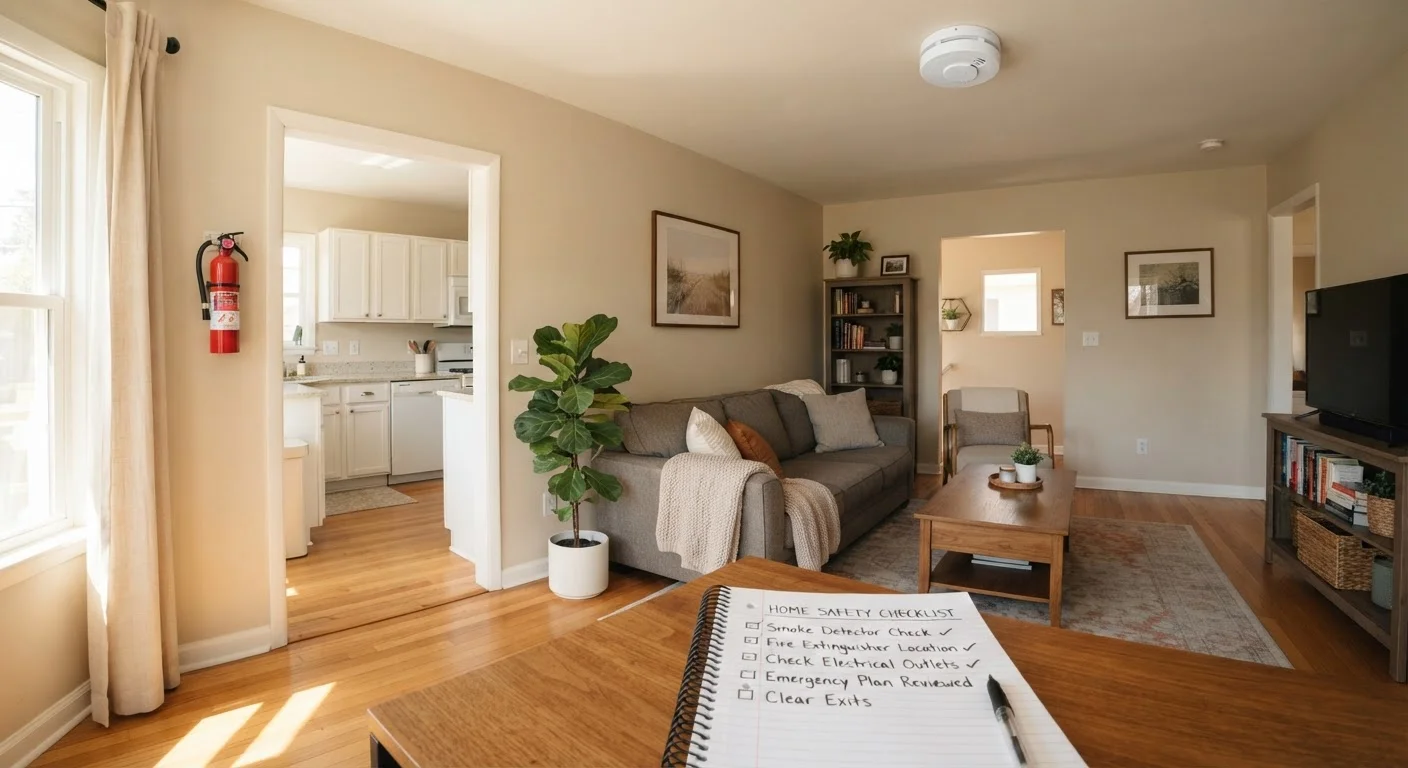
Key Takeaways
- A room-by-room audit helps you catch hidden hazards before they cause injuries or emergencies.
- Smoke and carbon monoxide detectors should be tested monthly and replaced on a schedule.
- Bathrooms and staircases account for a disproportionate share of home fall injuries.
- Electrical safety issues - such as overloaded outlets and damaged cords - are among the most commonly overlooked risks.
- Some repairs, especially electrical and gas-related, require a licensed professional and may need permits.
Summary
28 items · 45-90 minutes
Why an Annual Audit Matters
Most home hazards develop gradually - a loose handrail, a detector with a dead battery, a dryer vent slowly clogging with lint. Because these changes happen slowly, they rarely trigger alarm until something goes wrong. A structured annual walkthrough changes that dynamic by giving you a consistent framework for spotting problems early.
This checklist is organized by area of the home so you can move room to room without backtracking. For a broader introduction to household safety principles, see our complete home safety overview. If you've recently moved in, the guide on what new homeowners and renters should know first is a useful companion to this checklist.
Set aside 45 to 90 minutes for the full audit. Bring a notepad or use your phone to log items that need follow-up action.
Notepad or digital checklist app
Record pass/fail findings for each item and create a follow-up task list.
Flashlight
Inspect dark corners, under sinks, inside the electrical panel area, and the attic hatch.
Screwdriver (flathead and Phillips)
Tighten loose outlet covers, handrail brackets, and cabinet hardware encountered during the walkthrough.
Smoke and CO detector tester spray
Provides a functional test of detector sensitivity beyond the simple test-button press.
Replacement batteries (9V and AA)
Have batteries on hand to swap into detectors that fail during testing.
Ladder (step or extension)
Reach ceiling-mounted detectors, high shelving, and exterior light fixtures safely.
How to Use This Checklist
Work through the checklist systematically, one area at a time. Mark each item as pass, needs attention, or not applicable. Items marked as needs attention should be added to a follow-up list with a realistic repair timeline - ideally within 30 days for safety-critical issues.
Never DIY Electrical or Gas Repairs
If your audit uncovers a tripped breaker that won't reset, burning smells near outlets, flickering lights, or any suspected gas leak, do not attempt to investigate or repair these yourself. Turn off the relevant service at the main panel or gas shutoff if safe to do so, evacuate if needed, and contact a licensed electrician or your gas utility provider. These repairs are regulated in virtually every U.S. jurisdiction and must be performed by qualified professionals. For more on this topic, see our article on common electrical safety mistakes homeowners make.
For tasks involving electrical panels, gas lines, structural changes, or roofing, always consult a licensed professional. Many of these repairs are regulated and may require permits and inspections in your jurisdiction. Our plain-language home safety reference guide can help you understand unfamiliar terms you encounter during your audit.
Whole-Home Essentials
Kitchen
Bathrooms
Bedrooms and Hallways
Staircases
Garage, Basement, and Utility Areas
Exterior and Entry Points
Prioritizing What You Find
After completing the walkthrough, sort your findings into three tiers: immediate safety risks (address within days), moderate risks (schedule within 30 days), and maintenance items (plan for the next season). Electrical issues, gas-related concerns, and missing or non-functional detectors generally fall into the first tier.
Falls deserve special attention because they are a leading cause of home injury across all age groups. For a deeper look at the conditions that increase fall risk, see our article on fall prevention research and common risk factors. Households with older adults should also review our guide on adapting a home for aging in place.
Once you've addressed your findings, note the date of your audit and set a calendar reminder for next year. Pairing this with another annual household habit - seasonal HVAC servicing or a home insurance review, for example - can help you stay consistent.
Watch for Staircase and Bathroom Hazards
Staircases and bathrooms are two of the most injury-prone areas in American homes. During your audit, spend extra time on handrail stability, floor traction, and lighting in both spaces. For a detailed breakdown of why these areas are particularly risky, see our guide on the three most hazardous zones in the average home.