

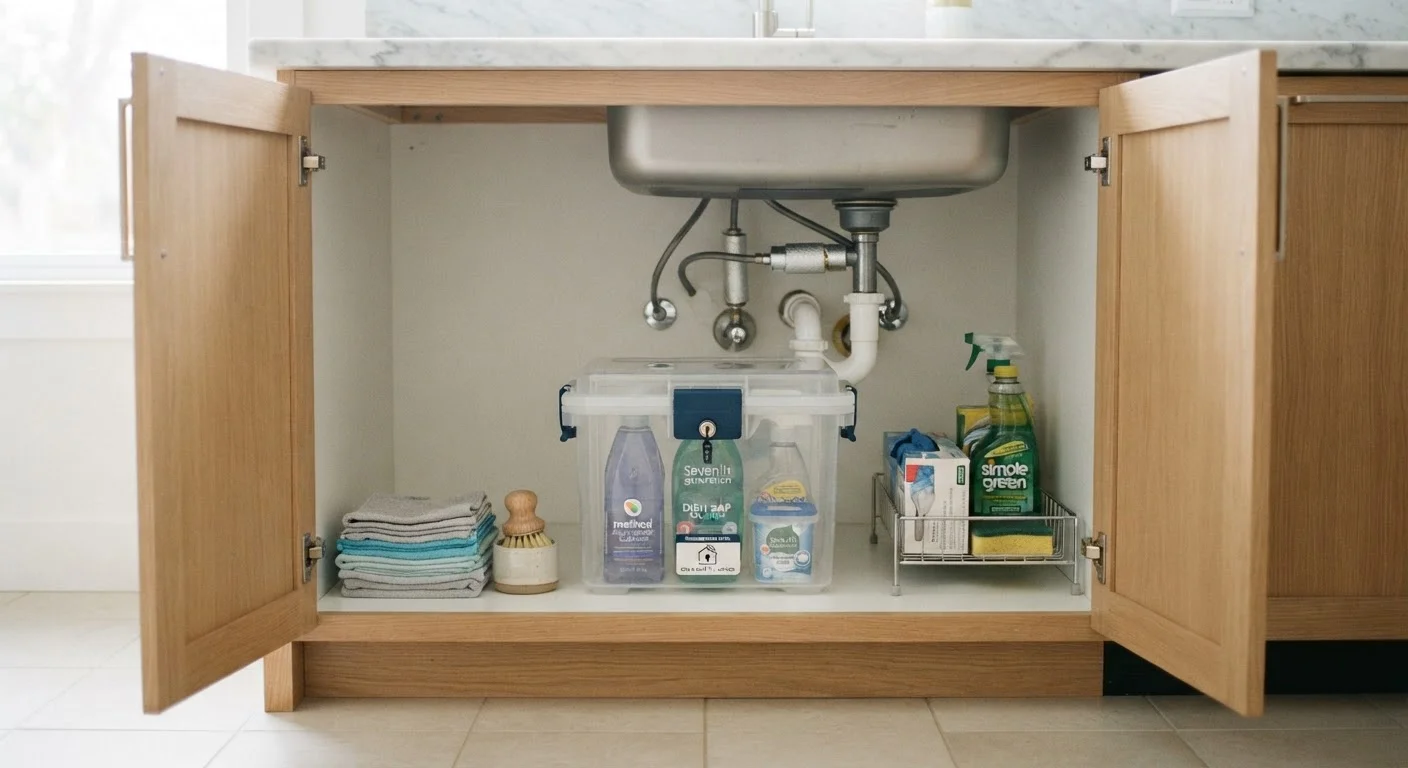
Key Takeaways
- Never store cleaning products in unlabeled or food containers - original packaging preserves critical safety information.
- Many common household chemicals become toxic or explosive when mixed, even accidentally through shared storage.
- Locked, ventilated storage out of children's reach is the gold standard for chemical safety at home.
- Disposing of expired or unknown products through designated hazardous waste programs protects your household and environment.
- Reading product labels before storing - not just before using - is a habit that prevents many household emergencies.
Why Chemical Storage Matters More Than Most People Realize
Most American households contain dozens of cleaning and chemical products - drain openers, bleach, oven cleaners, pesticides, and more. These products are designed to be effective, which means they're also capable of causing serious harm when handled carelessly. According to the American Association of Poison Control Centers, household cleaning substances are consistently among the leading categories of poison exposures reported each year.
The risks go beyond accidental ingestion. Improper storage can lead to chemical reactions between products stored too close together, fume buildup in enclosed spaces, and container leaks that contaminate other items nearby. A thoughtful approach to storage - not just use - is a fundamental piece of overall home safety. For a broader introduction to protecting your household, see our complete home safety overview.
Core Practices for Storing Chemicals Safely
The following practices reflect widely accepted guidance from poison control authorities and home safety professionals. Implementing even a few of these can meaningfully reduce risk in your household.
Always store chemicals in their original, labeled containers.
Original containers include critical safety information: first aid instructions, active ingredients, storage requirements, and emergency contact details. Transferring products to unmarked bottles removes all of this context and creates serious risks for anyone else in the household.
Separate incompatible chemicals - never store them side by side.
Certain common household chemicals react violently when they come into contact, producing toxic gases or heat. Bleach and ammonia-based cleaners, for instance, produce chloramine vapors that are harmful to breathe. Even storing these products next to each other creates risk if a container leaks.
Store chemicals in a cool, dry, well-ventilated location.
Heat and humidity can degrade chemical stability, accelerate reactions, or cause pressure buildup in sealed containers. A garage in summer or a cabinet next to the stove are poor choices for most cleaning products.
Use locked or latched storage for any product that poses a poison risk.
Household chemicals are a leading source of accidental poisoning, particularly for young children. Even if children are not currently in your home, locks establish a consistent safety habit for when guests with kids visit.
Read and follow label storage instructions before putting a product away.
Storage requirements vary considerably between products. Some must be kept upright to prevent leaks, others away from open flame due to flammability, and others require temperature ranges to remain stable. Assuming all products can be stored the same way is a common and avoidable mistake.
Conduct a periodic inventory and dispose of products you no longer use.
Accumulated products increase clutter, confusion, and the chance of accidental mixing. Products also degrade over time, sometimes becoming less predictable in their chemical behavior.
Quick Actions You Can Take Today
You don't need to overhaul your entire home to improve chemical storage safety. These immediate steps can reduce risk right now.
Disposing of Old or Unknown Products
One of the most overlooked aspects of chemical safety is knowing when - and how - to get rid of products you no longer need. Old or deteriorating products can become unstable, and unlabeled containers are inherently dangerous because you can't know what precautions to take.
Never Mix Unknown Products - Even to Dispose of Them
It can be tempting to combine partial containers of what appear to be similar products before disposal - don't. Even products that look or smell similar may have incompatible chemical compositions that react dangerously when combined. Keep unknown or unwanted products sealed in their existing containers and bring them to a hazardous waste facility as-is.
Most U.S. municipalities offer household hazardous waste (HHW) collection events or permanent drop-off sites for products like paints, solvents, pesticides, and pool chemicals. Never pour these substances down the drain or into the trash unless the label explicitly permits it. Check with your local solid waste authority to find disposal options in your area. If you're establishing safety habits in a new home, our guide on home safety for new homeowners and renters covers many first-step priorities, including how to assess what the previous occupants may have left behind.
Special Considerations for Families With Children
Children are at significantly greater risk from chemical exposure than adults - both because of their smaller body size and their natural curiosity. Even products marketed as "natural" or "gentle" can be harmful if ingested. Childproof cabinet locks are a practical baseline, but they are not foolproof. True safety means storing chemicals in spaces children simply cannot access, such as high shelves with latching doors or locked utility rooms.
Brightly colored packaging on some cleaning products can look appealing to young children. Never leave products unattended during use, and always reseal and return them to secure storage immediately after use - not after you've finished the full cleaning task. For a detailed look at how childproofing and broader household safety overlap, visit our article on childproofing versus general home safety.