

Key Takeaways
- Scheduled maintenance intervals come from your manufacturer, not general rules of thumb.
- Skipping services rarely saves money - deferred maintenance typically leads to larger, costlier repairs.
- Oil changes, tire rotations, coolant flushes, and brake inspections are among the most critical recurring tasks.
- Your owner's manual is the most accurate source for your vehicle's specific maintenance schedule.
- Keeping a maintenance log protects resale value and simplifies future mechanic visits.
Scheduled Vehicle Maintenance
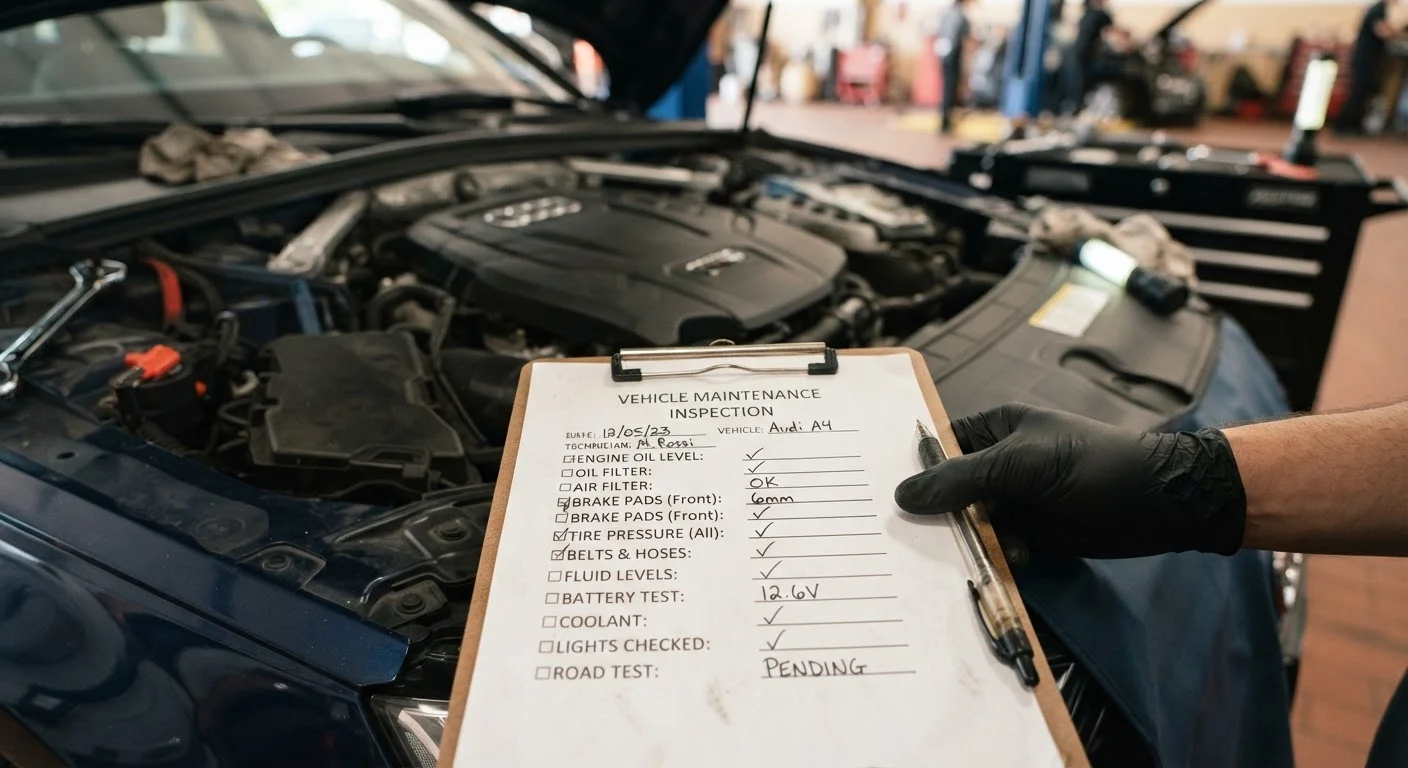
Scheduled maintenance refers to the specific services your vehicle manufacturer requires at set mileage or time intervals to keep the car running safely and reliably. These tasks - such as oil changes, tire rotations, and fluid replacements - are documented in your owner's manual and follow a predictable timeline. Unlike reactive repairs, scheduled maintenance is preventive: it addresses wear before it becomes damage.
Manufacturers establish maintenance intervals through engineering testing and are tied to component wear rates, fluid degradation curves, and safety thresholds - not arbitrary timelines.
Why the Maintenance Timeline Exists
Every vehicle leaves the factory with a maintenance schedule built by the engineers who designed it. That schedule exists because components wear at predictable rates - engine oil breaks down under heat and friction, coolant becomes acidic over time, brake fluid absorbs moisture, and tires lose even tread. None of these processes pause because you're busy or because the car seems to be running fine.
The problem is that maintenance timelines are often misunderstood as suggestions. They aren't. Skipping or significantly delaying scheduled services can accelerate internal wear, create safety risks, and - in some cases - affect your warranty coverage. Understanding what's on the timeline, and why, gives you the foundation to make smarter decisions as a vehicle owner. For a deeper look at how to read your specific schedule, see Understanding Your Owner's Manual Maintenance Schedule.
~$1,200
Estimated average annual vehicle maintenance cost
According to AAA's annual Your Driving Costs study, routine maintenance and tire costs represent a consistent portion of total vehicle ownership expenses for American drivers.
35%
Of vehicles found to need immediate attention
The Car Care Council's national vehicle inspection programs have consistently found that roughly one in three vehicles inspected has at least one maintenance item that needs immediate attention.
Up to 10,000 mi
Oil change interval for modern synthetic oil
Many vehicle manufacturers now specify extended oil change intervals for engines using full synthetic oil, a significant shift from the older 3,000-mile conventional guideline.
The Core Services and When They're Due
While every vehicle is different, most maintenance schedules include a common set of services. Here's what to expect and roughly when:
- Engine oil and filter: One of the most frequent tasks. Intervals vary widely - from 3,000 miles on older vehicles with conventional oil to 10,000+ miles on modern engines using full synthetic. Your owner's manual is the definitive source.
- Tire rotation: Typically every 5,000 to 7,500 miles. Rotating tires distributes wear evenly across all four, extending tire life and maintaining predictable handling.
- Air filter (engine): Generally every 15,000 to 30,000 miles, though driving in dusty conditions can shorten that interval. A clogged filter restricts airflow and hurts fuel efficiency.
- Coolant flush: Usually every 30,000 to 50,000 miles depending on the vehicle and coolant type. Old coolant loses its anti-corrosion properties and can damage the radiator and water pump.
- Brake fluid: Many manufacturers recommend replacement every two years or 30,000 miles. Moisture-contaminated brake fluid has a lower boiling point, which can compromise braking performance.
- Transmission fluid: Intervals range from 30,000 to 100,000 miles depending on transmission type and driving conditions. This is one service where delay can lead to very expensive consequences.
- Spark plugs: Conventional plugs may need replacement around 30,000 miles; iridium or platinum plugs in modern vehicles can last 60,000 to 100,000 miles.
- Timing belt (if applicable): Many vehicles now use a timing chain, but those with a belt typically require replacement between 60,000 and 100,000 miles. A failed timing belt can cause catastrophic engine damage.
This list covers the essentials, but your vehicle may have additional requirements. The Car Maintenance hub covers many of these services in more detail.
What Skipping Service Actually Costs You
The most common reason drivers defer maintenance is cost - it feels easier to skip a service when the car seems fine. But deferred maintenance rarely saves money over time. It shifts expense forward and amplifies it.
Engine oil that's left too long breaks down and loses its lubricating properties, causing metal-on-metal wear inside the engine. A $60-$100 oil change becomes relevant context when compared to an engine replacement that can run into thousands of dollars. Similarly, ignoring a coolant flush might delay a modest expense today while quietly allowing corrosion to develop inside the cooling system - potentially leading to a failed water pump or damaged radiator later.
Beyond mechanical costs, there's a resale consideration. A documented maintenance history is one of the clearest signals a buyer or dealer uses to assess a used vehicle's value. Gaps in service records introduce uncertainty that gets priced against you. Keeping a Vehicle Maintenance Log walks through why consistent records matter and what to track.
It's also worth distinguishing legitimate scheduled services from unnecessary ones. Not every service a shop recommends at every interval is actually required. The Maintenance Myths That Cost Drivers Unnecessary Money addresses some of the services that are often oversold or performed too frequently.
How to Stay on Track Without the Confusion
The most reliable tool you have is your owner's manual. It contains a maintenance schedule specific to your vehicle's engine, transmission, and design - not a generic approximation. If you've lost your manual, most manufacturers provide digital versions on their websites, and a VIN lookup can pull up the correct document.
Beyond the manual, your vehicle's dashboard may display a maintenance reminder light - often labeled "MAINT REQRD" or a wrench icon. These systems track mileage or driving conditions and alert you when service is approaching. They are useful prompts, but they don't replace the full schedule in your manual.
When you do bring your vehicle in, understanding what's being recommended - and why - helps you make informed decisions. Reading a Mechanic's Estimate can help you interpret what's on the invoice, and When a Mechanic Says You Need a Repair offers guidance on evaluating whether an additional recommendation is genuinely urgent.
Set Calendar Reminders Alongside Mileage Tracking
Some maintenance intervals are time-based (e.g., brake fluid every two years) rather than mileage-based, meaning they apply even if you don't drive much. Setting both a mileage target and a calendar reminder ensures you don't miss time-triggered services. A simple note in your phone or a physical logbook in the glove compartment works well for most drivers.