

Key Takeaways
- A repair estimate has three core cost categories: parts, labor, and shop fees - each negotiable to varying degrees.
- Labor hours are based on industry flat-rate guides, not always the actual time a mechanic spends on your vehicle.
- OEM parts come from the original manufacturer; aftermarket parts are made by third parties and may cost less.
- Shop supply fees and disposal fees are real charges - ask for an itemized breakdown so nothing is vague.
- Getting a written estimate before work begins is a standard consumer protection practice in most U.S. states.
- Asking questions about an estimate is normal and professional shops will explain every line item clearly.
What you will need
The Three Core Sections of Any Estimate
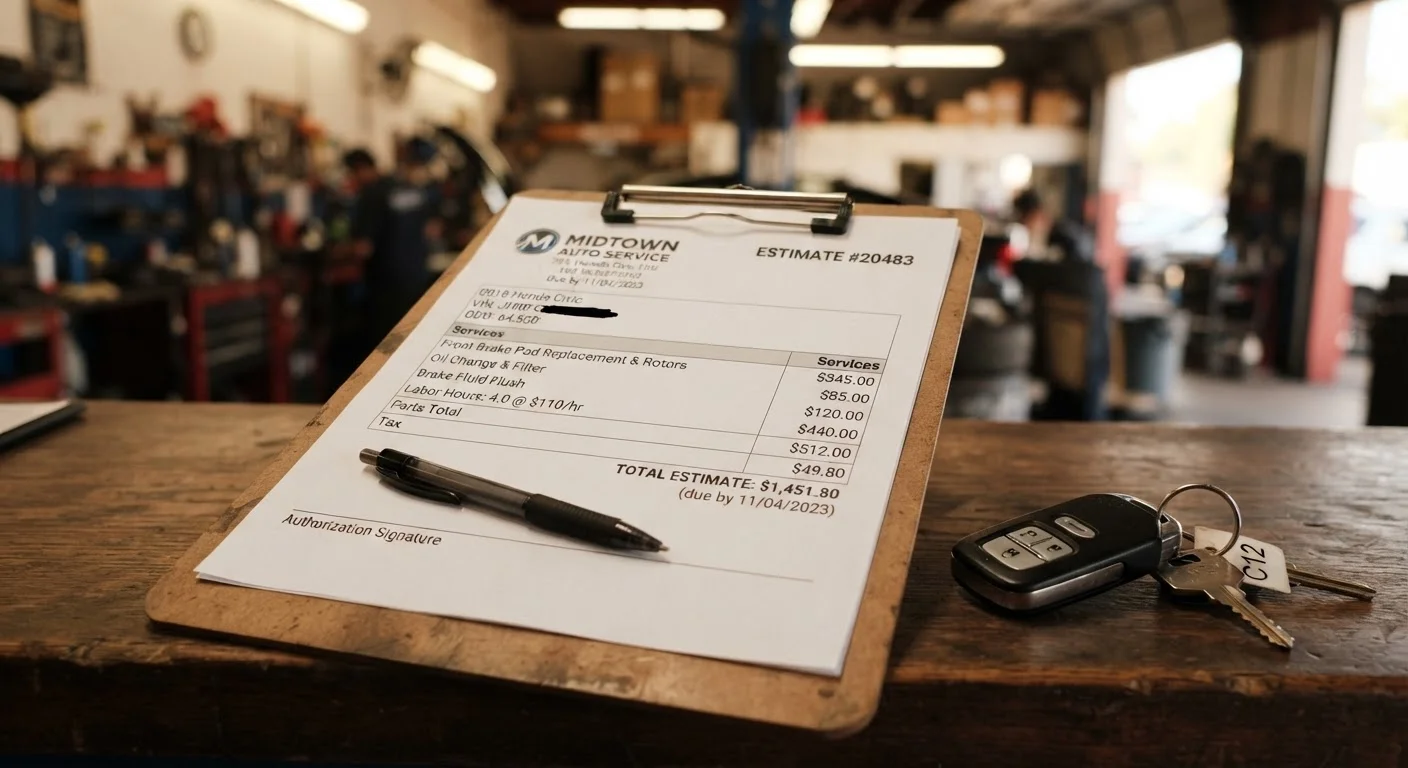
Most repair estimates - whether printed or emailed - break costs into three broad categories: parts, labor, and shop fees. Understanding what each category covers is the first step to reading an estimate with confidence instead of confusion.
Parts refers to any physical component being replaced or supplied. Each part should be listed individually with a unit price. You may notice notation like OEM or AM next to a part name - more on that distinction below.
Labor is the charge for the technician's time. This is usually listed as a number of hours multiplied by the shop's hourly labor rate. A shop charging $120/hour for 2.5 labor hours would show $300 on that line.
Shop fees - sometimes labeled "shop supplies" or "environmental fees" - cover consumables like rags, lubricants, and disposal of old fluids or parts. These are legitimate costs, but you're entitled to see them itemized rather than bundled into a vague flat charge.
What you will need
What Labor Hours Actually Mean
One of the most misunderstood parts of any estimate is the labor hours figure. Most independent shops and dealerships use a flat-rate labor guide - industry-standard references that assign a fixed time value to specific repair jobs. A water pump replacement on a particular engine might be listed as 2.0 hours in the guide, regardless of whether a technician completes it in 90 minutes or takes 2.5 hours on a difficult vehicle.
This system is standard practice in the industry, not a sign of dishonesty. However, it does mean the hours billed don't always match the clock on the wall. If a job is described as 3 hours and the car is done in an afternoon, that's generally how flat-rate billing works.
Flat-Rate Labor Is Standard Practice
Most shops bill labor based on industry flat-rate guides, not a stopwatch. This means you pay for the standardized time assigned to a job, not the actual minutes a technician spends on your car. Understanding this upfront prevents confusion when a repair is completed faster than the hours billed suggest.
If you're comparing estimates from multiple shops, pay attention to the labor rate and the number of hours quoted - both matter. A shop with a lower hourly rate but higher flat-rate hours can end up costing more. Ask each shop which labor guide they reference if you want an apples-to-apples comparison.
For context on which repairs are typically worth handling yourself versus leaving to a professional, see our guide to DIY maintenance vs. shop work.
OEM vs. Aftermarket Parts: What the Labels Mean
OEM (Original Equipment Manufacturer) parts are made by or for the vehicle's manufacturer to the same specifications as what came on your car originally. Aftermarket parts are produced by independent companies and are designed to fit and function similarly, though quality can vary widely across manufacturers.
Neither option is universally better. OEM parts typically carry a higher price and are often the default at dealerships. Aftermarket parts can be a sound, cost-effective choice - particularly for common components - but quality varies. Asking your mechanic which brand of aftermarket part they're using and whether it carries a warranty is a reasonable question.
Your estimate should clearly indicate which type of part is being used for each line item. If it doesn't, ask before you sign. Some shops will also quote both options so you can make an informed choice.
Keeping track of which parts were replaced and when is also easier if you're familiar with your vehicle's recommended service intervals. Our article on what's actually on your maintenance timeline provides useful context.
How to Review an Estimate Before You Approve Work
Once you have the written estimate in hand, go through it systematically before authorizing any work. A few minutes of careful review can prevent misunderstandings and unexpected charges when you pick up your vehicle.
Confirm the estimate is written and itemized
Request a written, itemized estimate before any work begins. Verbal estimates offer you no documented protection. A proper estimate lists each part by name and price, labor hours and rate, and any shop fees separately - not as a single lump sum.
Verify the parts type for each component
Check whether each part is labeled OEM, aftermarket, or remanufactured. If the notation is missing or unclear, ask the service writer to specify. This matters for both cost and warranty coverage - many parts come with a warranty that only applies if installed by a licensed shop.
Review labor hours and the hourly rate separately
Identify the labor rate (dollars per hour) and the number of hours quoted for each repair task. These should appear as distinct figures. If they're combined into one total, ask for the breakdown so you can understand what you're paying for.
Ask about shop supply and disposal fees
Look for any line items labeled shop supplies, environmental fees, or hazardous waste disposal. These charges are standard but should be itemized. Ask the shop to explain what's included if a fee looks vague or unusually high relative to the rest of the estimate.
Clarify the estimate's validity period and authorization terms
Some estimates expire after a set number of days, particularly if parts prices fluctuate. Ask how long the quoted price is valid and confirm that no work will begin - and no charges will be added - without your explicit approval first.
After the work is completed, compare your final invoice line by line against the original estimate. Reputable shops will discuss any differences with you before adding charges - not after. If the scope of work changed during the repair, you should have been contacted for approval first. In most U.S. states, shops are legally required to get customer authorization before exceeding the estimated amount by more than a defined threshold.
If you receive a recommendation for additional repairs beyond the original estimate, our article on how to evaluate a mechanic's repair recommendation walks through how to assess whether the advice makes sense for your situation.