

Key Takeaways
- A maintenance log creates a verifiable service history that protects resale value.
- Tracking patterns over time helps you catch recurring problems before they become costly.
- Even a basic notebook or spreadsheet works - consistency matters more than format.
- Mechanics can diagnose issues faster when given a clear service record.
- Log every service event, not just major repairs, for the most accurate picture.
Why Most Drivers Skip This - and Why That's a Mistake
Keeping a vehicle maintenance log sounds like extra homework. In practice, most drivers rely on memory or scattered receipts stuffed in the glove box. The problem is that cars accumulate services across years, multiple mechanics, and sometimes multiple owners - and memory is an unreliable record-keeper.
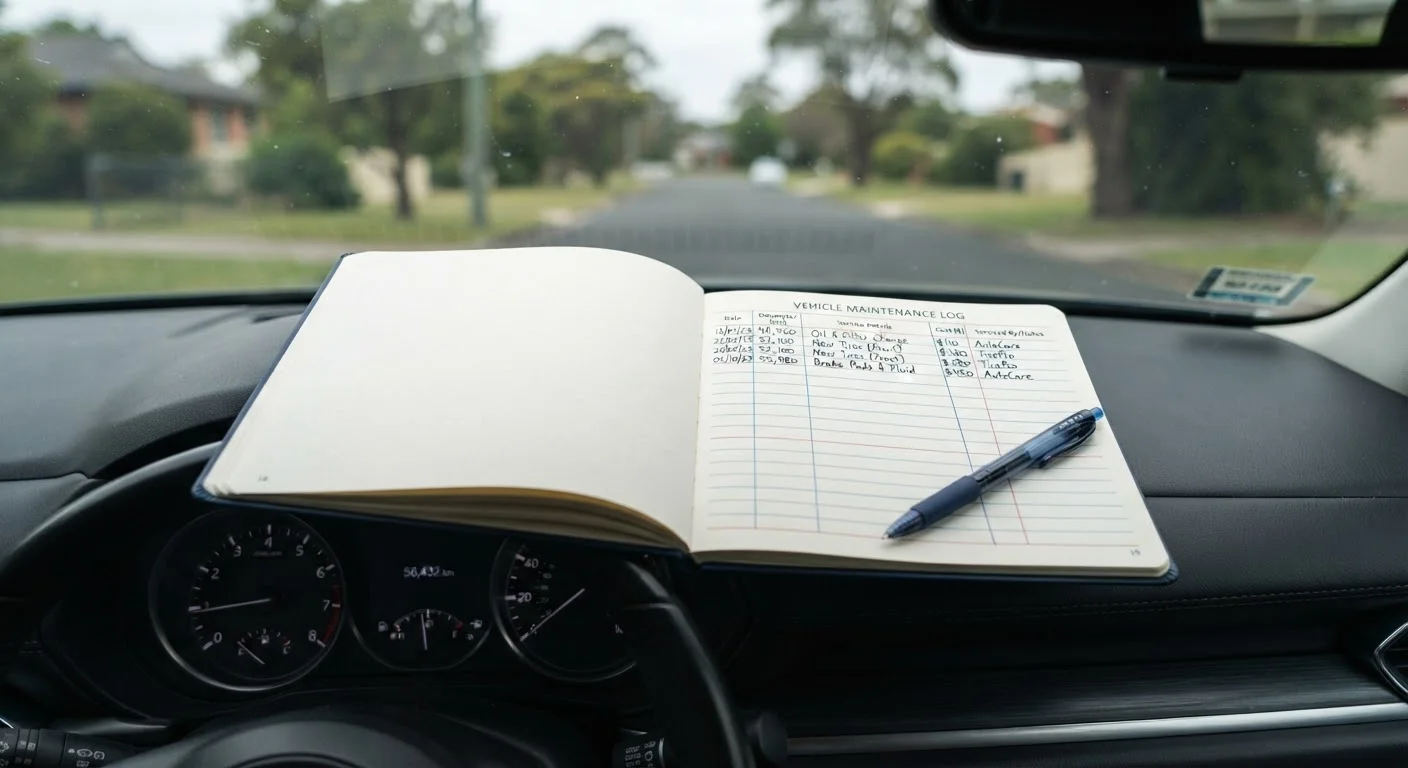
A maintenance log closes that gap. It gives you a timestamped, mileage-indexed account of everything done to your vehicle: oil changes, tire rotations, brake work, fluid flushes, battery replacements, and any repairs. That history has real, practical value. When a warning light appears, a mechanic armed with your service record can narrow down causes faster and with more confidence. When you go to sell the car, a documented history signals to buyers that the vehicle has been cared for - which often translates to stronger offers and a smoother transaction.
For drivers managing older vehicles, the stakes are even higher. See our guide to high-mileage vehicle care for context on why consistent records become especially valuable as odometer numbers climb.
What to Record in Every Entry
A useful log entry doesn't require much, but it does require consistency. Every time a service is performed - by a shop or by you - record the following:
- Date of service
- Current odometer reading
- Service performed (be specific: "oil change, 5W-30 synthetic" rather than just "oil change")
- Parts replaced, including any brand or specification noted on the receipt
- Name of the shop or technician
- Cost
- Next service due (mileage or date, whichever comes first)
That last field is often overlooked but is one of the most useful. Writing down when your next oil change or tire rotation is due turns the log into a proactive planning tool, not just a historical record. Pair this habit with the scheduled maintenance timeline your manufacturer recommends, and you have a complete system.
Format Options: Paper, Digital, or App
There is no single correct format. The right one is whatever you'll actually use.
Paper logbooks are inexpensive, require no technology, and stay in the car. A small notebook or a dedicated auto log journal (found at most auto parts stores) works well. The downside: it can be lost with the vehicle or damaged.
Spreadsheets stored in a cloud service give you searchable records accessible from any device. A simple table with the columns listed above is enough. This format also makes it easy to spot patterns - for example, noticing that brake pads are wearing faster than expected.
Mobile apps designed for vehicle tracking offer structured entry fields and automatic reminders. Many allow you to photograph receipts and attach them directly to a service entry. Evaluate any app for data privacy before storing detailed vehicle information.
Whichever format you choose, back it up. A log you can't access when you need it has limited value. For broader guidance on what records to save and for how long, see keeping records as a car owner.
Using Your Log to Spot Patterns and Plan Ahead
A maintenance log becomes most powerful after a year or two of consistent entries. With enough data, you can identify patterns that aren't obvious in the moment. If you notice you're topping off coolant every few months, that repeated entry is a signal worth investigating - it's the kind of slow-developing problem that goes undetected without a written record.
Logs also help you plan financially. Knowing that your timing belt was last replaced at 60,000 miles and you're now approaching 90,000 miles lets you anticipate that cost rather than absorb it as a surprise. Smarter ownership habits like this - built on reliable information - make a measurable difference in long-term vehicle reliability.
Finally, if you share a vehicle with another driver or hand it off to a family member, a complete log transfers the context they need to keep maintenance on track. It's one of the most practical gifts a vehicle can come with.
This article is for general informational purposes. Always consult a qualified mechanic for diagnosis and repair decisions specific to your vehicle.