

Key Takeaways
- Not every repair a mechanic recommends is immediately urgent - ask which ones are safety-critical.
- You have the right to request a written estimate and seek a second opinion before approving work.
- Cross-referencing recommendations with your owner's manual helps you verify what's actually due.
- Understanding the difference between a 'should fix' and a 'must fix' protects your wallet.
- Vague explanations or high-pressure urgency are signs worth taking seriously before saying yes.
What you will need
Why Repair Recommendations Deserve Scrutiny
When a mechanic hands you a list of recommended repairs, the natural response is a mix of anxiety and uncertainty. Is your car falling apart? Are they being straight with you? The honest answer is: sometimes repairs are genuinely necessary, and sometimes they aren't urgent at all - and telling the difference is a skill every car owner can develop.
Mechanics aren't a monolithic group. Most are professionals doing their jobs well. But the incentive structure at some shops - particularly those paid on commission or facing revenue targets - can lead to recommendations that are real but not pressing, or occasionally unnecessary altogether. That doesn't mean you should distrust every diagnosis. It means you should engage with it critically.
Check out our car maintenance hub for a broader foundation on keeping your vehicle in reliable shape.
You Are Always Allowed to Say 'Not Yet'
Unless a repair is an immediate safety risk, you are under no obligation to approve work on the spot. Take the written estimate, do your research, and return when you're ready. A trustworthy shop will respect that. One that pressures you to decide immediately is worth approaching with additional caution.
What You Need Before You Evaluate Anything
Before you can meaningfully assess a repair recommendation, you need two things: the right information from the shop, and a basic understanding of your vehicle's actual maintenance needs.
What you will need
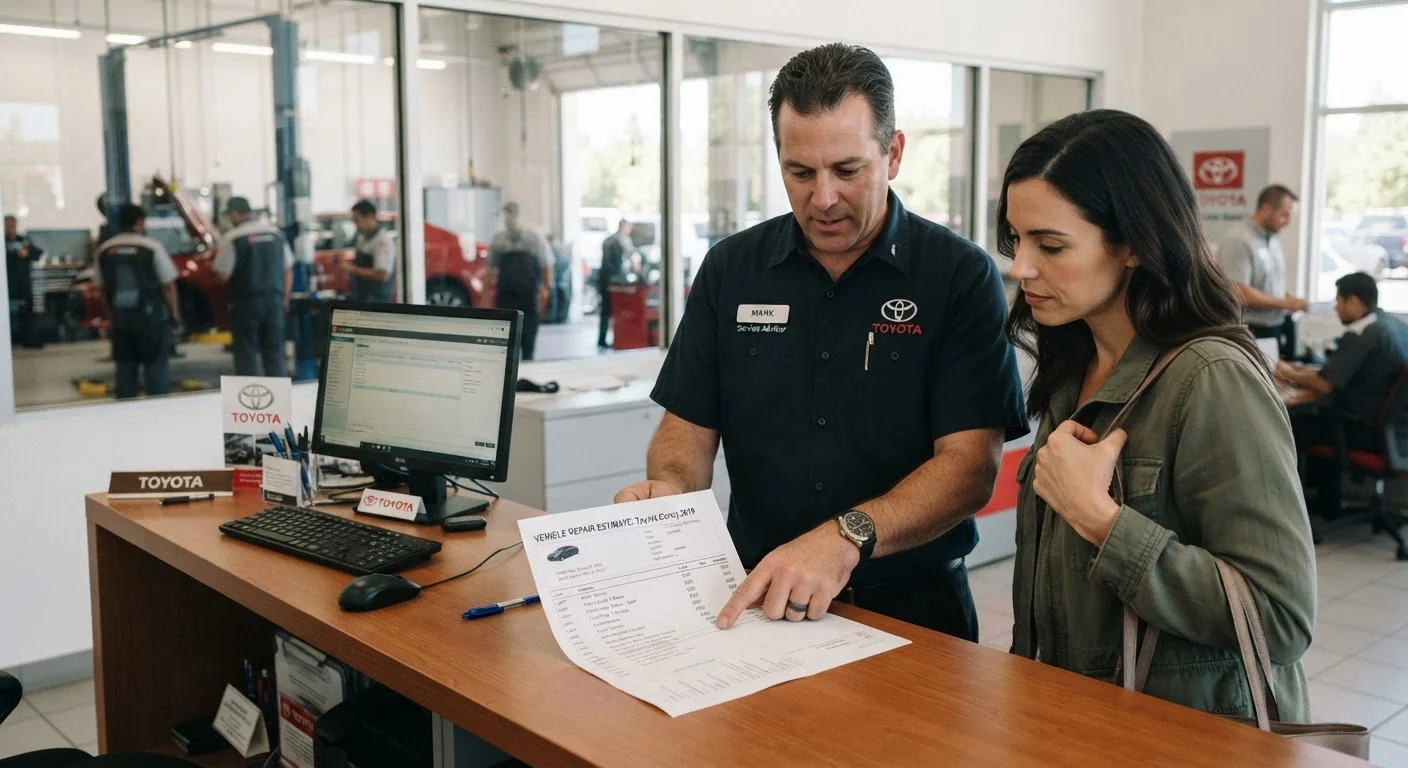
On the shop side, always ask for a written estimate that itemizes parts, labor, and any diagnostic fees separately. Verbal quotes are easy to misremember and hard to compare. A reputable shop will provide this without hesitation.
On the vehicle side, your owner's manual is the most underused resource in car ownership. It contains the manufacturer's own schedule for what needs servicing and when - which is a reliable baseline for evaluating whether a repair or service is genuinely due. Our article on understanding your owner's manual maintenance schedule walks through how to read it effectively.
Owner's Manual
Provides the manufacturer's recommended maintenance intervals, which serve as a baseline for evaluating whether a repair or service is actually due.
Written Repair Estimate
An itemized document from the shop listing parts, labor, and fees - essential for comparison and authorization.
Vehicle Service History Records
Prior service receipts or a maintenance log help verify whether a recommended service has already been performed recently.
Steps to Evaluate a Repair Recommendation
Use the following process any time you receive a repair recommendation you're unsure about. It takes time upfront but consistently leads to better decisions.
Ask the mechanic to explain the repair in plain language
Request a clear explanation of what's wrong, what part or system is affected, and what will happen if the repair isn't done. A competent mechanic should be able to describe this without relying on jargon. If they can't - or won't - that's a signal worth noting.
Categorize the repair as urgent, soon, or optional
Not all repairs carry the same urgency. Safety-critical issues - brake failure, steering problems, tire damage - require prompt attention. Others, like a minor oil seep or a cabin air filter that's slightly overdue, can typically wait. Ask the mechanic directly: Is this a safety issue, or is this about vehicle longevity? The answer shapes your decision.
Check the recommendation against your owner's manual
Look up the service or component in your owner's manual. If a transmission flush is recommended at 30,000 miles but your manual doesn't call for one until 60,000 - and you have no documented symptoms - that gap is worth discussing with the shop before agreeing to the work.
Get a written, itemized estimate
Before authorizing any work, ask for a written estimate that breaks out parts costs, labor hours, and any diagnostic fees. This makes it possible to compare quotes meaningfully and protects you if the final invoice comes in higher than discussed. In most states, shops are legally required to honor written estimates within a specified tolerance.
Seek a second opinion for any large or unexpected repair
For any repair over a few hundred dollars - or any recommendation that surprises you - a second opinion from an independent mechanic is a reasonable and common step. Reputable shops don't pressure you to decide on the spot. Bring the written estimate with you so the second shop is working from the same documented findings.
Don't Ignore Safety-Critical Repairs
Evaluating a recommendation critically is not the same as deferring everything indefinitely. Brake system issues, steering failures, and structural problems can progress quickly and have serious consequences. If a mechanic identifies a genuine safety concern and can show you evidence, treat it as a priority.
Spotting Recommendations That Don't Hold Up
Some services get recommended far more often than they're actually needed. Fuel system cleanings, transmission flushes, and coolant exchanges are legitimate services - but they're only warranted at specific mileage intervals, many of which stretch well beyond 50,000 miles. If a service is being recommended at 20,000 miles with no documented reason, that's worth questioning.
Our article on maintenance myths that cost drivers unnecessary money covers several of these in detail, including why interval-based recommendations aren't always what they seem.
Also be alert to urgency language that isn't supported by evidence. Phrases like "this needs to be done today" should come with a clear, demonstrable safety reason - not just a general warning. If a mechanic can't explain what failure looks like and when it's likely, that's not enough information to act on.
For clarity on what services genuinely belong on a routine timeline, see what's actually on the scheduled maintenance timeline.