

Key Takeaways
- Your owner's manual contains the manufacturer's exact maintenance schedule, tailored to your specific vehicle.
- Maintenance schedules are organized by mileage and time intervals - both matter, not just one.
- Many manuals offer two schedules: normal and severe driving conditions - most drivers use the wrong one.
- Following the manual's schedule is more reliable than generic advice from oil change shops or ads.
- Tracking completed services helps you stay on schedule and supports resale value.
What you will need
Why the Owner's Manual Is the Right Starting Point
Generic maintenance advice - from roadside shops, advertisements, or well-meaning friends - is rarely calibrated to your specific vehicle. Manufacturer engineers designed your car's service intervals based on the engine, transmission, fluid capacities, and expected operating conditions of that exact model. The owner's manual reflects that engineering directly.
The manual also carries practical weight. Staying current with the documented schedule supports any remaining factory warranty and gives you clear evidence of responsible upkeep - something that matters when reviewing a mechanic's estimate or preparing to sell the vehicle. See our guide on what records to keep as a car owner for how to file and store this documentation properly.
What you will need
What You'll Need Before You Begin
Owner's Manual
Contains the manufacturer's official maintenance schedule and service interval specifications for your vehicle.
Notepad or Maintenance Log
Used to record upcoming service milestones and track completed work.
Smartphone or Calendar App
Helps set reminders for upcoming maintenance intervals based on mileage and time.
Once you have these items ready, you can work through the schedule systematically in under 30 minutes. The goal isn't to memorize every interval - it's to identify what's coming up next and make sure nothing critical slips past unnoticed.
Following the Schedule - and What Happens If You Don't
The maintenance schedule isn't a sales tactic or a conservative estimate padded for profit. It represents the minimum upkeep needed to keep the vehicle operating as designed. Deferred services compound over time: a skipped transmission fluid change puts stress on components that a timely flush would have protected. Our related article on what actually happens when you skip scheduled maintenance covers the downstream effects in detail.
Consistent upkeep also ties directly into everyday habits that extend vehicle life - the two reinforce each other. If a dashboard warning light prompts a maintenance question, our guide on what warning lights are telling you can help you interpret the signal before your next shop visit.
Locate the Maintenance Schedule Section
Pull out your owner's manual - it's typically in the glove box - and look in the table of contents for terms like Maintenance Schedule, Service Intervals, or Scheduled Maintenance. Most manuals place this section near the back. If your physical manual is missing, many manufacturers provide digital versions through their official websites using your vehicle identification number (VIN).
Identify Your Driving Condition Category
Many owner's manuals list two maintenance schedules: one for normal driving conditions and one for severe driving conditions. Severe conditions typically include frequent short trips under five miles, stop-and-go city driving, towing or hauling loads, driving in extreme heat or cold, or operating in dusty or hilly terrain. If your daily routine matches any of these descriptions, the severe schedule - with shorter service intervals - likely applies to you, even if you don't think of your driving as unusually demanding.
Read the Interval Columns Carefully
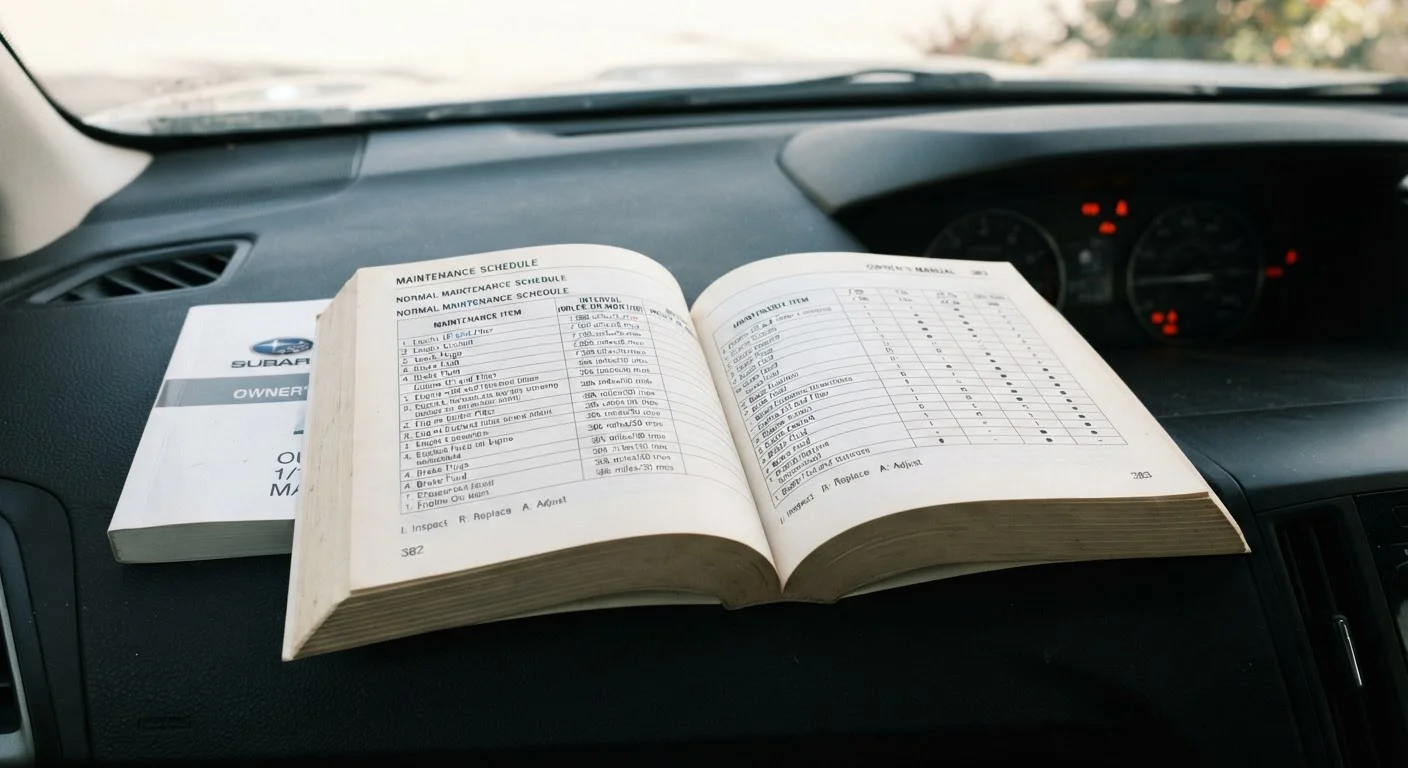
Maintenance schedules are organized in a grid format. The rows list specific services - oil change, tire rotation, air filter replacement, brake inspection, spark plugs, coolant flush, and so on. The columns indicate when each service is due, measured in miles and sometimes months or years. Both types of intervals apply. A coolant flush might be due at 60,000 miles or five years - whichever comes first. If you drive fewer miles annually, the time-based interval may trigger before the mileage one does.
Compare the Schedule to Your Current Mileage
Check your odometer and identify where you fall on the schedule. Note which services are already overdue, which are approaching within the next 5,000 miles, and which are safely in the future. If you're not sure when certain services were last performed - especially on a used vehicle - a qualified mechanic can inspect components like the brake pads, belts, and filters to estimate their remaining service life. For a broader look at what's typically included, see our overview of routine scheduled services.
Record What's Due and Set Reminders
Write down the next two or three upcoming service milestones with their mileage or date targets. Add reminders to your phone or calendar so the intervals don't sneak up on you. This small habit removes the guesswork and reduces the chance of overlooking a service. A dedicated vehicle maintenance log also helps you track what's been done and when, which matters when visiting a mechanic or selling the car.
When the Manual and a Mechanic Disagree
A service technician may occasionally recommend an interval shorter than what the manufacturer specifies. This can be legitimate - driving conditions, oil quality, or an observed wear pattern may justify it. But it's worth understanding the basis for any deviation. Use the manual as your reference point in those conversations. If a shop recommends a service that isn't listed in your schedule at that mileage, it's reasonable to ask why.
For guidance on evaluating those situations confidently, see how to evaluate a mechanic's repair recommendation. Your manual gives you the factual baseline - that's exactly the kind of informed position that leads to better outcomes at the shop.