

Key Takeaways
- Maintenance receipts prove service history and directly support resale value negotiations.
- Insurance declarations pages and accident reports should be kept for several years minimum.
- Title and registration documents are legal instruments - losing them causes real delays.
- A simple filing system, physical or digital, eliminates scrambling during claims or sales.
- Some records, like the original title, should be kept for as long as you own the vehicle.
Summary
18 items · 20-45 minutes
Why Car Records Matter More Than Most Owners Realize
Most drivers keep their registration in the glove box and toss everything else. It's a common habit - and a surprisingly costly one. When it's time to sell, file an insurance claim, dispute a repair charge, or prove your vehicle meets emissions standards, the absence of paperwork turns routine situations into drawn-out headaches.
Car ownership generates more documentation than people expect, and each category serves a distinct purpose. Some records protect you legally. Others directly affect the money you recover in a sale or claim. And a few are simply required by law to have on hand. The good news: organizing everything takes under an hour, and maintaining it afterward is a matter of minutes per visit to the mechanic or insurance portal.
If you're new to ownership, see our what changes the moment you drive off the lot - it covers the first documents that land in your hands and what to do with them immediately. This checklist picks up from there and covers the full lifecycle of records you'll accumulate.
Ownership & Legal Documents
Insurance Records
Maintenance & Repair Receipts
Incident & Accident Records
Emissions, Inspection & Registration Records
How to Set Up a Filing System That You'll Actually Use
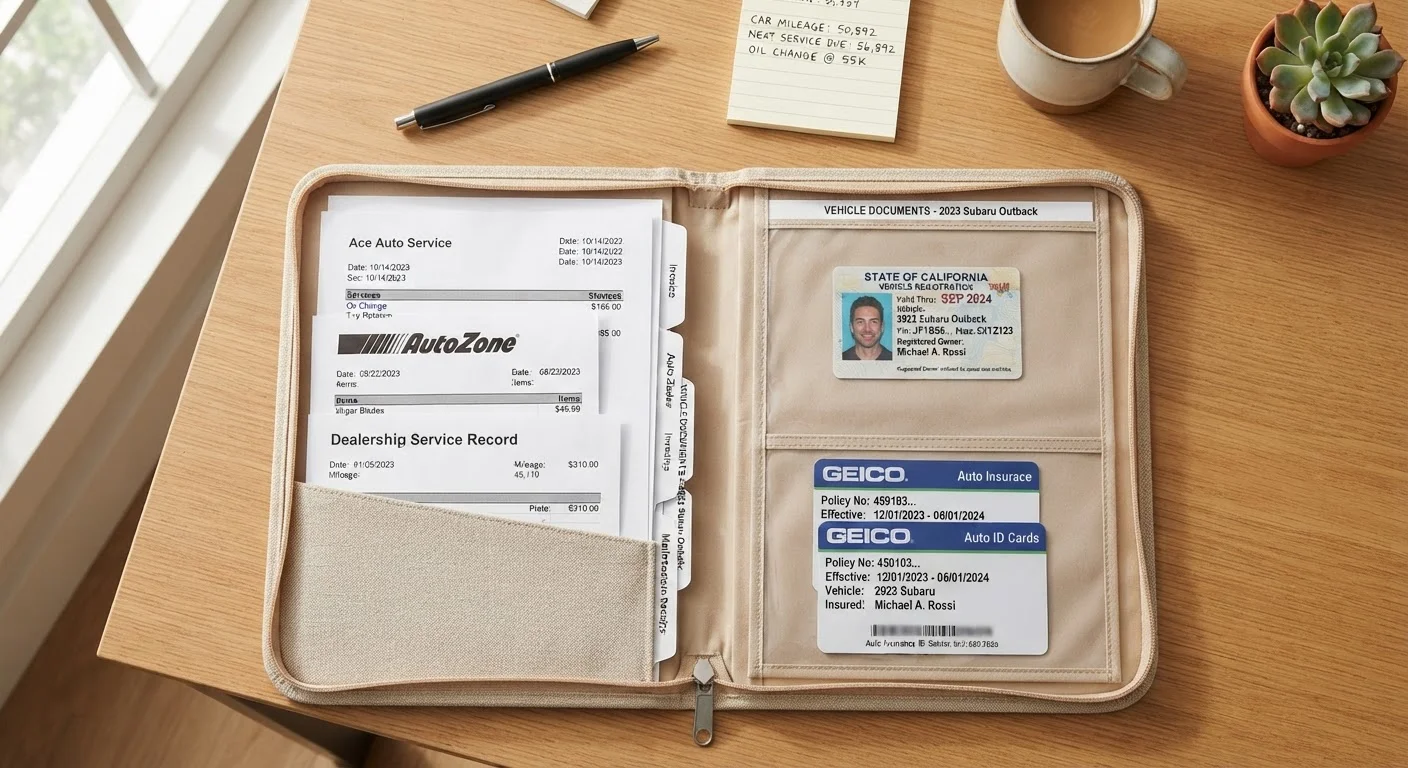
The most effective system is the one you stick with. A dedicated accordion folder or manila envelope for each vehicle works well for physical documents. For digital storage, a named folder in cloud storage - organized by vehicle and subcategory - gives you access from anywhere, which matters when you're standing at a dealership or on the side of the road.
The core principle: file every document the same day you receive it. Receipts pile up when you defer. A quick photo backup of every physical document adds a meaningful layer of protection - paper fades, folders get lost in moves, and glove boxes are not secure storage for originals.
Accordion file folder or binder
Stores physical documents by category in one portable, labeled location that's easy to access during sales or claims.
Cloud storage account
Backs up scanned or photographed documents so records survive a lost folder, water damage, or vehicle theft.
Smartphone camera
Quickly photographs receipts, incident scenes, and new documents before filing physical copies.
Vehicle maintenance log app or notebook
Tracks service dates and mileage in one place, making it easy to reference when organizing receipts.
How long should you keep things? Vehicle titles and purchase agreements: for as long as you own the vehicle and then some. Maintenance receipts: at minimum through the warranty period, and ideally through the ownership period if you plan to sell privately. Insurance declarations pages: keep the prior two or three policy periods on file. Accident reports: a minimum of five years is a practical standard, though your state's statute of limitations on civil claims may extend this.
For a practical companion to this checklist, our guide to keeping a vehicle maintenance log explains how to track service in a way that makes these records even more useful at sale time or during warranty disputes.
Don't Store Original Titles in Your Vehicle
Your vehicle title is a legal ownership document. Keeping it in your glove box exposes it to theft, fire, and loss. Store the original at home in a secure location such as a fireproof safe or a locked filing cabinet. A digital backup is useful for reference, but the physical original is what governs legal transfer of ownership.
Understanding what your title and registration actually say is equally important. If any of those fields are unfamiliar to you, reading your vehicle registration and title walks through each section and explains why they matter. And if you want context for how your maintenance records connect to the car's long-term value, our overview of how depreciation works shows the relationship between documented upkeep and resale outcomes.