

Key Takeaways
- Solo travel gives you complete control over your schedule, pace, and destination choices.
- Traveling alone typically costs more per person than sharing accommodations and transportation.
- Safety considerations vary significantly by destination, traveler profile, and trip type.
- Solo trips often lead to more spontaneous local connections than group travel allows.
- Loneliness and decision fatigue are real challenges that solo travelers commonly report.
Complete freedom over your itinerary and pace
You decide when to wake up, what to skip, and when to linger. No negotiating with others means you can follow your curiosity without compromise.
Stronger opportunities for genuine local connections
Solo travelers are often more approachable and more likely to accept invitations or strike up conversations. Groups tend to stay insular; solo travelers tend to integrate.
Deeper self-knowledge and confidence building
Navigating unfamiliar places alone - solving problems, making decisions, managing setbacks - builds a kind of self-reliance that's hard to develop in other settings.
Flexible, spontaneous decision-making
Heard about a hidden trail or a last-minute cultural event? Solo travelers can act on tips immediately without waiting for group consensus.
Full creative control over trip style and priorities
Whether you want to spend three hours in a single museum or eat dinner at 5 p.m., your preferences drive every choice - no compromise required.
Higher per-person cost with no one to share expenses
Single-occupancy hotel rooms routinely cost more per person than shared doubles. Transportation, tours, and rentals also lose the economies of scale that groups enjoy.
Greater personal safety responsibility
There's no travel companion watching your back or helping in an emergency. Solo travelers - particularly in unfamiliar destinations - need to be more deliberate about situational awareness and sharing their itinerary with someone at home.
Loneliness during extended trips is common
The freedom of solo travel is real, but so is the quiet of eating alone night after night or having no one to share a remarkable moment with. Many solo travelers report this as their biggest challenge on longer trips.
Decision fatigue accumulates without a partner to share choices
Every call - where to eat, which route to take, whether to extend a stay - falls on you. Over days or weeks, that constant decision-making can become exhausting.
Limited help when things go wrong
Illness, theft, missed connections, or language barriers are harder to manage without a companion. Having a reliable plan for emergencies matters more when you're traveling alone.
Our Verdict
Solo travel offers a level of freedom and self-discovery that group trips rarely match - but it comes with genuine trade-offs in cost, safety planning, and emotional sustainability. Neither approach is universally better; it depends on your personality, destination, and what you most want from a trip.
Best suited to self-directed travelers who are comfortable with independence, willing to plan thoughtfully for safety, and ready to embrace both the highs and the quiet lows of being on their own.
What Solo Travel Actually Feels Like
Solo travel is one of those experiences that's genuinely hard to understand until you've tried it. The first morning you wake up in an unfamiliar city with no one else's schedule to consider, something shifts. That freedom is real - and so is the occasional discomfort of being entirely on your own.
This isn't a pitch for solo travel, nor a warning against it. It's a balanced look at what you're actually signing up for - financially, emotionally, logistically - so you can decide whether it fits what you're looking for right now. For a broader look at how solo trips compare to group dynamics, see our guide on how solo and group travel differ in planning.
The Real Advantages of Traveling Alone
The strongest case for solo travel isn't romance - it's practicality. When you travel alone, your preferences drive every decision, from the type of accommodation you choose to how long you spend at a single site.
Complete freedom over your itinerary and pace
You decide when to wake up, what to skip, and when to linger. No negotiating with others means you can follow your curiosity without compromise.
Stronger opportunities for genuine local connections
Solo travelers are often more approachable and more likely to accept invitations or strike up conversations. Groups tend to stay insular; solo travelers tend to integrate.
Deeper self-knowledge and confidence building
Navigating unfamiliar places alone - solving problems, making decisions, managing setbacks - builds a kind of self-reliance that's hard to develop in other settings.
Flexible, spontaneous decision-making
Heard about a hidden trail or a last-minute cultural event? Solo travelers can act on tips immediately without waiting for group consensus.
Full creative control over trip style and priorities
Whether you want to spend three hours in a single museum or eat dinner at 5 p.m., your preferences drive every choice - no compromise required.
One underrated benefit: solo travelers often have richer interactions with locals. Traveling as part of a group creates a self-contained social bubble. Alone, you're more likely to accept a dinner recommendation from a stranger, join a walking tour where you meet other travelers, or simply have an extended conversation at a café. If you're weighing whether a solo city break or a wilderness escape suits your personality, choosing the right trip style can help frame that decision.
The Honest Drawbacks You Should Weigh
Solo travel's disadvantages are real and worth taking seriously before you commit to a trip - especially a longer or more remote one.
Higher per-person cost with no one to share expenses
Single-occupancy hotel rooms routinely cost more per person than shared doubles. Transportation, tours, and rentals also lose the economies of scale that groups enjoy.
Greater personal safety responsibility
There's no travel companion watching your back or helping in an emergency. Solo travelers - particularly in unfamiliar destinations - need to be more deliberate about situational awareness and sharing their itinerary with someone at home.
Loneliness during extended trips is common
The freedom of solo travel is real, but so is the quiet of eating alone night after night or having no one to share a remarkable moment with. Many solo travelers report this as their biggest challenge on longer trips.
Decision fatigue accumulates without a partner to share choices
Every call - where to eat, which route to take, whether to extend a stay - falls on you. Over days or weeks, that constant decision-making can become exhausting.
Limited help when things go wrong
Illness, theft, missed connections, or language barriers are harder to manage without a companion. Having a reliable plan for emergencies matters more when you're traveling alone.
Safety Planning Looks Different Solo
Solo travel doesn't mean unsafe travel, but it does mean preparation matters more. Before any solo trip, share your detailed itinerary with a trusted contact at home, keep digital and physical copies of key documents, and research local emergency numbers and healthcare access at your destination. Entry requirements, local laws, and travel advisories change - always verify current conditions through official government sources like travel.state.gov before departing.
Cost is one of the most consistent complaints. The "single supplement" charged by hotels, cruises, and tour operators can meaningfully increase what you pay per trip. Packing decisions also carry more weight when there's no one to hold a bag while you sort out a problem at check-in.
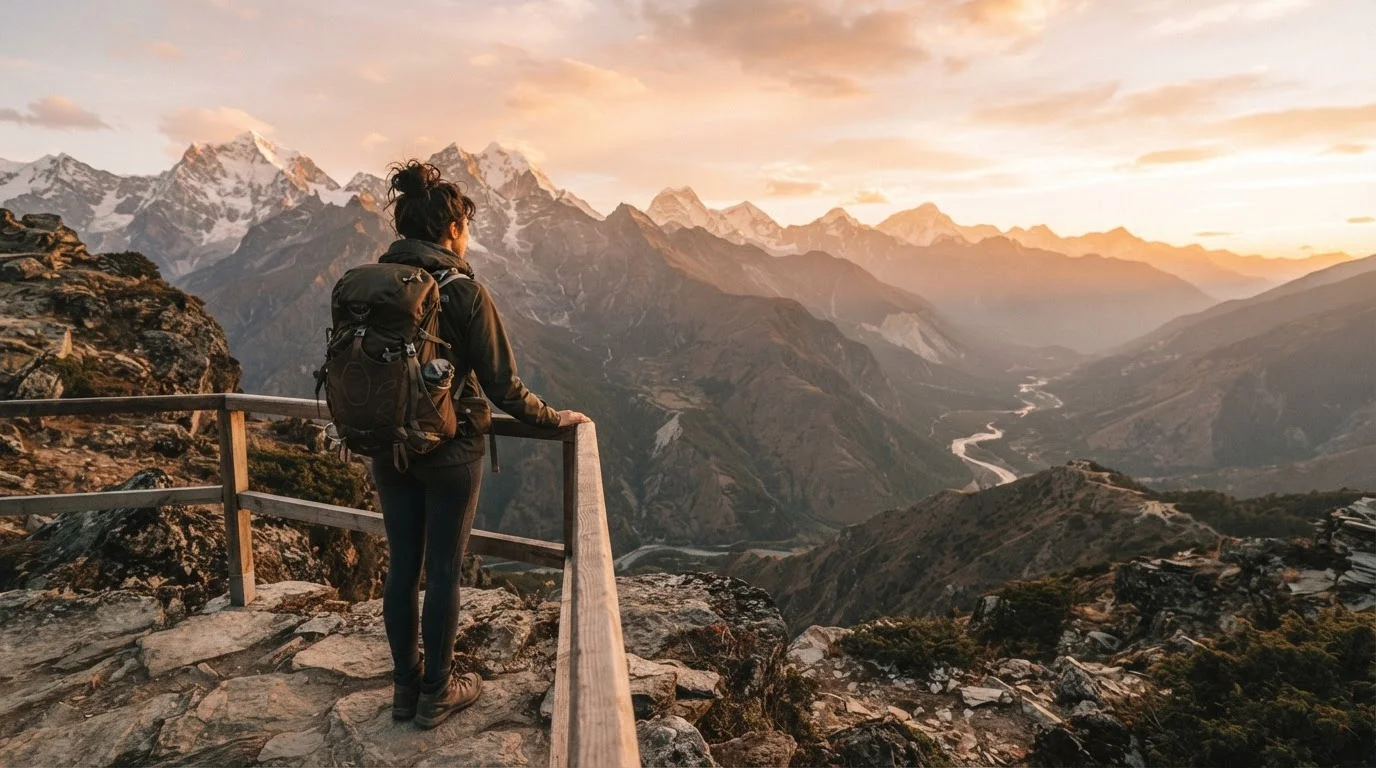
Loneliness deserves honest acknowledgment. Many solo travelers describe the experience as deeply rewarding overall - but also admit that certain moments, like a stunning sunset with no one to share it with, carry an unexpected sting. That emotional texture is part of the deal.
Who Solo Travel Tends to Suit Best
Solo travel isn't for everyone, and that's not a failing. It tends to work best for people who are genuinely comfortable with their own company for extended stretches, who find independent decision-making energizing rather than draining, and who are willing to invest time in pre-trip safety planning.
It also works well as an occasional mode rather than an all-or-nothing commitment. Many travelers go solo for shorter domestic trips - a weekend city break, a regional road trip - before testing the approach internationally. For a grounded look at what day-to-day solo international travel actually involves, see what solo travel abroad looks like in practice.
~25%
Share of Americans who have traveled solo
Surveys by major travel research groups consistently find roughly one in four American adults has taken at least one solo trip.
20-50%
Typical single-supplement cost increase
Solo travelers often pay a 'single supplement' on cruises and package tours, commonly ranging from 20% to 50% above the per-person double-occupancy rate.
Ultimately, solo travel rewards preparation and self-awareness. Go in with clear expectations about both the freedom and the friction, and it's far more likely to deliver what you're hoping for.