
Native Plants and the American Yard: What Shifting to Local Species Actually Involves

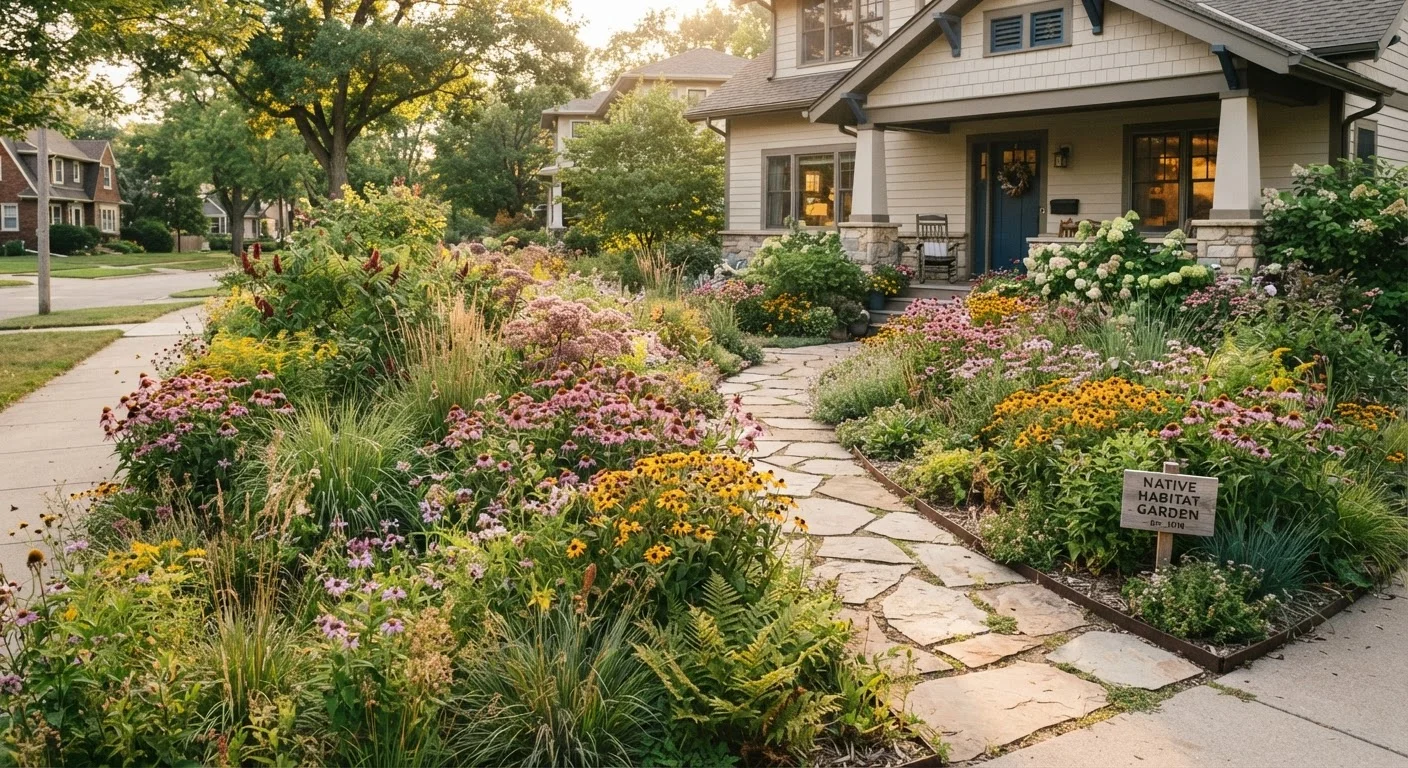
Key Takeaways
- Native plants are adapted to local soils and climate, often requiring less water and fertilizer once established.
- The transition period - typically one to three years - demands real effort before low-maintenance benefits appear.
- Plant selection must match your specific region; 'native' is not a single national category.
- Local ordinances and HOA rules may restrict how natural or informal a front yard can look.
- Native plantings actively support pollinators, birds, and soil health in ways traditional lawns often cannot.
Significantly lower water needs once established
Native plants adapted to regional rainfall patterns typically require little to no supplemental irrigation after their first one to two growing seasons, reducing both water bills and effort.
Minimal fertilizer and pesticide requirements
Because native plants evolved in local soils, they generally don't need synthetic fertilizers to thrive. Their natural resistance to regional pests also reduces - though doesn't eliminate - the need for pesticide applications.
Strong support for native pollinators and wildlife
Native plants provide food sources - nectar, pollen, seeds, and larval habitat - that many native bee species, butterflies, and birds depend on and that non-native ornamentals often cannot adequately replace.
Improved soil health and erosion control
Many native species develop deep, extensive root systems that improve soil aeration and water infiltration, and help hold soil in place on slopes or in areas prone to runoff.
Long-term cost savings on yard maintenance
Reduced irrigation, fertilization, and mowing (for low-growing species) can lower ongoing yard maintenance costs meaningfully, though these savings take time to materialize after the establishment phase.
Demanding establishment period of one to three years
Native plants require consistent watering, weeding, and monitoring while roots develop. The low-maintenance payoff is real but delayed, and many homeowners underestimate this upfront commitment.
Informal appearance may conflict with HOA rules
Native plantings - especially those featuring ornamental grasses, meadow flowers, or seed heads left standing for wildlife - can look less manicured than traditional lawns, which sometimes conflicts with neighborhood association standards.
Higher upfront cost for quality plants
Sourcing locally grown, region-appropriate native plants from specialty nurseries typically costs more than purchasing common ornamentals at general garden centers.
Weed pressure is substantial early on
Disturbed soil from turf removal creates ideal conditions for opportunistic weeds. Until native plants fill in and establish canopy coverage, regular weeding is necessary to prevent invasive species from taking hold.
Plant selection requires region-specific research
Simply buying plants labeled 'native' at a nursery is insufficient; species must be appropriate to your specific ecoregion, soil type, and sun exposure to perform as expected.
Our Verdict
Shifting to native plants offers genuine long-term rewards - reduced irrigation, healthier soil, and meaningful ecological contribution - but it requires upfront research, investment, and patience through an establishment phase. The results vary considerably depending on your region, soil conditions, and how much of your yard you convert.
Homeowners who are willing to invest time in planning and a season or two of attentive care, and who want a yard that works with their local environment rather than against it.
What 'Native' Actually Means for Your Yard
A plant is considered native to a region when it evolved there over thousands of years without human introduction. Native plants have adapted to local rainfall patterns, soil chemistry, seasonal temperature swings, and the insects and animals that share the ecosystem. This is why a coneflower (Echinacea) native to the Midwest prairies isn't automatically the right choice for a yard in coastal Georgia or the Pacific Northwest - each region has its own plant communities.
Before selecting species, homeowners should identify their specific USDA hardiness zone and their broader ecoregion. Resources like the Native Plant Society chapters in each state, university extension programs, and the National Wildlife Federation's plant finder tool can help narrow selections to genuinely local species. Treating native gardening as a regional discipline - not a national trend - is the first step toward realistic expectations.
For those also weighing how to structure new garden areas, our guide on raised beds vs. in-ground gardens covers how soil type and site conditions affect setup choices, which applies equally to native plant installations.
The Real Advantages of Going Native
Much of the enthusiasm for native plants is well-founded, provided expectations are grounded in what establishment actually looks like.
Significantly lower water needs once established
Native plants adapted to regional rainfall patterns typically require little to no supplemental irrigation after their first one to two growing seasons, reducing both water bills and effort.
Minimal fertilizer and pesticide requirements
Because native plants evolved in local soils, they generally don't need synthetic fertilizers to thrive. Their natural resistance to regional pests also reduces - though doesn't eliminate - the need for pesticide applications.
Strong support for native pollinators and wildlife
Native plants provide food sources - nectar, pollen, seeds, and larval habitat - that many native bee species, butterflies, and birds depend on and that non-native ornamentals often cannot adequately replace.
Improved soil health and erosion control
Many native species develop deep, extensive root systems that improve soil aeration and water infiltration, and help hold soil in place on slopes or in areas prone to runoff.
Long-term cost savings on yard maintenance
Reduced irrigation, fertilization, and mowing (for low-growing species) can lower ongoing yard maintenance costs meaningfully, though these savings take time to materialize after the establishment phase.
~40%
Potential reduction in outdoor water use
The EPA estimates that landscape irrigation accounts for nearly one-third of all residential water use, and established native plantings can substantially reduce that demand compared to conventional turf lawns.
4,000+
Native bee species in North America
According to the U.S. Geological Survey, North America is home to over 4,000 native bee species, many of which depend on specific native plants for pollen and larval food sources.
Beyond water savings, native root systems - often far deeper than those of turf grass or ornamental exotics - improve soil structure, reduce erosion, and support the microbial communities that keep soil fertile. Many native species have co-evolved with specific pollinators: native bees, butterflies, and moths rely on particular plants for larval food that introduced species simply cannot provide. A yard with a diverse native planting can meaningfully contribute to local food webs in a way a conventional lawn cannot.
Native perennials also tend to return season after season without replanting. Pairing them thoughtfully with annuals for early-season color is a strategy worth exploring - see our overview of perennials vs. annuals for planning guidance.
The Honest Tradeoffs and Challenges
The low-maintenance reputation of native plants is real - eventually. But it comes with significant caveats that are often understated.
Demanding establishment period of one to three years
Native plants require consistent watering, weeding, and monitoring while roots develop. The low-maintenance payoff is real but delayed, and many homeowners underestimate this upfront commitment.
Informal appearance may conflict with HOA rules
Native plantings - especially those featuring ornamental grasses, meadow flowers, or seed heads left standing for wildlife - can look less manicured than traditional lawns, which sometimes conflicts with neighborhood association standards.
Higher upfront cost for quality plants
Sourcing locally grown, region-appropriate native plants from specialty nurseries typically costs more than purchasing common ornamentals at general garden centers.
Weed pressure is substantial early on
Disturbed soil from turf removal creates ideal conditions for opportunistic weeds. Until native plants fill in and establish canopy coverage, regular weeding is necessary to prevent invasive species from taking hold.
Plant selection requires region-specific research
Simply buying plants labeled 'native' at a nursery is insufficient; species must be appropriate to your specific ecoregion, soil type, and sun exposure to perform as expected.
Sourcing is another practical challenge. True local-ecotype native plants - grown from seed stock native to your specific region, not just the broader species - can be harder to find than big-box nursery plants labeled 'native.' Cultivated varieties (often called 'nativars') may look like natives but offer reduced ecological value. Seeking out local native plant nurseries or plant sales hosted by native plant societies generally yields better results.
Homeowners planning a broader seasonal yard overhaul should also factor native plant establishment into their fall preparation. Our fall yard prep checklist covers tasks like mulching and bed cleanup that directly benefit native plantings heading into winter.
Planning a Realistic Transition
Most successful native yard conversions happen in phases rather than all at once. Starting with a single bed, a lawn strip, or a border reduces the upfront workload and lets you learn which species perform well in your specific conditions before expanding. Removing existing turf - whether by smothering with cardboard and mulch (sheet mulching) or mechanical removal - is labor-intensive and should be planned carefully to avoid soil disturbance that invites weed establishment.
Permit and Code Considerations
Some municipalities require permits or review for significant front-yard landscape changes, particularly those that alter drainage or involve removal of large areas of existing vegetation. Before converting a large portion of your lawn, contact your local planning or zoning office to understand what, if any, approvals are needed. Rules vary widely by city and county, and they do change, so verifying current requirements is always worth the effort.
Watering during the first growing season is typically necessary even for drought-tolerant species; roots need time to penetrate deeply enough to access subsoil moisture. By year two or three, supplemental irrigation requirements drop substantially for most native plantings in appropriate climates.
Check local ordinances before beginning. Some municipalities and homeowners associations have rules governing front yard appearance, plant height, or the percentage of 'naturalized' landscaping permitted. Many areas have updated these rules in recent years to support native gardening, but verification is essential before investing in a full front-yard conversion. The same due diligence applies when selecting trees - our article on tree planting decisions homeowners often regret illustrates why site and species research upfront prevents costly problems later.