

Key Takeaways
- Serving size is the foundation of every number on the label - always check it first.
- % Daily Value shows how much a nutrient contributes to a standard 2,000-calorie daily diet.
- Added sugars and saturated fat are the two figures most worth scrutinizing on most labels.
- Ingredients lists and Nutrition Facts panels work together - neither tells the full story alone.
- Front-of-package claims like "natural" or "light" are marketing terms, not regulated nutrition grades.
What you will need
Why Nutrition Labels Trip People Up
The Nutrition Facts panel has been a fixture on packaged foods in the United States since 1994, and the FDA updated its format significantly in 2020. Yet surveys consistently show that most Americans find the label confusing or misleading. The problem isn't the data - it's knowing which numbers actually matter for everyday decisions.
Part of the confusion comes from front-of-package marketing. Words like "natural," "light," "multigrain," and "low-fat" are largely unregulated claims designed to attract attention. They don't reflect the complete nutritional picture inside the panel. Learning to skip past the packaging and go straight to the label is the first skill worth developing. For a deeper look at how marketing language functions across consumer products, the same principle applies when decoding sunscreen label claims.
What you will need
How to Read the Label Step by Step
Follow these steps each time you pick up a packaged product. With practice, the process takes less than 30 seconds.
Start With the Serving Size
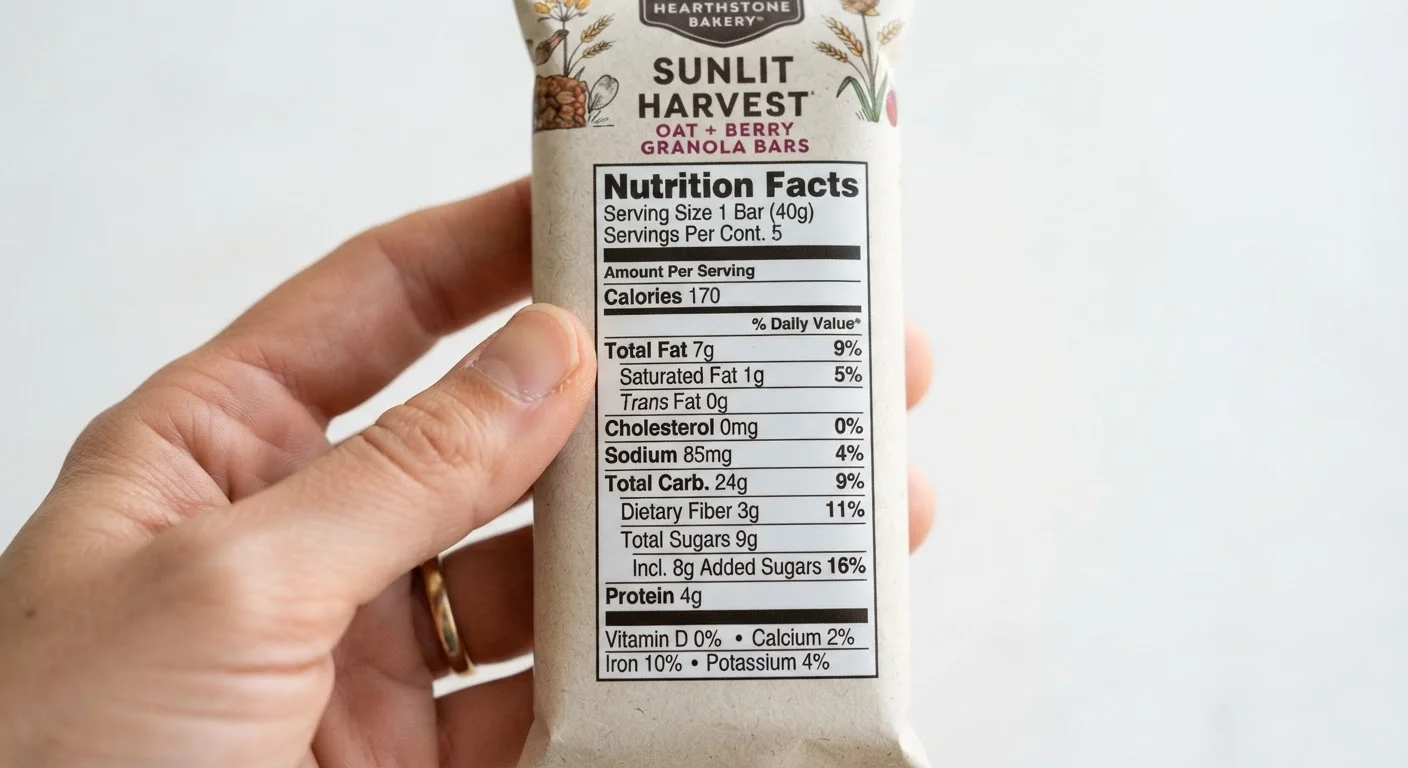
The serving size appears at the very top of the panel and is the single most important figure on the label. Every number below it - calories, fat, sodium, everything - applies to that serving amount, not to the entire package. Manufacturers are required to use realistic serving sizes, but a bag of chips or a bottle of juice may still contain two or three servings. If you eat the whole container, multiply every figure accordingly.
Check the Calorie Count
Calories measure the total energy a serving provides. This figure is displayed in large type because it's a primary reference point for energy balance. However, calories alone don't indicate nutritional quality. Two foods with identical calorie counts can differ dramatically in fiber, protein, and micronutrient content - factors that affect how satisfied and nourished you actually feel.
Examine the Fats Section
The label lists total fat, then breaks it into saturated fat and trans fat as sub-entries. Unsaturated fats (monounsaturated and polyunsaturated) may also appear. Saturated fat is the figure to watch most closely - current dietary guidance generally suggests limiting it. Trans fat should ideally be zero per serving; the FDA has effectively phased out artificial trans fats, but small amounts can still appear under the "0 g" label if they're below 0.5 g per serving. See the plain-language guide to macronutrients for how different fat types function in the body.
Read the Sodium Figure
Sodium is measured in milligrams (mg). Most Americans consume significantly more sodium than health guidelines recommend, and packaged foods are the largest single source. The % Daily Value column makes it easy to assess at a glance: 5% DV or less per serving is generally considered low, while 20% DV or more is considered high. Soups, sauces, and deli items are frequently high-sodium foods even when they don't taste noticeably salty.
Scrutinize Total and Added Sugars
The updated FDA label now requires a separate line for added sugars beneath total sugars. Total sugars include both naturally occurring sugars (as in fruit or dairy) and sugars added during manufacturing. Added sugars are the ones most associated with health concerns when consumed in excess. A yogurt may show 20 g of total sugar but only 5 g added - meaning the rest comes naturally from milk. That distinction changes the picture considerably.
Use the % Daily Value Column as a Quick Guide
The % Daily Value (%DV) column on the right side of the panel shows how much of a nutrient one serving contributes toward a reference 2,000-calorie daily diet. A quick rule of thumb: 5% DV or less is low, 20% DV or more is high. Use this column to compare similar products quickly. For nutrients you want to limit - saturated fat, sodium, added sugars - look for lower percentages. For nutrients you want more of - fiber, calcium, iron, potassium - look for higher percentages.
Check Fiber and Protein
Dietary fiber and protein are listed in the lower portion of the panel. Both contribute to feelings of fullness and play important roles in metabolic health. Most Americans fall short of recommended fiber intake. A food providing 3 g or more of fiber per serving is generally considered a good source. Protein content is especially worth noting if the food is intended as a meal component rather than a snack.
Compare Products Using % Daily Value
When choosing between two similar products, the %DV column is your fastest comparison tool. You don't need to do any math - just look at whether key nutrients are trending lower or higher across options. This works especially well for sodium and saturated fat.
Putting the Numbers in Context
A label never exists in a vacuum. The figures only become meaningful when you consider your overall diet. For most people, dietary patterns across an entire day - or week - matter more than any single product's numbers. If you're working on understanding how individual nutrients contribute to your overall intake, a plain-English reference on vitamins and minerals can add helpful context.
It's also worth understanding the distinction between naturally occurring sugars and sugars that manufacturers add during processing. Why the added sugar distinction matters is covered in detail in a companion guide. And if you want to move beyond calorie counting toward a more intuitive approach to eating, building a balanced plate without obsessing over numbers offers practical strategies grounded in the same evidence base.
For broader context on how official guidance is structured, making sense of dietary guidelines without a nutrition degree translates federal recommendations into everyday language.
This article is for general informational and educational purposes only and is not a substitute for advice from a qualified healthcare professional or registered dietitian.