

| SPF 15 UVB protection | ~93% (FDA sunscreen monograph testing standards) |
| SPF 30 UVB protection | ~97% (FDA sunscreen monograph testing standards) |
| SPF 50 UVB protection | ~98% (FDA sunscreen monograph testing standards) |
| Lab application amount for SPF testing | 2 mg/cm² (FDA testing protocol) |
| Highest PA rating | PA++++ (PPD 16+) (Japan Cosmetic Industry Association standard) |
| Maximum water-resistance claim (U.S.) | 80 minutes (FDA sunscreen labeling regulations) |
What SPF Numbers Actually Measure
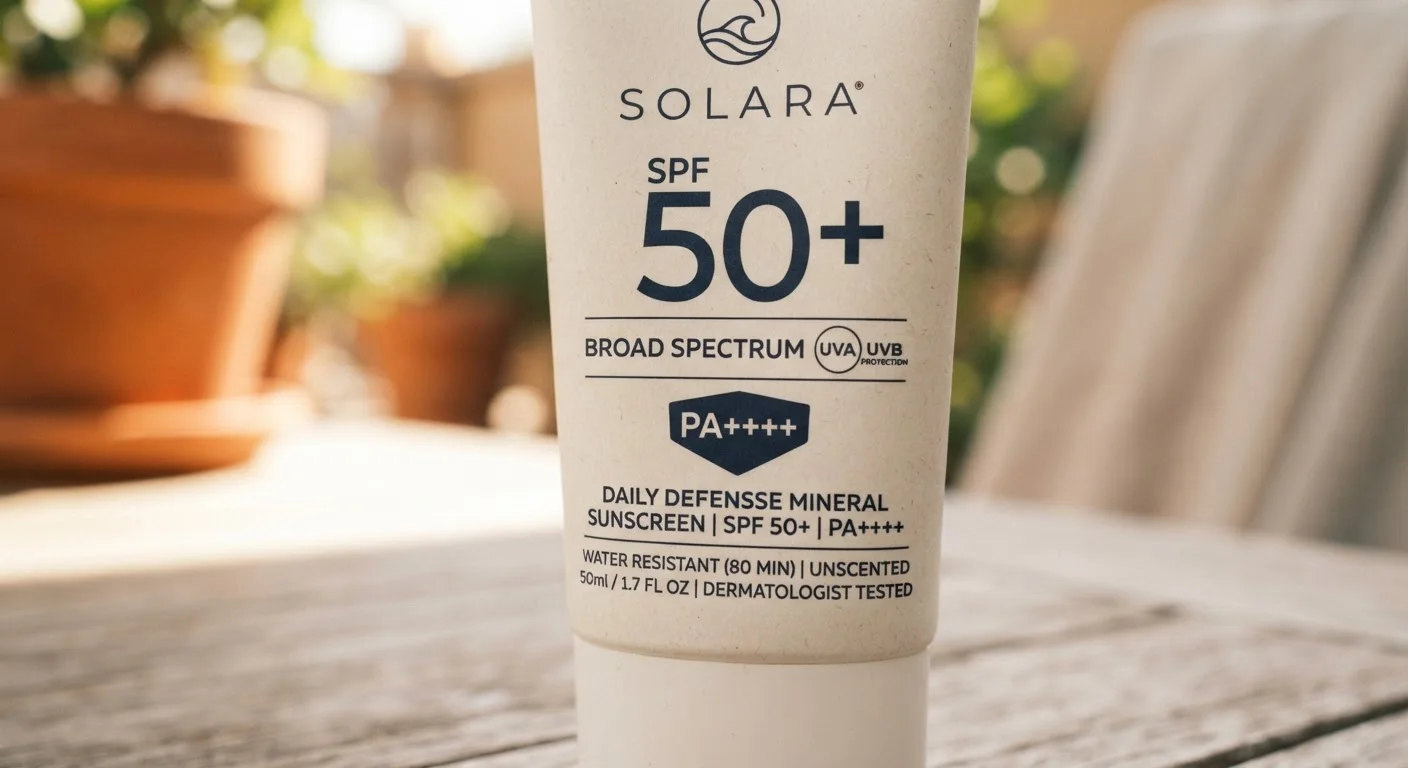
SPF - Sun Protection Factor - measures how well a sunscreen filters UVB radiation, the rays primarily responsible for sunburn and a major contributor to skin cancer risk. The number itself represents a ratio: SPF 30 means it would theoretically take 30 times longer for UVB to redden protected skin compared to unprotected skin, under controlled lab conditions.
Here's the part most labels won't tell you: the relationship between SPF numbers and protection isn't linear. SPF 15 blocks roughly 93% of UVB rays. SPF 30 blocks about 97%. SPF 50 gets to around 98%. That means doubling the number does not double the protection - a common misconception explored in depth in our sunscreen myths guide.
There's also a critical real-world catch: SPF ratings are tested in a lab using 2 mg of product per square centimeter of skin. Most people apply roughly a quarter of that amount, which can reduce effective SPF dramatically. Generous, even application matters as much as the number on the bottle.
| SPF 15 UVB protection | ~93% (FDA sunscreen monograph testing standards) |
| SPF 30 UVB protection | ~97% (FDA sunscreen monograph testing standards) |
| SPF 50 UVB protection | ~98% (FDA sunscreen monograph testing standards) |
| Lab application amount for SPF testing | 2 mg/cm² (FDA testing protocol) |
| Highest PA rating | PA++++ (PPD 16+) (Japan Cosmetic Industry Association standard) |
| Maximum water-resistance claim (U.S.) | 80 minutes (FDA sunscreen labeling regulations) |
UVA, Broad-Spectrum, and the PA Rating System
SPF only addresses UVB. UVA rays - which penetrate deeper into the skin and are associated with premature aging and DNA damage - require a separate protection framework.
In the United States, the FDA requires a broad-spectrum label for any sunscreen that passes a standardized critical wavelength test, meaning it provides meaningful protection across both UVB and UVA wavelengths. If a product isn't labeled broad-spectrum, it's not offering reliable UVA coverage regardless of its SPF number.
Many products imported from Asia or sold internationally carry a PA rating, a system developed in Japan and widely adopted across East and Southeast Asia. PA ratings use plus signs - PA+, PA++, PA+++, and PA++++ - to indicate increasing levels of UVA protection, based on a measurement called the PPD factor. PA++++ (four plusses) offers the highest UVA protection in this system.
SPF (Sun Protection Factor)
A measure of how much UVB radiation a sunscreen filters relative to unprotected skin. Higher numbers block a slightly greater percentage of UVB rays, but the scale is not linear.
UVB
Ultraviolet B radiation - shorter-wavelength UV rays that cause sunburn and contribute significantly to skin cancer risk. SPF ratings specifically measure protection against UVB.
UVA
Ultraviolet A radiation - longer-wavelength UV rays that penetrate deeper into the skin and are associated with premature aging and DNA damage. Not measured by SPF alone.
Broad-Spectrum
An FDA-regulated label indicating that a sunscreen provides protection across both UVB and UVA wavelengths, verified by a standardized critical wavelength test.
PA Rating
A UVA protection grading system common in Asia, using plus signs (PA+ through PA++++) to indicate increasing levels of UVA protection based on Persistent Pigment Darkening factor testing.
PPD (Persistent Pigment Darkening)
A measurement method used to assess UVA protection levels, forming the basis of the PA rating system. Higher PPD values correspond to higher PA ratings.
Both systems have their uses. Broad-spectrum is the U.S. regulatory standard; PA ratings give more granular UVA detail. Many internationally formulated sunscreens display both, which can help you compare options more precisely.
Water Resistance, Expiration, and Other Label Claims
Beyond SPF and UVA ratings, sunscreen labels carry a few other claims worth understanding at a glance.
- Water resistant (40 minutes) or (80 minutes): In the U.S., these are the only two permitted water-resistance claims. They indicate how long the product maintains its SPF rating during water exposure under testing conditions. No sunscreen is waterproof - reapplication after swimming or heavy sweating is always necessary.
- Expiration date: Sunscreen formulas degrade over time. The FDA requires stability testing that supports a minimum three-year shelf life, but an expired product or one stored in heat may lose effectiveness sooner. Check the date and discard old bottles.
- "Sport" or "outdoor" labels: These are marketing terms, not regulated categories. Rely on the SPF number, broad-spectrum status, and water-resistance rating instead.
Reading labels critically - rather than trusting front-of-package marketing - is the same skill that applies when decoding a nutrition label: the regulated details are in the fine print, not the headline.
This article is for general informational purposes only and is not a substitute for advice from a qualified dermatologist or healthcare provider. For personal skin health concerns, please consult a licensed professional.