

Key Takeaways
- The plate method uses visual proportions to guide balanced eating without counting calories.
- Half your plate should be non-starchy vegetables at most meals for optimal nutrient density.
- Protein, whole grains, and healthy fats each have a defined role in a balanced meal.
- Small, consistent habits - not perfection - drive long-term nutritional improvement.
- Eating balanced meals supports energy, satiety, and overall health more sustainably than strict tracking.
What you will need
Why the Plate Method Works
Calorie counting has its uses, but for most people it creates more friction than results. Research consistently shows that sustainable healthy eating depends more on food quality and pattern than precise numbers. The plate method - a portion-based visual framework endorsed by nutrition educators and used in many clinical settings - offers a practical alternative that translates nutrition science into something you can see at the dinner table.
Rather than weighing food or tallying numbers, you use the surface area of a standard 9-inch plate as your guide. Each section of the plate is reserved for a broad category of food, and the proportions do the nutritional work for you. This approach also scales naturally to different appetites and life stages without requiring constant recalculation.
For deeper context on how food labeling fits into everyday eating decisions, see our guide to reading nutrition labels. And if you're evaluating a specific eating pattern, our practical eating pattern checklist can help you assess whether it meets your needs.
The Method Adapts to Any Cuisine
You don't need to eat from a sectioned plate for this approach to work. A stir-fry, grain bowl, or burrito can all follow the same proportions - the key is mentally checking that vegetables dominate, protein and grains are present in smaller amounts, and fat is a supporting element rather than the base. Flexibility is a feature, not a loophole.
What Goes Where - and Why
Understanding the logic behind each plate section helps you apply the method flexibly across different cuisines and meal formats.
What you will need
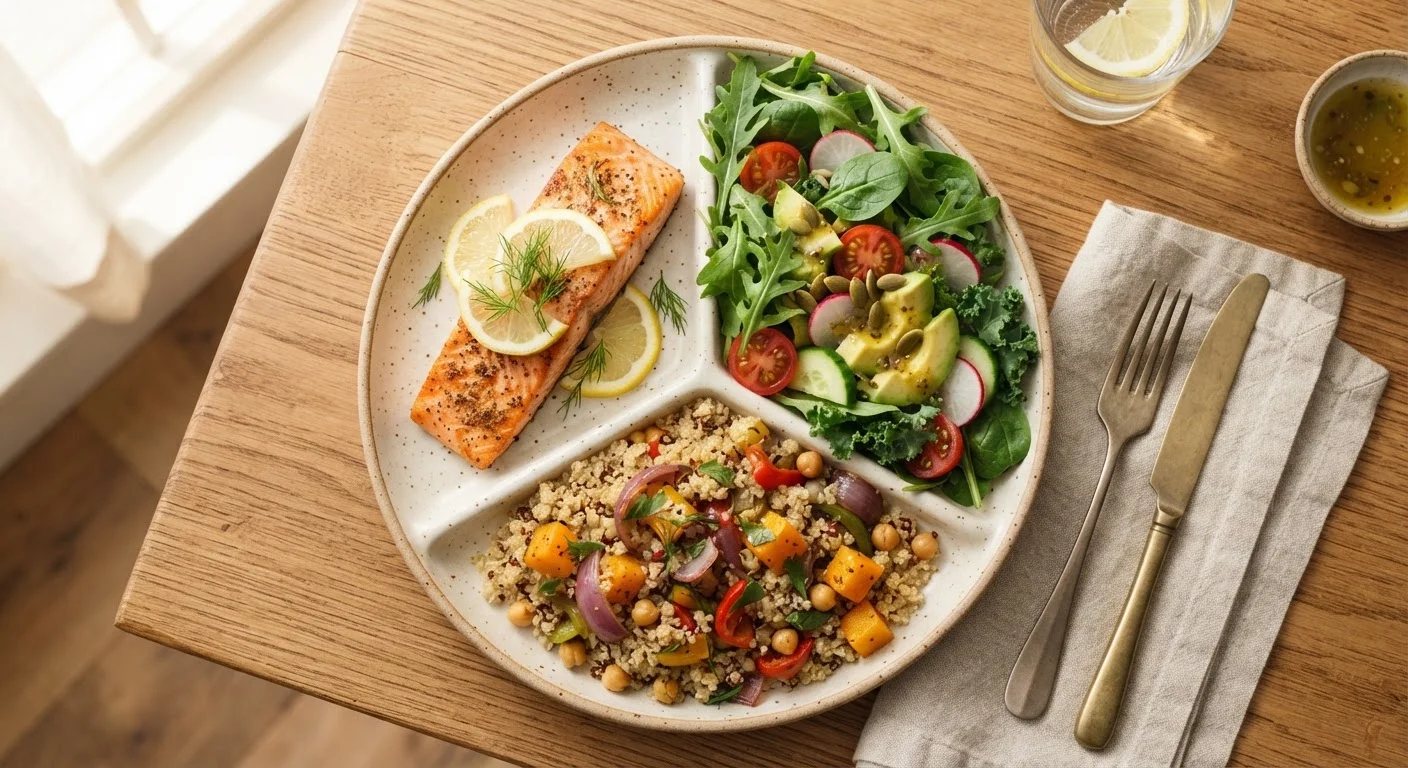
- Vegetables (half the plate): Non-starchy vegetables - leafy greens, broccoli, peppers, tomatoes, cucumbers - are calorie-light and nutrient-dense. Filling half your plate with them increases fiber, vitamins, and minerals while naturally moderating total energy intake.
- Protein (one quarter): Lean proteins - beans, lentils, eggs, fish, poultry, or tofu - support muscle maintenance, immune function, and satiety. Protein also slows digestion, helping you feel full longer after a meal.
- Whole grains or starchy foods (one quarter): Brown rice, whole wheat bread, oats, sweet potato, and similar foods provide sustained energy through complex carbohydrates and contribute fiber that supports digestive health.
- Healthy fats (small addition): A modest amount of fat from sources like avocado, olive oil, nuts, or seeds helps with the absorption of fat-soluble vitamins and adds flavor that makes meals satisfying.
- Beverage: Water or another low-sugar drink completes the meal without adding significant calories.
These proportions align with recommendations from major nutrition and public health bodies in the United States, including guidance from the Dietary Guidelines for Americans. For budget-conscious households, our article on eating well on a budget shows how these principles hold even when shopping economically.
Step-by-Step: Building Your Balanced Plate
The following steps walk you through assembling a balanced meal using the plate method. Apply them at home, when meal prepping, or even when ordering at a restaurant by mentally mapping your choices to the same proportions.
Start with vegetables on half the plate
Before adding anything else, fill half your plate with non-starchy vegetables. Good choices include leafy greens, roasted broccoli, sautéed zucchini, sliced peppers, or a mixed salad. Vary colors across the week to capture a broader range of nutrients.
Add a quality protein source to one quarter
Use one quarter of the plate for protein. Options include grilled chicken or fish, hard-boiled eggs, canned beans or lentils, cottage cheese, or tofu. Aim for preparation methods that don't add excessive saturated fat - baked, grilled, steamed, or sautéed with a small amount of oil are reliable choices.
Fill the remaining quarter with a whole grain or starchy food
Reserve the final quarter for a complex carbohydrate: brown rice, quinoa, whole wheat pasta, barley, roasted sweet potato, or whole grain bread. These foods provide lasting energy and dietary fiber. Choose minimally processed versions when possible to maximize nutritional value.
Add a small amount of healthy fat
Drizzle a teaspoon of olive oil over vegetables, slice a quarter of an avocado alongside your protein, or add a small handful of nuts or seeds. Healthy fats improve the absorption of vitamins A, D, E, and K - all fat-soluble - and contribute to meal satisfaction.
Choose a low-sugar beverage
Complete your meal with water, sparkling water, unsweetened tea, or black coffee. Beverages high in added sugar can contribute substantially to overall energy intake without adding meaningful nutrients. Milk or an unsweetened plant-based alternative are also reasonable options that provide additional protein or calcium.
This article is for general informational and educational purposes only and is not a substitute for personalized medical or dietary advice. Consult a qualified healthcare professional or registered dietitian for guidance specific to your health needs.
Making It a Lasting Habit
The plate method is most effective when it becomes a loose mental framework rather than a rigid rule. On nights when you have pizza or a bowl of soup, you can still apply the underlying logic - ask whether the meal includes vegetables, a quality protein source, and a reasonable grain component. If one element is missing, add a simple side or adjust the next meal.
Consistency matters more than precision. Nutritional patterns across days and weeks have a far greater impact on health than any single meal. If your plate looks different at lunch than the model suggests, that's normal and acceptable. The goal is a general direction, not a test to pass.
You can also use our weekly pantry audit to keep your kitchen stocked with the right building blocks so the method is easy to follow throughout the week. Avoiding the common pitfalls of all-or-nothing thinking is equally important - our article on where nutrition advice goes wrong addresses the patterns that most often derail consistent healthy eating.
This Approach Has Limits for Some People
The plate method is a general framework suited to most healthy adults, but individual nutritional needs vary significantly. People managing chronic conditions such as diabetes, kidney disease, or cardiovascular disease may need a different approach tailored by a healthcare provider. Pregnant or breastfeeding individuals, children, and older adults also have distinct nutritional requirements. Always consult a registered dietitian or physician before making significant changes to how you eat if you have an existing health condition.