

Key Takeaways
- Texas BBQ centers on beef brisket smoked low and slow, with minimal sauce and a focus on the meat itself.
- The Carolinas split into two distinct traditions - vinegar-based Eastern and mustard-based South Carolina styles.
- Kansas City BBQ is sauce-forward, using a thick, sweet tomato-based glaze on a wide variety of meats.
- Regional differences trace back to local agricultural history, Indigenous techniques, and immigrant foodways.
- No single BBQ style is considered superior - each reflects the culture and ingredients of its place.
Our Verdict
American barbecue has no single winner - each regional tradition is a complete culinary philosophy shaped by history, geography, and community. Whether you favor the bark-forward simplicity of Texas brisket or the tangy punch of Eastern Carolina pulled pork, understanding what defines each style deepens your appreciation for why Americans argue so passionately about smoke.
| Best for | Recommended |
|---|---|
| Beef lovers who prefer the meat to speak for itself | Texas BBQ |
| Those who love tangy, vinegar-forward flavors | Eastern Carolina BBQ |
| Sauce enthusiasts who enjoy sweet, complex glazes | Kansas City BBQ |
| Fans of whole-hog tradition and mustard-based profiles | South Carolina BBQ |
Why Regional BBQ Differences Actually Matter
Barbecue is one of America's oldest and most contested culinary traditions. Long before the country had a unified food culture, Indigenous peoples, enslaved Africans, and European settlers each contributed techniques and flavors to what eventually became a deeply regional practice. As food historian Andrew Warnes and others have documented, slow-cooking meat over fire was central to community gatherings across the American South for centuries - and those distinct local methods never merged into one.
Today, the differences between regional styles aren't just about taste preferences. They reflect local livestock traditions, indigenous wood varieties, African culinary influences, and waves of European immigration. Understanding them is a window into why Americans eat the way they do - and why geography still shapes the plate. Food traditions tied to American holidays show a similar pattern: what feels universal is almost always rooted somewhere specific.
The Four Major Regional Traditions
While dozens of subregional styles exist, four traditions are most widely recognized as defining American BBQ.
Texas
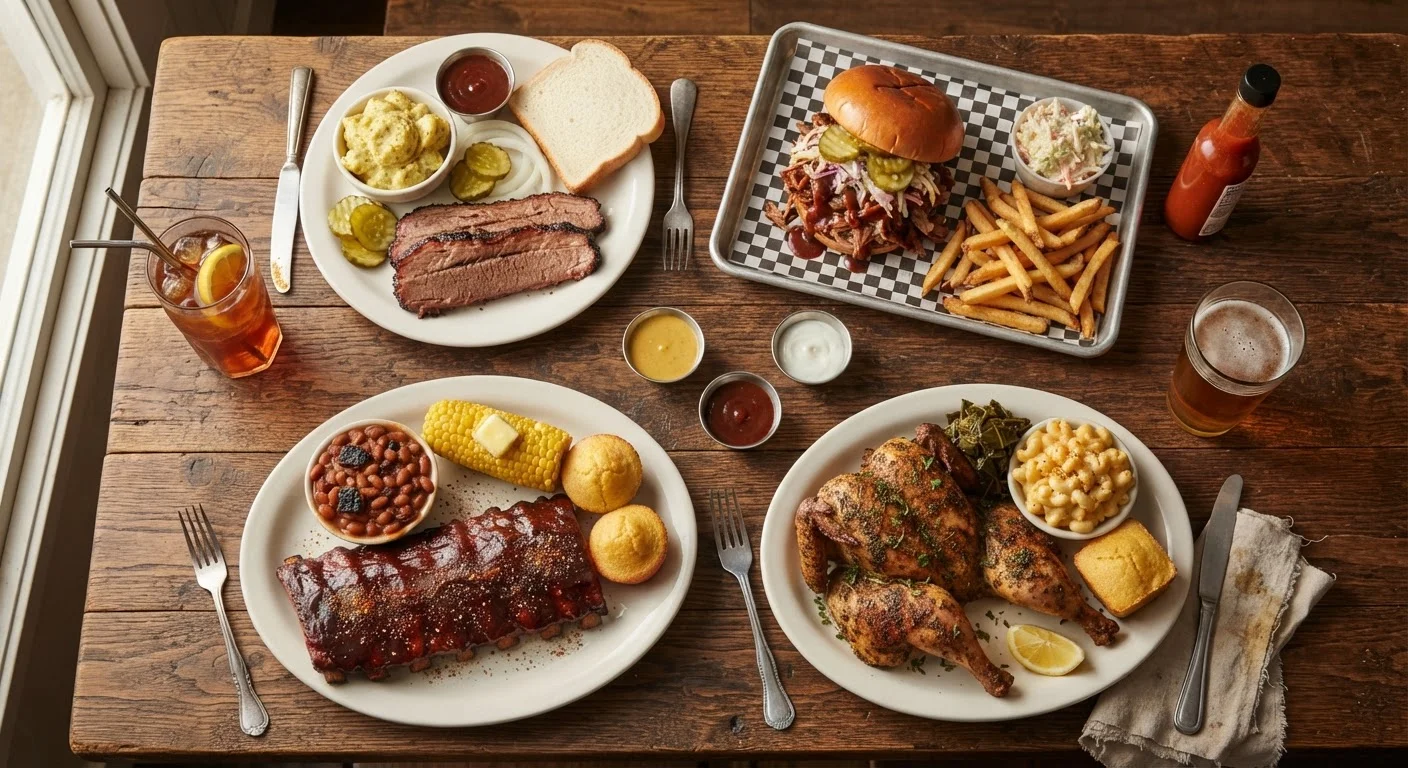
Texas BBQ is beef country. The signature cut is brisket - specifically the whole packer brisket smoked for 12 to 18 hours over post oak wood. The seasoning is simple: salt and black pepper. Sauce, if served at all, appears on the side and is rarely applied during cooking. This approach grew out of the state's cattle ranching economy and the influence of German and Czech butcher-pit traditions in Central Texas communities.
Eastern North Carolina
Eastern Carolina style uses whole hog - the entire pig, cooked slowly over hardwood coals - and finishes with a thin sauce of vinegar, salt, black pepper, and red pepper flakes. No tomato, no sugar. This style has deep roots in African American pitmaster traditions and reflects an era when every part of the animal was used. The result is bright, tangy, and intensely porky.
South Carolina (Midlands)
South Carolina's defining feature is mustard-based sauce - a legacy of German immigrant settlement in the Midlands region during the 1700s. It's applied to pulled pork or whole hog and produces a sharp, slightly sweet flavor unlike anything else in the BBQ canon.
Kansas City
Kansas City style is the most sauce-centric of the major traditions. A thick, sweet, tomato-and-molasses glaze is applied to a wide range of meats - ribs, brisket, burnt ends, chicken - and the smoke ring (the pink layer just beneath the crust) is considered a mark of quality. Hickory is the dominant wood.
| Texas | Eastern NC | South Carolina | Kansas City | |
|---|---|---|---|---|
| Primary Meat | Beef brisket | Whole hog | Whole hog / pulled pork | Ribs, brisket, burnt ends |
| Sauce Style | Minimal or none | Thin vinegar & pepper | Yellow mustard-based | Thick sweet tomato-molasses |
| Wood Used | Post oak | Hardwood coals | Hardwood coals | Hickory |
| Key Influence | German/Czech butchers | African American pitmaster tradition | German immigrant settlers | Meatpacking industry heritage |
| Defining Texture | Firm bark, tender interior | Mixed pull from whole hog | Pulled, slightly tangy | Sauced, smoky, caramelized |
What the Pitmasters Are Actually Doing Differently
The technical differences between styles are real and significant. Wood choice is foundational: post oak in Central Texas, hickory in Kansas City, and hardwood coals (often hickory or oak) in the Carolinas each produce different flavor profiles. Cooking temperature and duration vary too - whole-hog Carolina BBQ may take 12 to 24 hours at low heat, while Texas brisket operations often run at higher pit temperatures for a firmer bark.
The meat cut matters as much as the method. Brisket is loaded with connective tissue that breaks down into gelatin during long, slow cooking, creating the moist, pull-apart texture Texas is known for. Whole hog, by contrast, delivers a mix of textures - leaner shoulder meat alongside richer belly fat - in a single serving.
How to Read a BBQ Menu Like a Local
In Texas, ordering 'moist' brisket means you want cuts from the fattier point end. In Kansas City, 'burnt ends' are the caramelized brisket cubes cut from the point - a delicacy, not scraps. In the Carolinas, asking for 'outside brown' at a whole-hog joint gets you the crispier, more flavorful exterior meat. Knowing the vocabulary signals respect for the tradition.
These traditions are also living ones. Regional BBQ festivals, competition circuits like the Kansas City Barbeque Society, and a new generation of pitmasters have introduced cross-regional influence and experimentation. That's part of what makes American BBQ culture feel similar to how music festivals differ by genre and format - a regional identity at the core, but always in conversation with the wider culture.
The Social and Cultural Dimension
BBQ in America has always been more than food. Historically, large-scale pit cooking was central to political rallies, church fundraisers, and community events across the South - a way of feeding hundreds of people from a single fire. That communal dimension still shows up in how BBQ is served: long lines at roadside joints, paper-lined trays, and little pretense.
The influence of African American pitmasters on virtually every major BBQ tradition is well documented and, historically, underacknowledged. Researchers like Adrian Miller, author of Soul Food: The Surprising Story of an American Cuisine, have helped bring those contributions back into the mainstream conversation around BBQ's origins. Understanding that history is part of respecting any regional tradition.
Across the country, BBQ also functions as a kind of edible identity marker - the kind of regional pride that shows up at potlucks and community gatherings in different forms depending on where you are. Whether it's a North Carolina church pit or a Texas backyard offset smoker, the act of tending fire for hours in service of feeding others carries a meaning that goes well beyond the meal itself.