

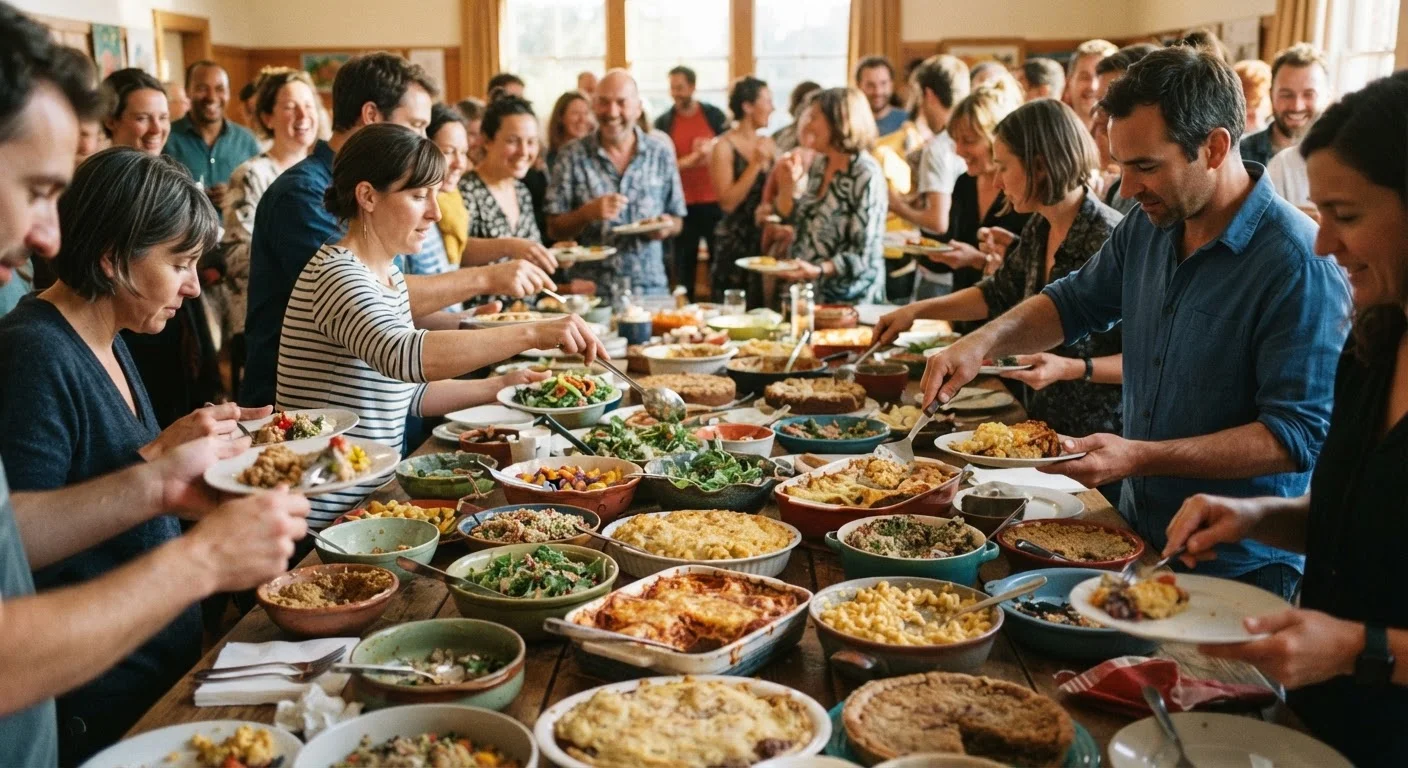
What Makes a Potluck a Potluck
A potluck is a shared meal where each guest contributes a dish. The word itself has murky origins - some trace it to 16th-century England, where "pot luck" meant taking your chances with whatever was in the communal pot. In America, the format became intertwined with community life: church suppers, barn raisings, neighborhood socials, and now office holiday parties.
What distinguishes a potluck from other shared meals is its democratic premise: everyone contributes, and everyone eats. There's no host shouldering the entire burden of feeding a crowd. That social contract - implicit but powerful - is what gives the potluck its particular energy.
As food culture researchers note, the potluck sits at the intersection of immigration history, regional agriculture, and community structure - making it one of the most revealing windows into how Americans actually eat.
The Unwritten Rules Most People Already Know
Potluck etiquette is rarely posted on a sign, but most participants understand it intuitively. A few norms hold across most American contexts:
- Bring enough to share. A dish that feeds the contributor's household of two doesn't cut it at a table of twenty. A common informal standard is enough for 8-10 servings when attending a large gathering.
- Label your dish. Noting ingredients - especially common allergens like nuts, dairy, or gluten - is increasingly considered basic courtesy, not an optional extra.
- Don't arrive empty-handed. Even if you're running late or forgot, bringing a store-bought item is almost universally accepted over arriving with nothing.
- Take home your dish. Leaving serving bowls behind creates logistical headaches for hosts. Disposable containers sidestep this problem entirely.
- Try what others brought. Potlucks carry an unspoken expectation that guests sample beyond their own contribution. Ignoring other dishes can read as dismissive.
These norms aren't rigid laws, but violating them repeatedly tends to affect whether someone gets invited back. The potluck is, after all, a social performance as much as a meal.
Regional Traditions That Show Up on the Table
Walk into a church potluck in rural Mississippi and you'll likely find smothered chicken, deviled eggs, banana pudding, and at least three varieties of cornbread. The same format in a Pacific Northwest community might yield wild salmon, roasted root vegetables, lentil salads, and kombucha alongside the sweet tea.
Regional identity runs deep in what Americans bring to shared tables. A few patterns that food observers frequently note:
- The South: Casseroles built on cream soups, sweet tea, pimento cheese, slow-cooked greens, and pound cake are staples. Church "dinner on the grounds" traditions have shaped Southern potluck culture for generations.
- The Midwest: Hot dish (a catch-all term for baked casseroles, often involving ground beef, vegetables, and a starchy binder) is nearly synonymous with potluck in states like Minnesota and Wisconsin. Jello salads - fruit suspended in flavored gelatin - still appear with surprising frequency.
- The Southwest: Green chile, tamales, and rice and beans reflect the deep influence of Mexican and Indigenous food traditions on the region's communal eating. Indigenous culinary contributions shape what shows up on these tables in ways that often go unacknowledged.
- The Northeast: Deli-style dishes, pasta salads, and contributions from Italian, Jewish, and Eastern European immigrant traditions are common. Immigrant food traditions have thoroughly shaped what Northeasterners consider potluck staples.
Hot dish
A Midwestern term for a baked one-pan casserole, typically combining a protein, vegetable, and starchy binder such as pasta, rice, or tater tots. It is a potluck staple across Minnesota, Wisconsin, and surrounding states.
Dinner on the grounds
A Southern church tradition where congregants bring covered dishes and eat together outdoors after a service. It is one of the oldest and most consistent forms of community potluck dining in the United States.
Covered-dish supper
An alternate regional term for a potluck, used primarily in the South and parts of the Mid-Atlantic. The "covered dish" refers to the lidded containers guests bring to keep food warm during transport.
Progressive dinner
A variation on potluck culture where guests move from home to home through a neighborhood, with each stop serving a different course. Common in suburban and close-knit residential communities.
Potlucks also overlap significantly with holiday food traditions, particularly around Thanksgiving, Easter, and the Fourth of July, when shared communal meals are culturally expected.
How Potluck Culture Is Changing
The potluck isn't static. Several forces are reshaping what gets brought and how the format works:
Dietary diversity has made label-reading and dish awareness more important than ever. A gathering that includes guests who are vegan, gluten-intolerant, or have nut allergies requires more thoughtfulness than the church suppers of past generations, where most attendees shared similar dietary baselines.
Store-bought contributions have become more accepted as time pressures grow. A thoughtfully chosen artisan cheese board or quality bakery item is rarely met with judgment in most contemporary potluck circles.
Themed potlucks - where the host specifies a cuisine, ingredient, or format - have grown popular as a way to add structure and novelty. "Bring a dish from your family's heritage" or "everything must use a specific seasonal vegetable" add a creative constraint that many participants find engaging.
Like the Sunday dinner tradition, the potluck endures because it meets a need that transcends food: the desire to gather, contribute, and belong. The dishes change. The impulse doesn't.