

Key Takeaways
- Most American holiday foods have layered origins - immigrant traditions, Indigenous ingredients, and marketing all played a role.
- Many dishes we consider timeless classics only became mainstream in the 20th century.
- Regional variation means the same holiday can look very different on the plate depending on where you live.
- Holiday food traditions are living - they shift with demographics, ingredient access, and cultural exchange.
- Understanding food origins adds meaning to the meals we share with family and community.
Why Holiday Food Tells a Bigger Story
Every year, millions of Americans sit down to largely the same dishes on the same dates - turkey in November, hot dogs in July, ham on Easter. These meals feel inevitable, almost natural. But they're not. They're the result of converging histories: Indigenous agricultural knowledge, immigrant cooking, corporate food marketing, regional adaptation, and the simple human impulse to mark time with something worth eating.
Understanding where these traditions came from doesn't diminish them - it adds depth. As food culture researchers explain, geography, immigration, and industry have all shaped what ends up on American plates. Holiday tables are a concentrated example of exactly that.
Below are six major American holidays and the food traditions most closely tied to them - along with the stories behind how those traditions formed.
Thanksgiving: Turkey, Stuffing, and Indigenous Roots
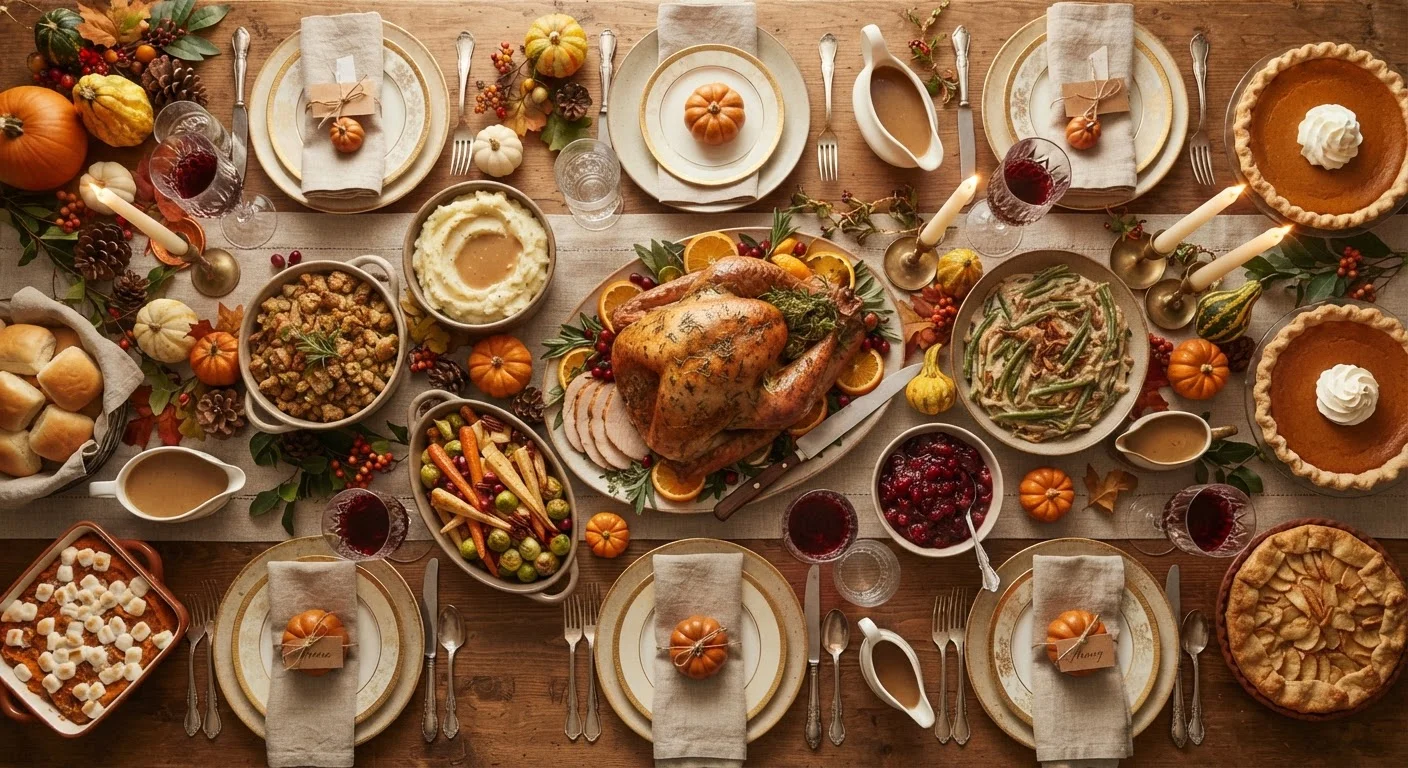
Thanksgiving is America's most food-centric holiday, and its centerpiece - roasted turkey - has a complicated history. While wild fowl may have been present at the 1621 harvest gathering between the Wampanoag and Plymouth colonists, the modern Thanksgiving menu was largely standardized in the 19th century, partly through the advocacy of writer Sarah Josepha Hale, who campaigned for a national holiday for decades before Abraham Lincoln declared it in 1863.
What's often underappreciated is how much of the Thanksgiving table - corn, squash, and beans - reflects Indigenous agricultural knowledge. These crops, known as the Three Sisters, were cultivated by Native peoples long before European contact and remain foundational to the meal. Indigenous culinary traditions are increasingly being recognized as central contributors to American food culture, not footnotes to it.
Much of the Thanksgiving table traces directly to Indigenous agricultural knowledge that predates European settlement.
Fourth of July: Barbecue, Hot Dogs, and Regional Pride
Independence Day is synonymous with outdoor grilling, and it's one of the clearest examples of how a holiday food tradition maps onto a distinctly American cooking method. Barbecue as a technique has deep roots in Indigenous and African American cooking traditions across the South, and it spread northward and westward through the 20th century to become the nation's default summer ritual.
Hot dogs - a descendant of German immigrant sausage-making - became July Fourth staples partly through the rise of ballpark culture and suburban backyard cookouts in the postwar era. Regional variation is significant here: a Fourth of July cookout in Texas looks different from one in the Carolinas or Kansas City. Regional barbecue traditions each carry their own history and loyal following.
Barbecue's July Fourth dominance reflects Indigenous, African American, and immigrant culinary contributions all at once.
Easter: Ham, Lamb, and the Springtime Table
Ham became the dominant Easter protein in America for a largely practical reason: pigs slaughtered in the fall were salt-cured through winter and ready to eat by spring. That agricultural logic translated into a cultural habit that stuck long after refrigeration made seasonal timing irrelevant.
Lamb remains central at Easter tables in many Greek, Italian, and Middle Eastern American households, reflecting the dish's deep religious and cultural symbolism in those traditions. Deviled eggs, hot cross buns, and spring vegetable dishes round out a holiday spread that varies considerably by region and heritage - a reminder that American holidays have never had a single, uniform menu.
Ham became the Easter standard through seasonal farm logic - pigs cured in fall were table-ready by spring.
Halloween: Candy, Caramel Apples, and the Trick-or-Treat Economy
Halloween's food tradition is almost entirely a 20th-century construction. Trick-or-treating as a widespread American custom didn't solidify until the late 1940s and 1950s, when candy companies recognized and actively cultivated the holiday as a sales opportunity. Before that, Halloween gatherings often centered on harvest foods - nuts, apples, cider - reflecting its roots in the Celtic festival of Samhain and later All Saints' Day observances brought by Irish and Scottish immigrants.
The caramel apple, a now-classic Halloween treat, was reportedly invented in the 1950s when a candy company salesman experimented with leftover caramel. It's a neat illustration of how commercial interests and seasonal ingredients can quickly harden into tradition.
Trick-or-treating and its candy focus didn't become mainstream American practice until the postwar 1950s.
Christmas: Cookies, Roasts, and a Patchwork of Traditions
Christmas may be the holiday with the widest range of food traditions, precisely because it's been shaped by so many immigrant communities. German Americans brought cookie-baking and gingerbread. Italian American families gather for the Feast of the Seven Fishes on Christmas Eve. Puerto Rican households prepare pasteles. Scandinavian American communities serve lutefisk or rice pudding.
The roast - whether beef tenderloin, prime rib, goose, or ham - became a Christmas centerpiece largely through British influence and its amplification in American popular culture. Eggnog, now a grocery-store seasonal staple, traces to medieval European drinks and was popularized in colonial America. The extended family meal structure of Christmas dinner mirrors broader American traditions around food and gathering.
Christmas dinner in America is a patchwork - shaped by British, German, Italian, and countless other immigrant traditions.
New Year's: Black-Eyed Peas, Greens, and the Language of Good Luck
New Year's Day food traditions are among the most explicitly symbolic in American culture. In the South, black-eyed peas and collard greens are eaten on January 1st for luck and prosperity - the peas represent coins, the greens represent paper money. This tradition has roots in African American foodways in the South and is observed widely across racial and regional lines today.
Other regional customs include pork (in the Midwest and Pennsylvania Dutch communities, where pigs root forward and symbolize progress) and lentils (in Italian American households, where their coin-like shape carries similar symbolism). These overlapping lucky-food traditions reflect how communal eating customs carry meaning that goes well beyond nutrition.
Black-eyed peas and greens on New Year's Day carry luck symbolism rooted in African American Southern foodways.
Food Traditions Are Always Evolving
What strikes any observer of American holiday eating is how dynamic it actually is. Dishes that seem ancient often have surprisingly recent origins. The green bean casserole, a Thanksgiving staple in millions of homes, was developed in 1955. Candy corn, synonymous with Halloween, dates to the 1880s but only became a mass-market phenomenon in the mid-20th century.
Exploring Your Own Holiday Table
If you're curious about the origins of dishes your family makes on holidays, talking to older relatives is one of the most direct routes to that history. Many family recipes carry geographic or cultural clues - ingredients, techniques, or names that point toward a region or heritage. Documenting those stories is as valuable as the recipe itself.
At the same time, older, deeper traditions are gaining broader recognition. Indigenous food traditions - including the very crops that anchor Thanksgiving - are being more explicitly acknowledged and celebrated. And as immigrant foodways continue to shape American cuisine, holiday tables increasingly reflect the full breadth of who Americans actually are. The tradition isn't frozen - it's a conversation across generations.