

Key Takeaways
- Most immigrant cuisines in the U.S. have evolved significantly from their original forms due to ingredient availability and local tastes.
- Americanized dishes like General Tso's chicken and Tex-Mex burritos were largely developed or popularized within the United States.
- Economic pressures, ingredient substitutions, and customer demand all drive how immigrant restaurant owners adapt their menus.
- Adaptation doesn't erase cultural heritage - many immigrant families maintain traditional cooking at home while serving Americanized versions commercially.
- The relationship between original and adapted cuisines is dynamic, with both forms often coexisting and enriching American food culture.
Americanization of Immigrant Food
The Americanization of immigrant food refers to the process by which cuisines brought to the United States by immigrant communities are gradually modified to appeal to broader American tastes, ingredient availability, and cultural expectations. These changes can range from subtle tweaks in seasoning to entirely new dishes that wouldn't be recognized in the cuisine's country of origin. The result is a distinctly American interpretation of a foreign culinary tradition.
Food scholars often describe this process through the lens of culinary acculturation - the two-way exchange where immigrant communities adapt their cooking while also influencing the mainstream food culture around them.
Why Dishes Change When They Cross Borders
Food does not travel in a vacuum. When immigrant families and communities bring their culinary traditions to the United States, those dishes immediately encounter new pressures: unfamiliar ingredients, different kitchen equipment, unfamiliar palate expectations, and the hard realities of running a small food business. The result, over years and generations, is a transformed cuisine - sometimes barely recognizable from the original.
This isn't a failure of authenticity. It's the natural outcome of what happens when any living tradition meets a new environment. Understanding why dishes change helps explain much of what Americans think of as their favorite foods. As part of the broader story of why Americans eat the way they do, immigrant food adaptation is one of the most powerful forces shaping the American plate.
The Forces Behind Culinary Adaptation
Several overlapping pressures push immigrant cuisines toward adaptation:
- Ingredient substitution: Specific chilies, fish sauces, spice blends, and fresh herbs may be unavailable or expensive. Cooks substitute what's accessible, which changes flavor profiles in significant ways.
- Customer taste calibration: Early immigrant restaurant owners quickly learned that American diners often preferred milder spice levels, sweeter sauces, and larger portion sizes. Menus were adjusted accordingly.
- Economic survival: A restaurant that cannot attract enough customers does not stay open. Adaptation was frequently a pragmatic business decision, not a creative one.
- Generational drift: Second- and third-generation immigrant cooks sometimes grow up more fluent in American culinary culture than in their grandparents' traditions, and their cooking reflects that blend.
45,000+
Chinese restaurants operating in the United States
Estimates from food industry analysts suggest Chinese restaurants outnumber McDonald's locations in the U.S., reflecting the deep entrenchment of Chinese-American cuisine in everyday American life.
~1 in 3
Americans who eat ethnic cuisine weekly
Survey data from the National Restaurant Association has consistently found that a significant share of American diners regularly seek out cuisines from other cultures, driving ongoing demand for immigrant-influenced restaurants.
200+
Years of Italian-American culinary evolution
Italian immigrants began arriving in the U.S. in meaningful numbers in the 1800s; their food traditions have been adapting and influencing mainstream American cooking ever since.
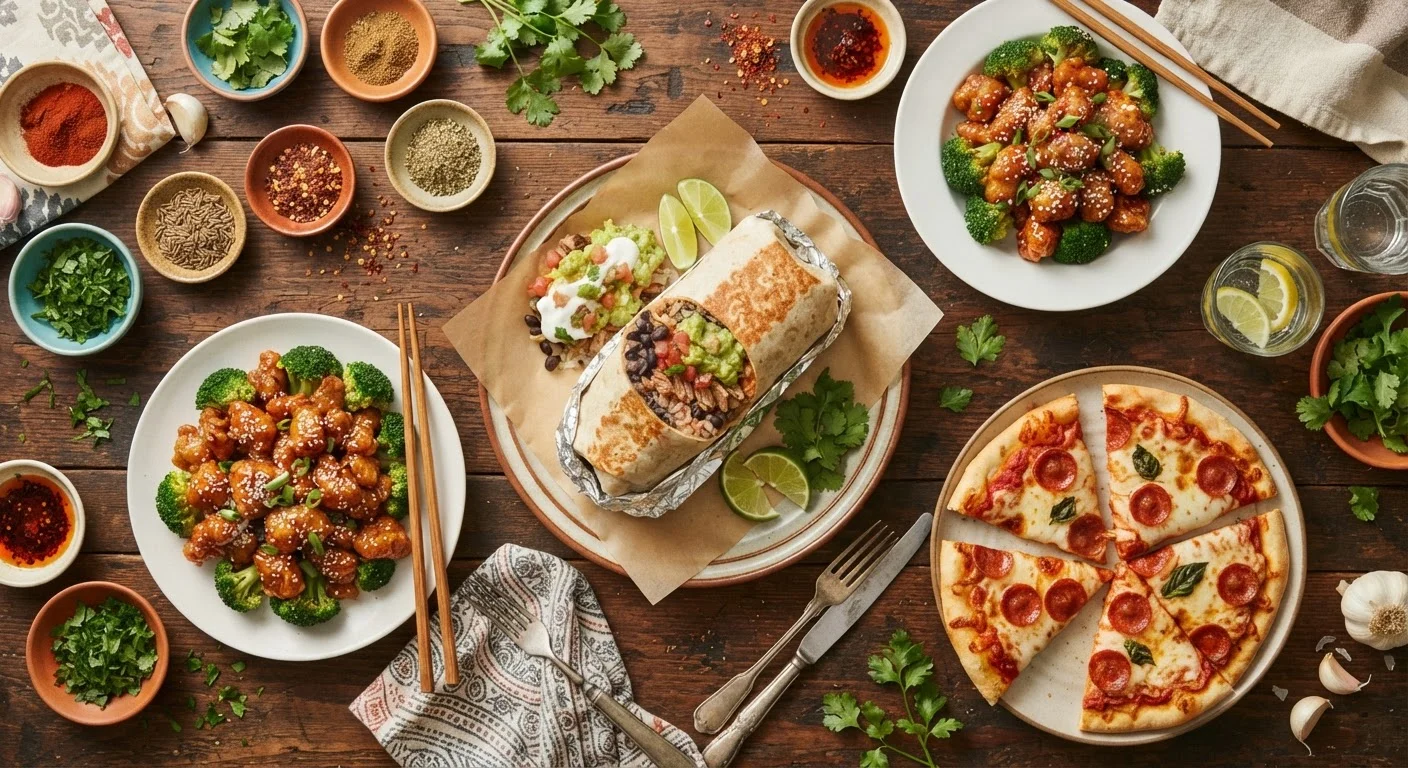
These forces rarely operate independently. A dish like the Americanized burrito - now a fixture of fast-casual dining - emerged from Mexican-American communities in the Southwest where large flour tortillas, abundant cheese, and sour cream became dominant through a mix of regional ingredient access and evolving customer preference.
Iconic Dishes That Were Made in America
Some of the most beloved "ethnic" foods in the U.S. are largely American inventions, or at minimum, American evolutions so dramatic they constitute something new entirely.
General Tso's Chicken is perhaps the most-cited example. Food historians have traced the dish's popularization to Chinese-American restaurants in New York City during the 1970s. The sweet, deep-fried preparation bears little resemblance to the Hunanese cooking it nominally references.
Fortune cookies are another: widely associated with Chinese restaurants in the U.S., they actually trace their origins to Japanese-American bakers in California in the early 20th century and remain virtually unknown in China.
American-style pizza - particularly the thick, cheese-heavy New York and Chicago styles - diverged sharply from the thinner, more restrained Neapolitan originals that Italian immigrants brought with them. The transformation reflects both American appetites and the abundance of dairy available in the U.S.
“The history of American food is a history of immigrants negotiating between memory and market - between what they grew up eating and what they could get their new neighbors to try.”
— Krishnendu Ray, Food studies scholar and author of 'The Migrant's Table'
These dishes aren't fraudulent imitations - they're genuine American creations that grew out of immigrant ingenuity and cultural negotiation. For a closer look at how these food encounters unfold in specific dining settings, see our piece on street food vs. restaurant dining.
Preservation Alongside Adaptation
It's worth noting what the public menu doesn't always show: behind the restaurant doors and inside family kitchens, many immigrant communities continue to cook with deep fidelity to their original traditions. The Americanized version served commercially coexists with - rather than replacing - dishes prepared for family gatherings, religious observances, and cultural celebrations.
This dual culinary life is common across many communities. A Vietnamese-American family might serve pho with a sweeter, more aromatic broth at their restaurant to accommodate local tastes, while preparing a more traditional version for Tết celebrations at home. The adapted and the authentic are not always in conflict - they serve different functions.
This same dynamic plays out in how food becomes part of shared American ritual. Holiday food traditions in the U.S. often show evidence of this layering - dishes that were once immigrant-specific gradually becoming part of a shared national table.
Understanding these layers makes it possible to appreciate Americanized food not as a corruption, but as its own kind of cultural document - one that records a community's negotiation between who they were and where they landed.