

Key Takeaways
- Fusion cuisine has deep roots in American food history, shaped by waves of immigration and cultural exchange.
- At its best, fusion cooking expands flavor possibilities and introduces diners to unfamiliar ingredients.
- Critics argue that fusion dishes can strip cultural context from dishes, reducing rich traditions to trends.
- The difference between respectful crossover and cultural confusion often comes down to knowledge and intent.
- Fusion restaurants have played a meaningful role in how Americans discover and engage with world cuisines.
Expands culinary vocabulary for home cooks and diners
Fusion dishes often introduce ingredients and techniques - like miso, gochujang, or tamarind - to audiences who might never seek them out in their original cultural context.
Reflects the genuine diversity of American food history
Many beloved American staples - pizza, tacos, sushi rolls - are themselves products of cultural blending, suggesting fusion is less a trend than a continuation of how food evolves.
Encourages culinary creativity and professional innovation
Cross-cultural technique sharing has driven some of the most technically interesting developments in modern cooking, from fermentation hybrids to layered spice combinations.
Can make unfamiliar flavors more approachable
When bold or unfamiliar ingredients are introduced alongside familiar ones, diners are more likely to explore and appreciate them, creating a pathway into deeper culinary discovery.
Risk of stripping cultural context from traditional dishes
When a dish is lifted from its original tradition without acknowledgment, diners may consume a caricature of a cuisine rather than develop genuine appreciation for it.
Can reinforce unequal power dynamics in food culture
Non-immigrant chefs have sometimes built profitable careers on cuisines from communities that receive little economic or cultural recognition for those same food traditions.
Novelty-driven combinations often sacrifice culinary coherence
Fusion that chases trend over technique can produce dishes that are visually interesting but culinarily incoherent - flavor combinations that don't serve the ingredient or the diner.
May misrepresent the source cuisine to wider audiences
When a simplified or altered dish becomes the popular reference point for an entire culinary tradition, it can crowd out authentic versions and mislead diners about what the cuisine actually is.
Our Verdict
Fusion cuisine is neither inherently good nor inherently problematic - the quality of the outcome depends heavily on the cook's understanding of the source traditions. When it's grounded in genuine knowledge and respect, fusion cooking can produce genuinely exciting food that reflects America's multicultural reality. When it's driven purely by novelty or commercial trend, it risks flattening complex traditions into gimmicks.
Diners and home cooks who are curious about world flavors and willing to learn the cultural stories behind the dishes they enjoy or experiment with.
What Is Fusion Cuisine, and Where Did It Come From?
Fusion cuisine refers to cooking that deliberately combines ingredients, techniques, or flavor profiles from two or more distinct culinary traditions. While the term became a buzzword in upscale American restaurants during the 1980s and 1990s, the practice itself is as old as human migration. Every time a culture moved, traded, or settled alongside another, its food changed.
America, in particular, has always been a fusion kitchen. Chinese railroad workers adapted their cooking to available ingredients. Italian immigrants modified Old World recipes with New World produce. Tex-Mex - now a staple of American dining - emerged from the centuries-long interaction between Mexican and Anglo-American foodways along the border. To understand fusion is to understand how Americans eat broadly. For that foundation, see why Americans eat the way they do.
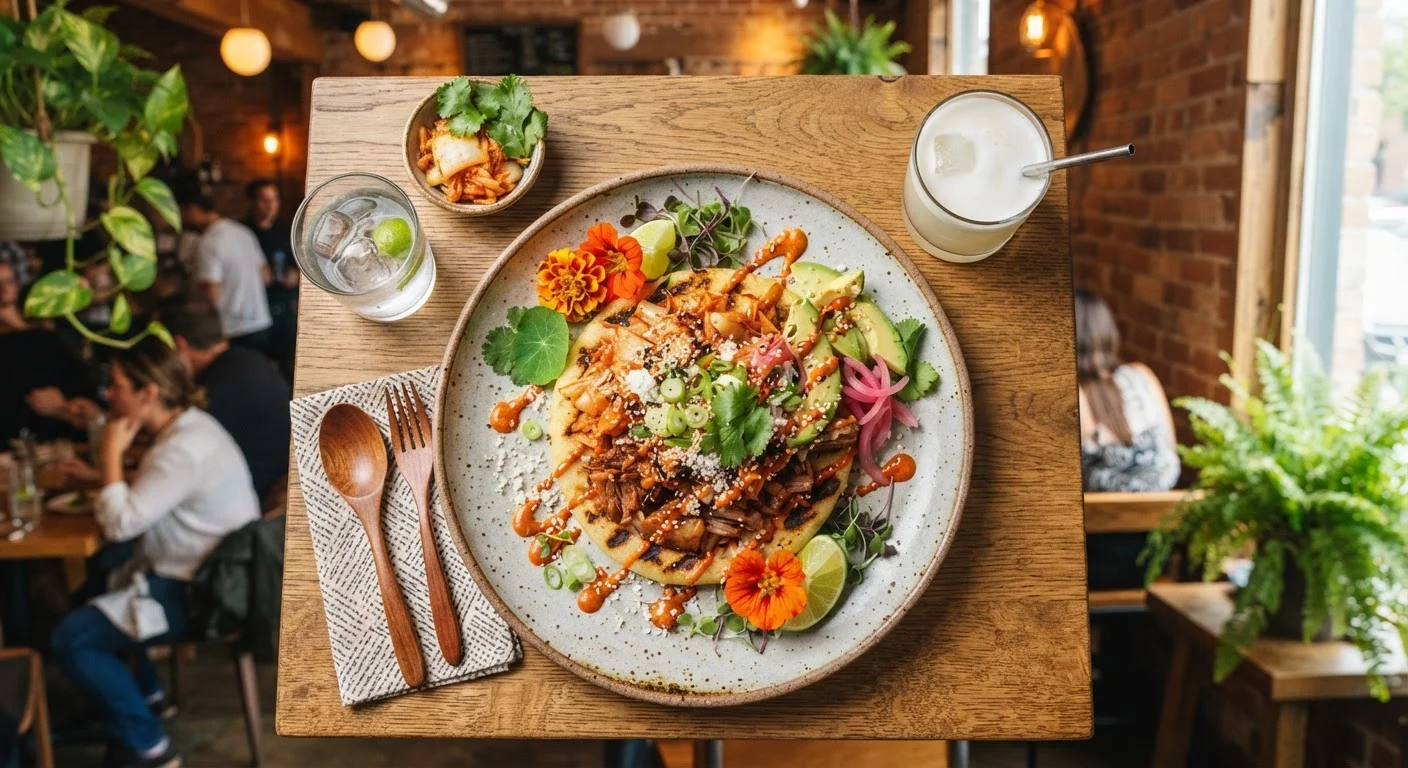
What changed in the modern era was intentionality. Chefs began deliberately engineering combinations - Korean-Mexican tacos, Japanese-Peruvian ceviche, Indian-Chinese stir-fries - treating cultural crossover as a design choice rather than an organic evolution. That shift is where much of today's debate begins.
The Case for Fusion: Creativity, Accessibility, and Cultural Discovery
Supporters of fusion cooking point to several genuine benefits - for chefs, diners, and food culture as a whole.
Expands culinary vocabulary for home cooks and diners
Fusion dishes often introduce ingredients and techniques - like miso, gochujang, or tamarind - to audiences who might never seek them out in their original cultural context.
Reflects the genuine diversity of American food history
Many beloved American staples - pizza, tacos, sushi rolls - are themselves products of cultural blending, suggesting fusion is less a trend than a continuation of how food evolves.
Encourages culinary creativity and professional innovation
Cross-cultural technique sharing has driven some of the most technically interesting developments in modern cooking, from fermentation hybrids to layered spice combinations.
Can make unfamiliar flavors more approachable
When bold or unfamiliar ingredients are introduced alongside familiar ones, diners are more likely to explore and appreciate them, creating a pathway into deeper culinary discovery.
Beyond individual dishes, fusion restaurants have historically served as gateway experiences. Many Americans first encountered miso, kimchi, or tamarind through approachable, blended menus that softened unfamiliar flavors with familiar context. That gateway function has real cultural value. Understanding how flavors interact across traditions - salt, acid, fat, heat - is also central to what makes fusion work. Our guide to the four forces behind great home cooking explains how these principles apply across any cuisine.
The Criticism: When Fusion Becomes Cultural Confusion
The enthusiasm around fusion has never been without critics - and many of those critics are chefs and food scholars from the very cultures being blended.
Risk of stripping cultural context from traditional dishes
When a dish is lifted from its original tradition without acknowledgment, diners may consume a caricature of a cuisine rather than develop genuine appreciation for it.
Can reinforce unequal power dynamics in food culture
Non-immigrant chefs have sometimes built profitable careers on cuisines from communities that receive little economic or cultural recognition for those same food traditions.
Novelty-driven combinations often sacrifice culinary coherence
Fusion that chases trend over technique can produce dishes that are visually interesting but culinarily incoherent - flavor combinations that don't serve the ingredient or the diner.
May misrepresent the source cuisine to wider audiences
When a simplified or altered dish becomes the popular reference point for an entire culinary tradition, it can crowd out authentic versions and mislead diners about what the cuisine actually is.
The debate around fusion closely mirrors broader conversations happening in the arts. The line between cultural appreciation and appropriation is contested in music, fashion, and visual art for many of the same reasons it's contested in food: power dynamics, credit, and who profits.
A Note on the Term 'Authentic'
The word 'authentic' gets used frequently in fusion debates, but culinary historians caution against treating any cuisine as static or pure. Most food traditions have themselves absorbed outside influences over centuries. Insisting on a fixed, unchanging 'authentic' version of a dish can erase the history of how that dish evolved in the first place. What matters more is accuracy, credit, and understanding - not purity.
What Separates Respectful Crossover from Careless Appropriation?
There's no formula, but food writers and culinary scholars often point to a few recurring markers that distinguish thoughtful fusion from exploitative trend-chasing.
Attribution and transparency matter. A chef who names the specific regional dish that inspired their interpretation, and explains it to diners, is doing something very different from one who presents a dish as an original invention with no cultural reference. Menus that tell a story - not just list ingredients - help diners engage rather than consume blindly.
Economic equity matters too. One persistent criticism is that fusion often profits non-immigrant chefs more than the communities whose food inspired them. This isn't a reason to avoid cross-cultural cooking, but it is a reason to pay attention to who gets celebrated and who gets overlooked in the same food culture. Street food and sit-down restaurants often reflect that gap - immigrant vendors in markets while their techniques appear, repackaged, in upscale dining rooms.
45M+
Foreign-born residents shaping U.S. food culture
According to U.S. Census Bureau data, more than 45 million foreign-born residents live in the United States, each bringing distinct culinary traditions that influence the broader food landscape.
~$1T
Annual U.S. restaurant industry revenue
The National Restaurant Association has estimated U.S. restaurant industry sales at roughly $1 trillion annually, with ethnic and fusion dining among the fastest-growing segments.
Depth of knowledge matters most. Cooks - professional or home - who invest in understanding a cuisine's history, techniques, and significance before experimenting with it tend to produce work that honors rather than flattens it. That's a standard any curious cook can aspire to.