

Key Takeaways
- Music festivals exist across every genre and price point, not just pricey mainstream pop events.
- Many festivals actively serve older adults, families, and first-timers with thoughtful amenities.
- Solo attendance is common and often leads to richer social experiences than group trips.
- Camping is optional - hotels and day passes are widely available alternatives.
- Smart planning eliminates most of the chaos that first-timers fear before arriving.
The Stories Keeping You on the Sidelines
Picture the word "festival" and a specific image probably forms: a sea of college students, scorching heat, overpriced water bottles, and mud. That image has real staying power - and it keeps a surprising number of adults from ever stepping through the gates of what could be one of their most memorable live music experiences.
The truth is that American music festivals have evolved into an enormous and genuinely varied ecosystem. From intimate folk gatherings in Vermont to week-long jazz celebrations in New Orleans, the range of formats, price points, and crowd profiles is wider than most people realize. The myths, however, have not kept pace with the reality.
Below, we untangle the most persistent misconceptions - and replace them with what first-timers actually need to know. For a broader look at how festivals differ structurally, our genre-by-genre breakdown is a useful companion read.
Myth
Music festivals are only for young people in their twenties. Anyone older will feel out of place.
Fact
Festivals serve every adult age group, and many are specifically designed with older audiences in mind.
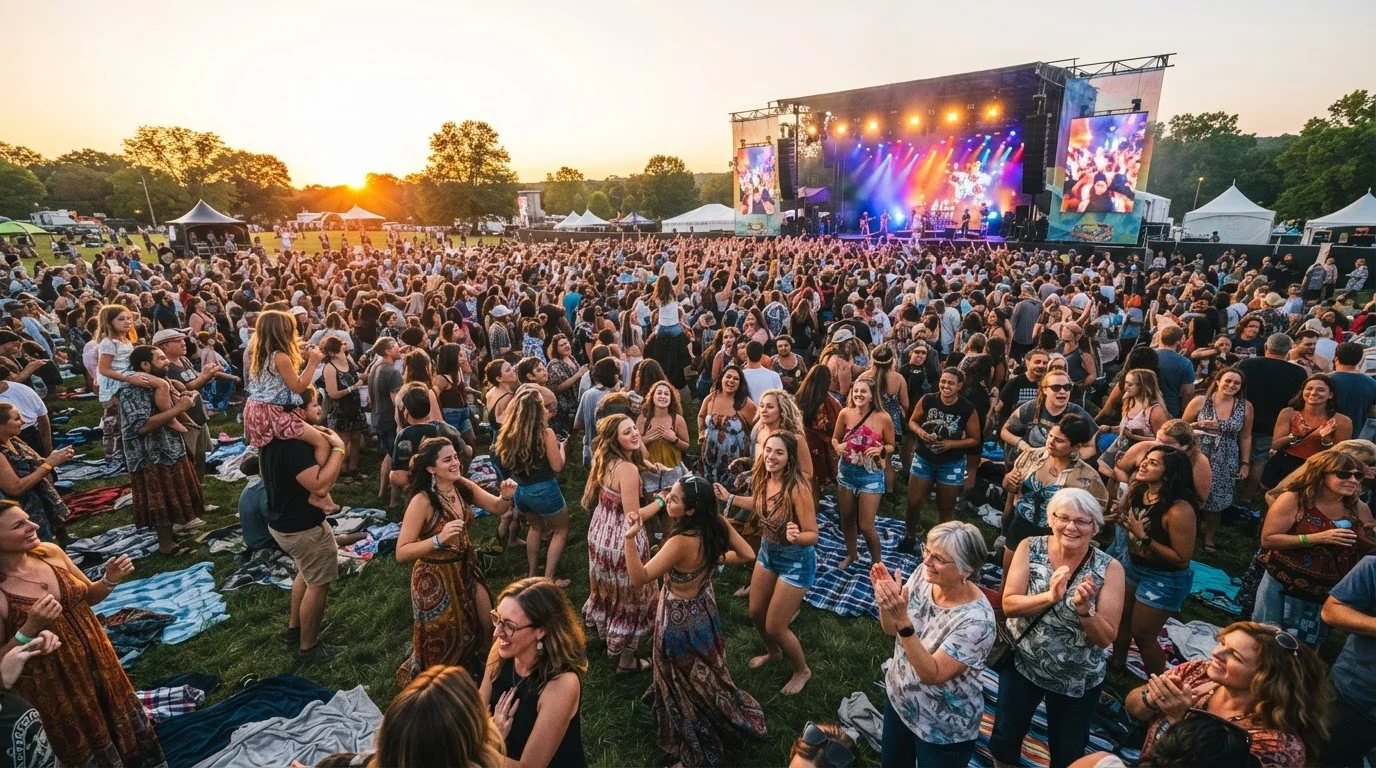
The demographic data on festival attendance is more diverse than the Instagram highlight reel suggests. Events like the Newport Folk Festival, the New Orleans Jazz & Heritage Festival, and the Telluride Bluegrass Festival routinely draw large numbers of attendees in their 40s, 50s, and beyond. Seated sections, accessible pathways, and calmer venue zones are increasingly standard. The perception of youth-only crowds is largely shaped by which festivals receive the most media coverage - not by who actually shows up.
Myth
Festivals are prohibitively expensive. Tickets alone can cost hundreds of dollars.
Fact
Ticket prices vary enormously, and free or low-cost festivals are more common than most people know.
Yes, a weekend pass to a major commercial festival can run several hundred dollars. But that's one end of a very wide spectrum. Hundreds of American cities host free or low-admission festivals annually - cultural street fairs, community jazz days, city-sponsored outdoor concerts - that offer full festival experiences at no cost. Even paid events frequently offer single-day tickets, volunteer work exchanges for admission, or early-bird pricing that significantly reduces the barrier. The assumption that "festival" automatically means "expensive" simply doesn't hold up across the full landscape.
Myth
You have to camp, and camping is uncomfortable and essential to the full experience.
Fact
Camping is one option among many; most festivals offer hotel access, day passes, or glamping alternatives.
Camping at a festival can be wonderful - but it is rarely required. A large share of multi-day festivals sell day passes that let attendees arrive in the morning and leave each evening. Nearby hotels and short-term rentals fill up around popular events, but they exist. Some festivals have introduced dedicated glamping areas with provided tents and cots for those who want proximity without a sleeping bag on rocky ground. Equating festival attendance with roughing it outdoors is one of the most persistent myths, and it steers away exactly the people who would thrive with a day-pass approach.
Myth
Going alone to a festival is awkward or even unsafe. You need a group to enjoy it.
Fact
Solo festival attendance is extremely common and often produces better, more spontaneous experiences.
Solo attendees consistently report one underrated benefit: freedom. Without a group to coordinate, you can wander to a smaller stage on a whim, linger through an unexpected set, or leave when you're ready. Festivals attract sociable crowds by nature, and brief, friendly conversations with strangers are part of the culture. Major festivals also invest significantly in visible security, medical stations, and staff presence precisely because their audiences include solo visitors. Going alone is a legitimate and often rewarding choice, not a fallback.
Myth
The crowds are overwhelming and the whole experience is just noise and chaos.
Fact
Festival organizers structure events into distinct zones and stages specifically to manage crowd flow and noise.
The chaos impression usually comes from peak moments - headliner sets at large-capacity events. But multi-stage festivals are deliberately designed so the crowd disperses across venues of different sizes simultaneously. At any given moment, smaller stages, food courts, art installations, and workshop tents are operating at much lower density. First-timers who learn to read the schedule and treat the smaller stages as destinations - not consolation prizes - typically find a version of the festival that feels entirely manageable.
What Smart First-Timers Actually Do
Once the myths dissolve, what's left is a very manageable planning challenge. The first real step is choosing a festival that matches your actual musical taste rather than one you've simply heard of. An event organized around a genre you love immediately makes the crowd, the schedule conflicts, and the logistics feel worth navigating.
Logistics deserve attention, but they rarely require heroics. Most large festivals publish detailed site maps, accessible entry routes, and quiet zones - information that's freely available on their websites. Reading it before you go converts potential chaos into a familiar blueprint. Our outdoor concert preparation guide covers the practical checklist in detail, from footwear to hydration to what to leave in the car.
32
Median age of U.S. festival attendees
Industry audience research has consistently found the average American festival-goer is in their early 30s, not their teens or early 20s.
Hundreds
Free or low-cost festivals held in the U.S. annually
Community arts organizations and municipal governments across the country host no-admission or low-admission outdoor music events every year.
If a previous concert experience has left you flat - bad sightlines, late arrival, skipping the opening acts - those same pitfalls apply at festivals, only more so. Understanding why live shows underdeliver and correcting for those habits in advance makes a meaningful difference. First-timers who arrive curious, flexible, and a little prepared almost universally say they wish they'd gone sooner.
Check the Festival's Refund and Transfer Policy
Ticket terms vary significantly between events. Some festivals offer no refunds regardless of circumstances, while others allow ticket transfers or provide rain-check credits. Read the policy carefully before purchasing - especially for multi-day passes at higher price points.