

Key Takeaways
- Streaming fatigue stems from too many platforms, too many choices, and too little curation.
- The paradox of choice - more options leading to less satisfaction - is well-documented in behavioral research.
- Many viewers are actively canceling subscriptions, rotating services, or returning to scheduled TV.
- Binge-release models and serialized storytelling can amplify commitment fatigue over time.
- Intentional viewing habits and subscription rotation are among the most effective viewer responses.
Unprecedented access to diverse, global content
Streaming has made it possible for American viewers to discover international films, niche documentaries, and genre shows that would never have reached wide audiences through traditional broadcast. This breadth genuinely expands cultural exposure.
On-demand flexibility fits modern schedules
The ability to watch what you want, when you want - pausing, rewinding, and resuming at will - removed the rigid constraints of broadcast scheduling that had defined television for decades.
Original programming has raised creative ambitions
Competition among platforms has funded ambitious, high-budget original series and films that might not have been greenlit under traditional studio or network constraints, benefiting viewers who prize quality storytelling.
Ad-free tiers offer an uninterrupted experience
Premium subscription tiers eliminate commercial interruptions, which research suggests reduces cognitive load during viewing and allows audiences to stay more deeply immersed in narrative.
Too many platforms fragment content and drain budgets
Accessing the full range of desirable programming now requires subscribing to multiple services simultaneously, with combined monthly costs that can rival or exceed a traditional cable bill.
Endless choice creates decision paralysis
The paradox of choice is well-documented: when options multiply beyond a manageable threshold, satisfaction declines and the decision-making process itself becomes a source of stress rather than pleasure.
Premature cancellations leave stories unresolved
Streaming services cancel shows based on proprietary engagement metrics that are rarely shared publicly, leaving viewers burned by investments in multi-season narratives that end abruptly without resolution.
Binge-release models accelerate burnout
Dropping an entire season at once encourages rapid consumption that can feel more like an obligation than enjoyment, compressing the communal anticipation that week-to-week releases once sustained.
Algorithms favor the familiar over the surprising
Recommendation systems are engineered to maximize watch time rather than broaden taste, which often means surfacing content similar to what you've already seen rather than genuinely expanding discovery.
Our Verdict
Streaming fatigue is a genuine cultural and psychological phenomenon, not mere complaining. The same abundance that makes streaming remarkable - vast libraries, original content, on-demand access - also creates the conditions for exhaustion, decision paralysis, and disengagement. Neither streaming nor its critics are simply right; the experience depends heavily on how viewers choose to engage with it.
Viewers who feel overwhelmed by their subscriptions and want to understand why - and what thoughtful, low-stress alternatives look like.
What We Mean When We Talk About Streaming Fatigue
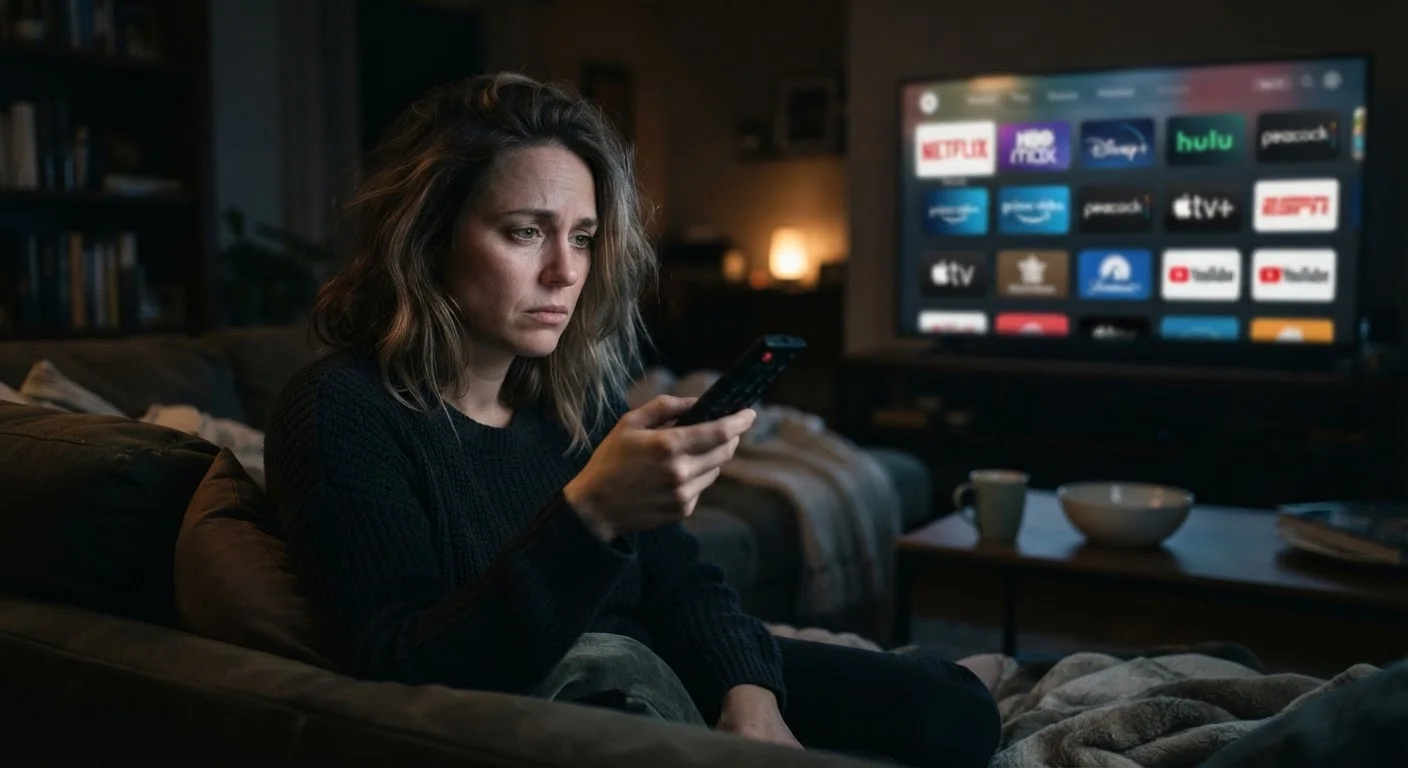
Streaming fatigue describes a creeping sense of overwhelm and disengagement that many viewers report when confronted with the sheer volume of on-demand content available across multiple platforms. It's not simply boredom - it's the specific frustration of having more options than ever and feeling less satisfied as a result.
Behavioral economists have a name for the underlying dynamic: the paradox of choice. When presented with too many alternatives, people often experience anxiety, second-guessing, and reduced enjoyment of whatever they ultimately choose. Applied to television, this means scrolling through endless catalogs only to settle on something familiar, or giving up entirely and watching nothing at all.
To understand how the landscape got this crowded, it helps to look at how the streaming wars unfolded - a fragmentation story that continues to shape the viewer experience today.
7+
Average streaming services per U.S. household
Industry analysts at Nielsen and similar firms have reported that U.S. households managing multiple subscriptions has grown steadily alongside platform proliferation.
~36%
Viewers who describe choice overload as a problem
Surveys conducted by media research firms have found that roughly a third of streaming subscribers report feeling overwhelmed by the volume of available content.
The Forces Behind the Fatigue
Several structural factors have converged to produce this exhaustion. First, platform proliferation: where there were once two or three dominant services, viewers now face a dozen or more, each with its own subscription fee, interface, and exclusive library. The promise of consolidation hasn't arrived - instead, content that once lived under one roof has been redistributed across competing services.
Second, the rise of serialized drama has raised the stakes of commitment. Unlike episodic TV - where you can tune in to almost any episode without losing the thread - many prestige streaming dramas require you to follow dozens of hours of backstory. The difference between serialized and episodic storytelling matters enormously here: one format invites casual viewing, the other demands investment.
Third, the industry's own metrics are poorly understood by most viewers. Show cancellations, renewal decisions, and platform strategies often seem arbitrary - which adds to a sense of futility. How streaming ratings actually work is more complex than most people realize, and that opacity breeds frustration.
Unprecedented access to diverse, global content
Streaming has made it possible for American viewers to discover international films, niche documentaries, and genre shows that would never have reached wide audiences through traditional broadcast. This breadth genuinely expands cultural exposure.
On-demand flexibility fits modern schedules
The ability to watch what you want, when you want - pausing, rewinding, and resuming at will - removed the rigid constraints of broadcast scheduling that had defined television for decades.
Original programming has raised creative ambitions
Competition among platforms has funded ambitious, high-budget original series and films that might not have been greenlit under traditional studio or network constraints, benefiting viewers who prize quality storytelling.
Ad-free tiers offer an uninterrupted experience
Premium subscription tiers eliminate commercial interruptions, which research suggests reduces cognitive load during viewing and allows audiences to stay more deeply immersed in narrative.
The Downsides That Keep Accumulating
The advantages of streaming are real - but so are the structural problems driving fatigue. Costs add up fast when subscriptions multiply, and the emotional labor of managing multiple platforms is genuinely draining. Shows get canceled mid-story, leaving viewers with unresolved narratives and a reluctance to invest in new ones. The release-all-at-once binge model, while popular, has also been linked to faster burnout and reduced communal conversation around shows.
Perhaps most corrosively, the sheer volume of content makes genuine discovery harder. Recommendation algorithms optimize for engagement rather than quality, which often means surfacing the familiar rather than the surprising.
Too many platforms fragment content and drain budgets
Accessing the full range of desirable programming now requires subscribing to multiple services simultaneously, with combined monthly costs that can rival or exceed a traditional cable bill.
Endless choice creates decision paralysis
The paradox of choice is well-documented: when options multiply beyond a manageable threshold, satisfaction declines and the decision-making process itself becomes a source of stress rather than pleasure.
Premature cancellations leave stories unresolved
Streaming services cancel shows based on proprietary engagement metrics that are rarely shared publicly, leaving viewers burned by investments in multi-season narratives that end abruptly without resolution.
Binge-release models accelerate burnout
Dropping an entire season at once encourages rapid consumption that can feel more like an obligation than enjoyment, compressing the communal anticipation that week-to-week releases once sustained.
Algorithms favor the familiar over the surprising
Recommendation systems are engineered to maximize watch time rather than broaden taste, which often means surfacing content similar to what you've already seen rather than genuinely expanding discovery.
How Viewers Are Actually Responding
Audiences haven't just accepted the fatigue passively. Industry observers have noted meaningful behavioral shifts: subscription rotation (subscribing to one service, watching what you want, then canceling before the next billing cycle) has become a common cost-management strategy. Others are deliberately limiting the number of platforms they maintain at any given time.
Some viewers are returning to live, scheduled television - not out of nostalgia, but because having a program chosen for you eliminates the decision burden entirely. Sports, news, and appointment viewing have regained cultural traction partly for this reason.
For those who want to stay engaged with streaming without burning out, the most durable approaches involve practical strategies for managing a large TV universe and a shift toward more intentional viewing habits. Watching with a purpose - rather than grazing - consistently produces more satisfaction and less regret.
Streaming Fatigue Isn't Universal
Not all viewers experience fatigue equally. Those who use a single platform deliberately, follow a small number of ongoing shows, or treat streaming primarily as background entertainment tend to report significantly less overwhelm. The phenomenon is most pronounced among heavy multi-platform subscribers who feel obligated to keep up with cultural conversation around new releases. Recognizing which category you fall into is a useful first step toward adjusting your habits accordingly.