

Key Takeaways
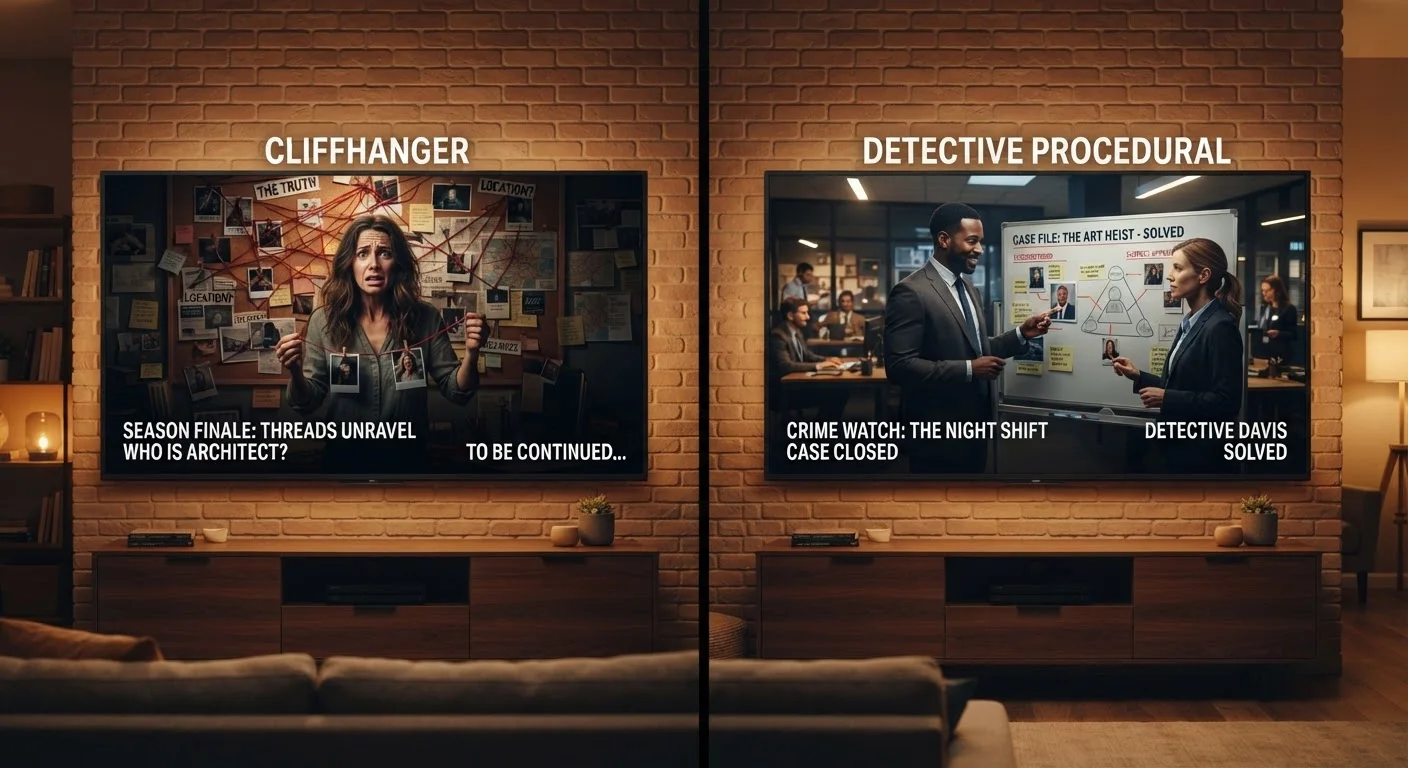
- Serialized dramas reward viewers who watch in order, building complex character arcs across many episodes.
- Episodic TV offers flexibility - most episodes stand alone, letting viewers drop in without prior context.
- Neither format is inherently superior; the right choice depends on your schedule, attention, and taste.
- Streaming has accelerated the popularity of serialized storytelling by making binge-watching possible.
- Many modern shows blend both approaches, offering episode-level closure within a season-long arc.
Our Verdict
Serialized drama and episodic TV represent two genuinely different contracts between a show and its audience. Serialized storytelling offers depth, emotional investment, and the satisfaction of a story that builds - but demands commitment. Episodic TV trades that depth for accessibility, consistency, and the pleasure of a self-contained tale well told. The healthiest viewing diet may include both.
| Best for | Recommended |
|---|---|
| Viewers who enjoy deep character investment and complex, evolving plots | Serialized Drama |
| Those with limited time who prefer to dip in and out without homework | Episodic TV |
| Casual fans of a genre looking for reliable, familiar entertainment | Episodic TV |
| Binge-watchers who want a full narrative arc in one committed run | Serialized Drama |
The Core Difference: One Long Story vs. Many Short Ones
Think of television storytelling as existing on a spectrum. At one end sits the serialized drama - a show where every episode is a chapter in a single, continuous story. Miss an episode and you're lost; the whole season, sometimes the whole series, is one unbroken narrative thread. Breaking Bad, The Wire, and Succession are textbook examples. At the other end lives episodic TV - shows where each episode tells its own complete story, and viewers can tune in on a Tuesday with no prior knowledge and still follow along perfectly. Classic procedurals like Law & Order or sitcoms like Seinfeld operate this way.
The distinction isn't just structural - it shapes your entire relationship with a show. Serialized drama asks for a commitment closer to reading a novel. Episodic TV functions more like a short-story collection: individual entries that can be savored in any order, each delivering its own satisfying arc.
For a broader sense of how format shapes viewer experience across the medium, our genre fluency guide breaks down the categories and subgenres that define modern screen entertainment.
What Serialized Drama Does Best
The power of serialized storytelling is cumulative. A character's small decision in episode two can echo catastrophically in episode nine. Relationships deepen gradually, betrayals sting harder because we've watched trust build over hours, and themes gain resonance through repetition and variation. When a serialized show works, it can feel genuinely novelistic - a quality that earned prestige drama its cultural cachet during what critics often call the "golden age" of cable television in the 2000s and beyond.
Streaming platforms have supercharged this format. When an entire season drops at once, viewers can pursue narrative momentum without waiting a week between episodes - a change that has meaningfully shifted how writers structure their seasons. You can read more about how distribution shapes a story's life in our piece on theatrical release vs. streaming premiere.
| Serialized Drama | Episodic TV | |
|---|---|---|
| Viewing order | Must watch in sequence | Can watch in any order |
| Episode closure | Usually ends on cliffhanger or open thread | Self-contained story each episode |
| Character development | Deep, evolving arcs across seasons | Consistent, familiar characterization |
| Entry barrier for new viewers | High - context required | Low - easy to drop in |
| Binge-watch suitability | Highly suited | Works well in any viewing pattern |
| Syndication potential | Limited | Very strong |
The tradeoff is the barrier to entry. A serialized show that's three seasons deep can feel impenetrable to a new viewer, and the emotional stakes - while potentially higher - demand real investment before they pay off.
The Enduring Appeal of the Episodic Format
Episodic TV often gets undervalued in prestige conversations, but its longevity tells a different story. Procedurals, sitcoms, and anthology episodes have sustained television for decades precisely because of their accessibility. There's genuine craft in writing a complete story - introduction, complication, resolution - in under an hour, with characters compelling enough to invite viewers back the next week even without a cliffhanger.
The episodic format also travels better. Syndication, where episodes air in rotation on cable channels, works because viewers don't need context. That kind of cultural saturation - where Friends or NCIS plays in hotel rooms and waiting rooms across America - is nearly impossible for a deeply serialized show to achieve.
Give Episodic Shows a Fair Trial
If you're used to serialized storytelling, procedurals or sitcoms can feel low-stakes at first. Try watching three or four episodes of a well-regarded episodic series before judging it - the craft often reveals itself in how efficiently and elegantly each story is constructed within tight constraints. Some viewers find episodic TV more relaxing precisely because it doesn't demand full attention.
There's also a low-stakes pleasure to episodic viewing. Viewers can skip weeks, re-enter without penalty, and enjoy the show as comfort rather than obligation. If you're interested in navigating large or complex shows without burning out, see our guide on keeping up with a large TV universe.
The Hybrid Middle Ground
Most contemporary television doesn't sit cleanly at either extreme. Shows like Buffy the Vampire Slayer pioneered what's now a common template: episodic stories that feel complete week to week, wrapped inside a season-long serialized arc. A given episode might resolve its own conflict while advancing a larger threat that won't pay off until the finale. This hybrid approach tries to offer both accessibility and depth - a new viewer can enjoy a single episode, but a devoted fan is rewarded for following the whole season.
Limited series add another wrinkle. Shows like Chernobyl or The Queen's Gambit commit fully to serialization, but with a defined ending - borrowing the narrative closure of a film while using the extended runtime of television. For context on how non-fiction storytelling navigates similar structural choices, our piece on documentary formats on screen is worth a read.
Understanding these formats can sharpen how you choose what to watch and how you engage with it. For viewers who want to go deeper, our guide on watching more intentionally offers frameworks for a richer relationship with screen storytelling.