
The Streaming Wars Explained: Why There Are So Many Services and What That Means for Viewers

Key Takeaways
- The fragmentation of streaming grew directly from studios reclaiming content they once licensed cheaply to a handful of platforms.
- Subscriber growth has slowed industry-wide, pushing services to compete on price, advertising tiers, and exclusive content.
- Consolidation - mergers, bundling, and shuttered platforms - is already reshaping the landscape that exploded between 2019 and 2022.
- Knowing which service holds the content you actually watch is more practical than subscribing broadly.
- How streaming data is measured differs significantly from traditional TV ratings, affecting what gets renewed or cancelled.
The Streaming Wars
The 'Streaming Wars' is the informal term for the intense competition among media companies to attract and retain subscribers to their video-on-demand platforms. As traditional television audiences declined, studios, tech giants, and broadcasters all launched their own services, creating a crowded marketplace. The result is a landscape where consumers have unprecedented choice - but also real confusion about where to find content and how much it all costs.
Industry analysts often distinguish between first-generation streamers (those that launched before 2019, relying heavily on licensed content) and second-generation entrants (studio-backed services built primarily around proprietary IP and original programming).
How We Got Here: From One Netflix to Many
For most of the 2010s, streaming meant Netflix - a disruptive upstart that paid modest licensing fees to fill its library with content owned by everyone else. The arrangement was convenient: studios collected easy revenue, and Netflix collected subscribers. Then the math changed.
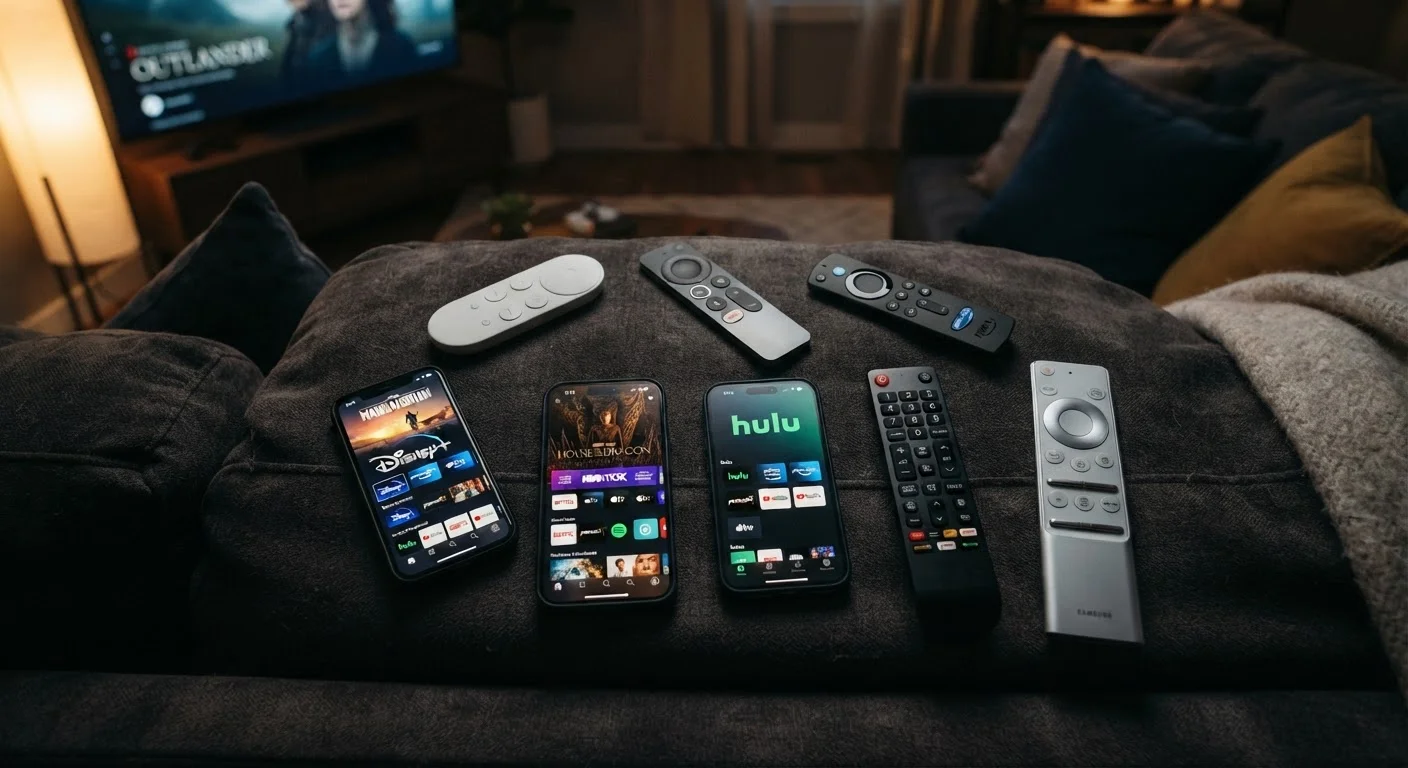
As Netflix's valuation soared and its subscriber count climbed into the hundreds of millions, rights holders noticed they were essentially training audiences to expect their content on someone else's platform. Disney moved first, pulling its library in preparation for Disney+ and setting off a chain reaction. WarnerMedia, NBCUniversal, Paramount, and Apple all followed. By 2022, American households could theoretically subscribe to more than a dozen major streaming services - not counting sports-focused or niche platforms.
The deeper structural force was a collapse in traditional pay-TV. As cable subscribers declined, the advertising and carriage fees that had funded broadcast and cable networks for decades dried up. Streaming was the replacement revenue model, which meant everyone needed to own the pipeline, not just the content. For more on what that shift looks like from a viewer's perspective, see what actually changes when you cut the cord.
4+
Average streaming services per U.S. household
Industry surveys conducted in recent years have consistently found that American households subscribe to between four and five streaming services on average.
~$1B+
Annual content spend at major platforms
Leading streaming services have publicly reported annual original content budgets in the billions of dollars, reflecting the high cost of competing for subscriber attention.
2019-2022
Peak launch period for major streaming entrants
Disney+, Peacock, Paramount+, HBO Max, and Apple TV+ all launched within this three-year window, creating the most concentrated expansion in streaming history.
The Economics Driving Competition - and Consolidation
Running a streaming service is expensive. Original content budgets for major platforms have reached into the billions annually, because exclusive programming is the primary reason subscribers sign up - and stay. A buzzed-about series can add millions of subscribers in a week; cancelling a beloved show can shed them just as fast.
That dynamic helps explain why the industry has already begun to consolidate. Several platforms that launched with ambition have merged, pivoted, or quietly folded. Bundling - packaging two or three services from the same corporate parent at a combined discount - has become a common strategy to reduce the subscriber cancellations known in the industry as churn. Advertising-supported tiers, once considered beneath the streaming brand, are now standard across nearly every major service, offering a lower entry price in exchange for commercials.
For viewers, consolidation is a double-edged development. Fewer competing platforms might mean less choice, but it also means less of the fragmentation that currently makes tracking down a specific title feel like solving a puzzle. Understanding how engagement is measured on these platforms - and why it drives programming decisions - is something our piece on common misconceptions about TV ratings unpacks in useful detail.
What This Means for Viewers Today
The practical reality for most American households is a recurring recalculation: which subscriptions are actually earning their keep? Research has suggested that many subscribers underestimate how many services they pay for, and overestimate how often they use each one. The paradox of choice is real - more content available doesn't always translate into more satisfying viewing.
A useful mental shift is to think of streaming subscriptions as rotating rather than permanent. If a platform's marquee show ends its run and the next anticipated release is months away, there's little friction in pausing and restarting. Most services are designed to make rejoining seamless precisely because they know subscribers do this.
Content itself has also changed in response to the competitive pressure. The arms race for prestige originals has produced a genuine golden era for certain genres - especially serialized drama, which thrives when viewers can binge an entire season at once. For a closer look at how that format shapes your experience as a viewer, our explainer on serialized vs. episodic TV is worth a read. And if navigating a growing content library feels overwhelming, practical approaches for following a large TV universe offers strategies for both casual and devoted watchers.
“The dirty secret of the streaming wars is that the consumer won the first round - more content, lower prices, no long-term contracts. The second round is being negotiated right now, and the terms are less obviously favorable.”
— Michael Nathanson, Media industry analyst and founding partner, MoffettNathanson