

Key Takeaways
- Distributing valuables across multiple locations significantly limits losses if one item is stolen.
- How you carry a bag matters as much as which bag you choose - position and awareness are key.
- Passports and backup cards are almost always safer locked in accommodation than carried daily.
- Digital copies of key documents stored securely online give you recovery options after any loss.
- Most opportunistic theft targets distraction, not force - staying aware is your strongest defense.
Why Casual Awareness Goes a Long Way
Theft targeting travelers is overwhelmingly opportunistic. Pickpockets and bag-snatchers look for easy wins - an unzipped pocket, a bag set down carelessly, someone absorbed in a map on their phone. The good news is that basic, consistent habits remove you from that category without requiring paranoia or restricting what you do.
Before you even leave home, building a security mindset into your packing is smart. Our pre-departure checklist covers steps like notifying your bank and making copies of key documents - both of which ease recovery if something does go wrong.
“Awareness is the most effective security tool a traveler has. Thieves rely on distraction - the moment you're paying attention, you become a harder target.”
— Travel Security Advisory Panel, Advisory body on traveler safety practices
Smart Practices for Protecting Your Belongings
The following habits are practical, low-effort, and widely recommended by experienced travelers and security researchers alike.
Distribute valuables across at least two separate locations on your body or in your bag.
If a pickpocket or snatch-and-grab thief gets one item, they rarely get everything. Splitting cash, cards, and ID means a single incident doesn't leave you stranded.
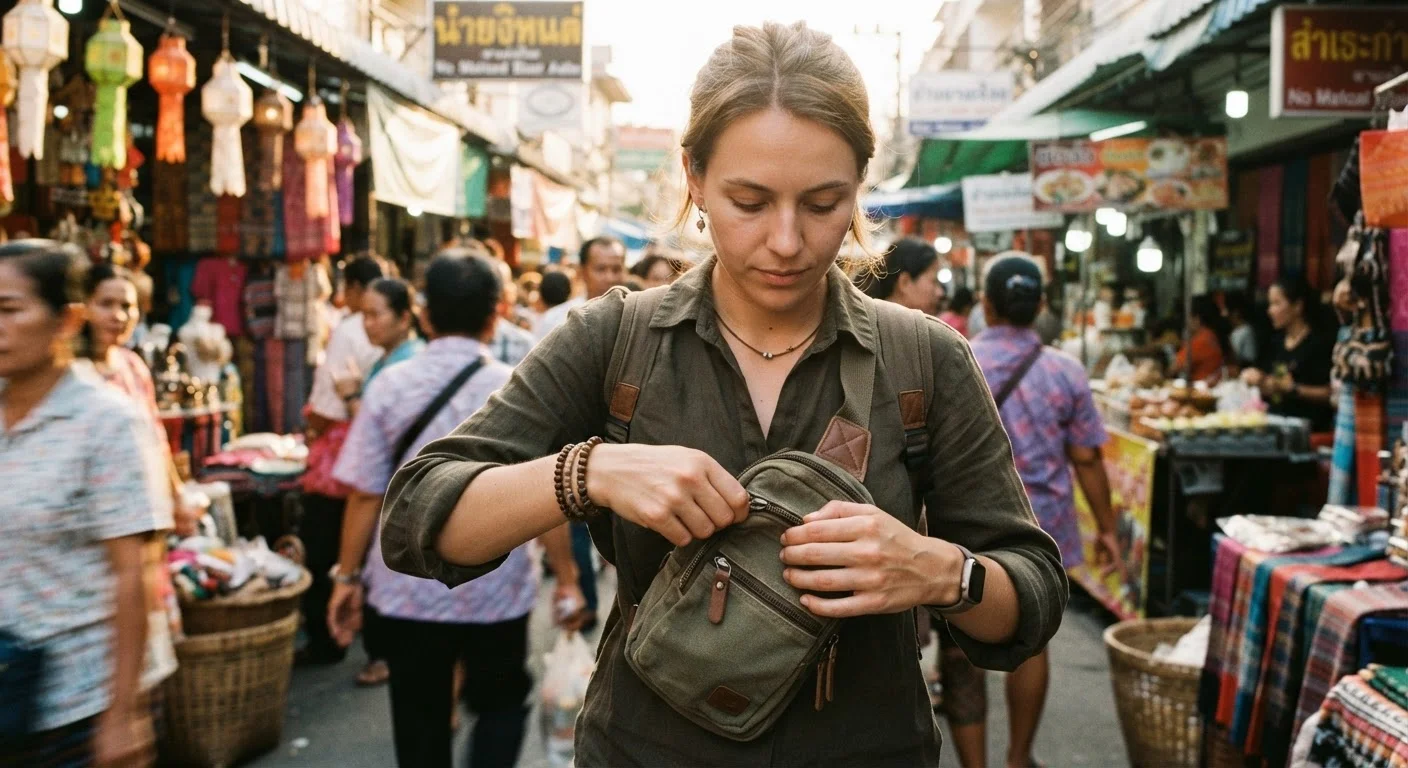
Wear bags in front of you or across your body in crowded areas.
Backpacks worn on your back and shoulder bags that hang loosely to the side are the easiest targets in crowded transit or markets. Repositioning keeps the bag in your line of sight.
Leave your passport locked in your accommodation unless you specifically need it.
Passports are difficult to replace abroad and valuable to thieves. Most daily activities only require a photo ID or a digital copy, and lost passports create significant disruption.
Store digital copies of key documents - passport, insurance card, itinerary - in a secure cloud folder.
Physical copies can be lost alongside the originals. A cloud-stored scan lets you access document details from any device and speeds up reporting and replacement.
Avoid displaying expensive items unnecessarily in public.
High-value electronics, jewelry, and camera equipment signal opportunity to opportunistic thieves. Keeping items out of sight when not in use reduces targeting risk.
Set up transaction alerts on every card you travel with.
Real-time alerts let you catch unauthorized use within seconds, allowing you to freeze the card before additional charges occur.
Quick Actions You Can Take Right Now
Whether you're leaving tomorrow or in three months, several steps can be completed today with minimal effort but meaningful payoff.
If you're still dialing in your packing strategy, our guide to packing a personal item that actually works includes organization tips that double as security habits - keeping essentials accessible without exposing them.
At the Airport and Beyond
Airports and transit hubs are high-risk environments because travelers are tired, distracted, and often carrying everything they own in one place. At security checkpoints in particular, the rush to reassemble your belongings creates a window of vulnerability.
~80%
Of travel theft is opportunistic
Security experts and travel safety organizations broadly estimate that the large majority of tourist-targeted theft involves opportunistic rather than planned criminal activity.
Top 3
Highest-risk theft environments for travelers
Crowded transit hubs, busy markets, and airport security checkpoints are consistently cited by travel safety resources as the environments where travelers most frequently report theft.
A key discipline: never place your phone, wallet, or passport in a bin at security. Keep them in your carry-on until the last possible moment, and retrieve them before moving away from the belt. For a broader look at what slows travelers down and exposes them unnecessarily, see our article on what actually causes airport security delays.
In hotels and rentals, use the room safe for your passport and a backup payment card whenever one is available. If no safe exists, a hidden location inside a piece of luggage - not the top pouch - is preferable to carrying everything on your person.