

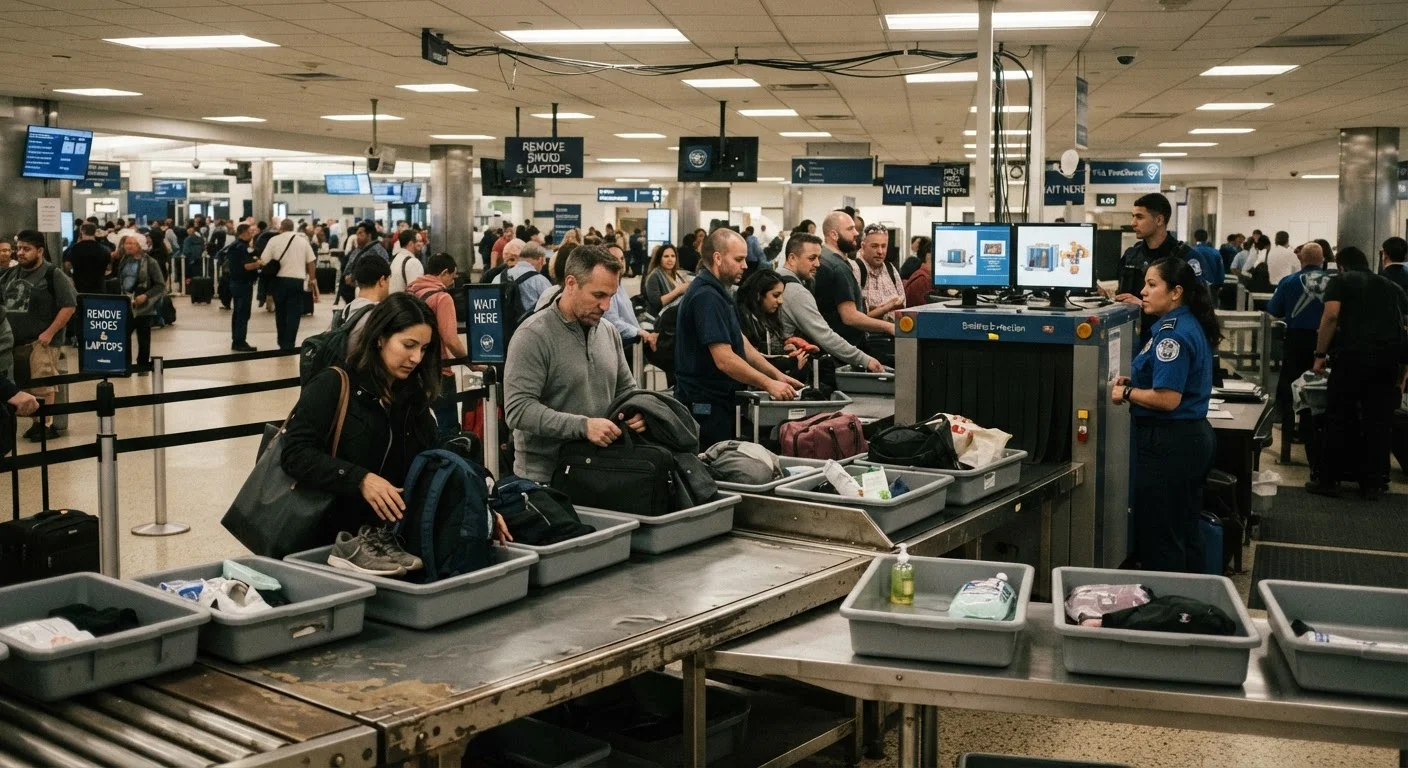
Key Takeaways
- Most security delays are caused by a handful of predictable, avoidable mistakes.
- Liquids, electronics, and footwear are the top sources of bag re-screening.
- Preparing your bag and pockets before reaching the checkpoint saves significant time.
- Trusted Traveler programs like TSA PreCheck can reduce screening friction substantially.
- What slows down one person in line affects every traveler behind them.
Why Security Lines Stall - and Who's Really Responsible
Airport security checkpoints are designed to move efficiently - the equipment is fast, the staff is trained, and the lanes are structured to process hundreds of passengers per hour. When lines back up, it's almost never a systemic failure. It's almost always a cluster of individual, preventable mistakes arriving at the same moment.
Understanding what actually triggers a delay - a bag pulled for re-screening, a traveler unprepared at the ID check, a laptop left inside a bag - puts the control back in your hands. Most slowdowns are caused by the same handful of issues, trip after trip, airport after airport. The good news: every one of them is avoidable with a little preparation before you leave home.
Don't Leave Security Preparation to the Last Moment
Many travelers wait until they reach the bin conveyor to start removing items from their bag - this is the single biggest bottleneck in a security line. Have your ID and boarding pass ready before you step into the queue. Pull out your electronics and liquids bag while you're still waiting, not after you've been waved through. Those extra 90 seconds you spend fumbling delay everyone behind you.
The Mistakes That Cause the Most Delays
The following are the most common errors that send bags back through the scanner, trigger manual searches, or cause travelers to hold up the entire line. Each one is rooted in a habit or assumption that's easy to fix once you're aware of it.
Packing liquids loosely throughout the carry-on instead of consolidated in a clear bag.
Why it happens: Many travelers either forget the 3-1-1 rule or assume small bottles scattered across a bag won't trigger screening. Screeners can't confirm compliance without pulling the bag for a secondary search.
Not removing a laptop or large tablet from the bag before placing it on the belt.
Why it happens: Travelers assume that if smaller electronics pass through inside a bag, all electronics can. TSA generally requires laptops and similarly sized devices to come out and be screened separately in standard lanes.
Wearing shoes, belts, and heavy jewelry that require removal without planning for it.
Why it happens: People dress for comfort or appearance and simply forget they'll need to remove these items at the checkpoint. Slip-on shoes and metal accessories cause a real scramble at the bin station.
Leaving loose change, keys, and other metal items in pockets until reaching the scanner.
Why it happens: Habit takes over - most people keep items in their pockets all day without thinking about it. At security, they empty pockets into a bin or directly into their bag, creating confusion and slow-downs.
Presenting a paper boarding pass or confusing boarding documents when a phone screen dims or fails.
Why it happens: Travelers rely on their phone screen without adjusting brightness or downloading the pass to a wallet app. A dim screen or no cellular connection at the checkpoint causes delays and frustration.
Overpacking carry-ons to the point where agents need to manually search them.
Why it happens: A densely packed bag is hard to read clearly on an X-ray screen. Agents will flag it for a physical inspection if they can't identify contents, adding several minutes of delay.
~10 sec
Average time lost per unprepared traveler
TSA has publicly noted that even a few seconds of additional processing per traveler compounds significantly across hundreds of passengers in a single lane.
3-1-1
Liquid rule travelers most frequently violate
Liquids violations are consistently among the most common reasons carry-on bags are pulled for secondary screening at U.S. checkpoints, according to TSA public reporting.
If you're traveling internationally, keep in mind that checkpoint rules can vary by country. Always verify current requirements through official government sources before you travel - what works in a U.S. domestic terminal may differ abroad. For a broader look at entry-related surprises, see our article on foreign entry requirements travelers commonly misunderstand.
Liquids Rules Are Strictly Enforced
The TSA's 3-1-1 rule requires all liquids, gels, aerosols, creams, and pastes to be in containers of 3.4 ounces (100ml) or less, all fitting in one quart-sized clear bag. This applies to carry-ons only - checked bags have different standards. Oversized containers will be confiscated regardless of how much liquid remains inside. When in doubt, pack liquids in your checked bag or buy them at your destination.
How to Build a Faster Security Routine
Experienced travelers don't just know the rules - they build habits that eliminate friction before it starts. The goal is to arrive at the checkpoint with nothing to figure out on the spot.
- Pack with security in mind: Electronics near the top, liquids bag accessible, no overstuffed compartments. A well-organized bag moves faster on every leg of the trip - not just at security.
- Dress for the checkpoint: Slip-on shoes, minimal metal, and a jacket you can remove easily. Save the belt and boots for when you land.
- Use the waiting time in line: Pull out your liquids bag and laptop while you're still in the queue. Have your ID and boarding pass ready before you reach the officer.
- Consider a Trusted Traveler program: TSA PreCheck (for domestic U.S. travel) and Global Entry (for international arrivals) reduce the number of items you typically need to remove. These programs require an application and fee - visit the official TSA and CBP websites for current details and eligibility.
If a connection follows your security checkpoint, the minutes you save add up. A smooth checkpoint exit pairs well with smart layover planning - see our piece on making the most of layovers once you're through the gate.